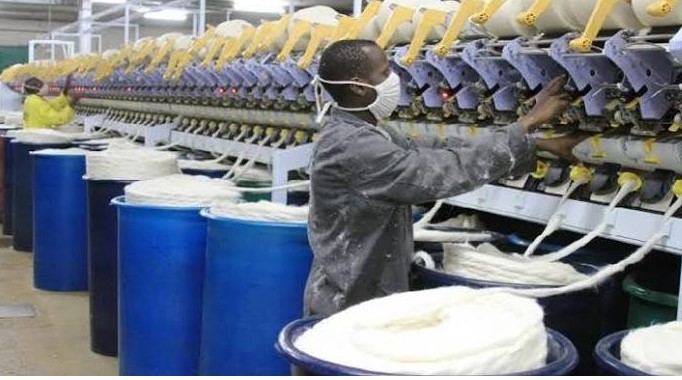
Manufacturing remains a key pillar of Kenya’s economy, supporting employment, exports and value addition across several industries. However, recent data indicates that the sector’s contribution to economic output continues to decline despite modest growth in production. Rising production costs, weak domestic demand and increased competition from imported goods have slowed the sector’s expansion, raising concerns about Kenya’s industrialization agenda.
According to the Kenya National Bureau of Statistics (KNBS) Economic Survey 2026, manufacturing’s contribution to Gross Domestic Product (GDP) declined by 0.2% points to 7.1% in 2025, down from 7.3% in 2024. During the same period, total manufacturing output increased by approximately 2.0% to KShs 3.8 tn, indicating that while production continued to grow, it expanded more slowly than other sectors of the economy.
The decline reflects a combination of structural challenges facing manufacturers. According to the Kenya Association of Manufacturers (KAM) Manufacturing Priority Agenda 2026, the sector’s contribution to GDP has steadily fallen over the past decade, declining from 11.1% in 2011 to 7.3% in 2024, before falling further to 7.1% in 2025. Industry stakeholders attribute this trend to high electricity costs, rising raw material prices, multiple taxes and levies, and increasing competition from lower-cost imported products.
KAM also notes that many manufacturers continue to operate below their optimal production capacity because of weak domestic demand, rising operating costs and intense import competition. Running factories below capacity increases the average cost of production, reduces operational efficiency and weakens the competitiveness of locally manufactured products. These challenges continue to constrain investment, productivity growth and the sector’s overall contribution to Kenya’s economic development.


Despite these headwinds, several manufacturing subsectors recorded positive growth during 2025. According to the KNBS Economic Survey 2026, increased production of cement, assembled motor vehicles and galvanized iron sheets supported overall manufacturing output during the year. However, these gains were partly offset by slower production in some food manufacturing segments, particularly sugar and soft drinks, highlighting the uneven performance across different industries.
A stronger manufacturing sector remains important for Kenya’s broader economy. Beyond factory production, manufacturing stimulates demand for locally produced agricultural commodities, transport services, logistics, and other business support activities while creating employment opportunities across multiple value chains. Continued growth in the sector therefore has wider implications for economic diversification, income generation and industrial development.
Overall, Kenya’s manufacturing sector continues to expand, but its relative contribution to the economy has weakened. With manufacturing accounting for 7.1% of GDP in 2025, down from 7.3% in 2024, the latest data underscores the structural challenges facing local industries. Addressing production costs, improving factory utilization and strengthening the competitiveness of locally manufactured goods will remain important in supporting the sector’s long-term contribution to Kenya’s economic growth.