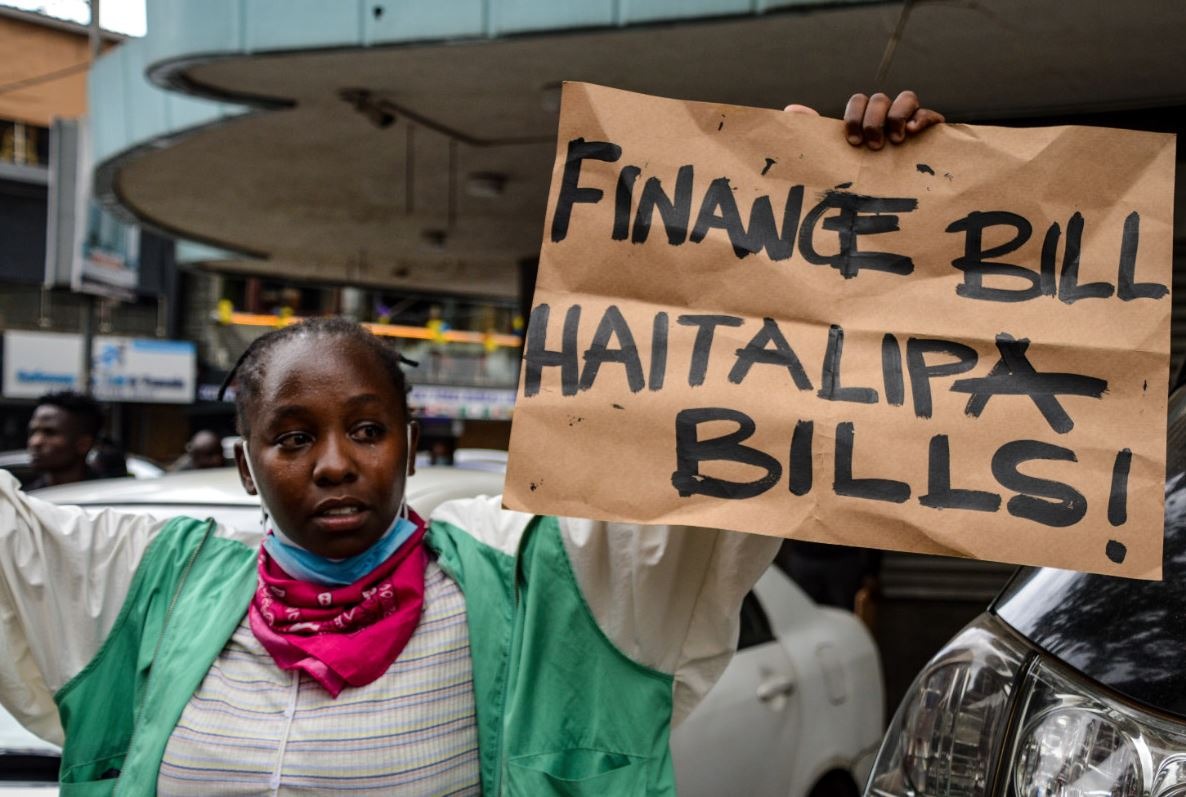
When President William Ruto vetoed Kenya’s Finance Bill 2024 in the face of sustained public outcry, the message from Kenyans was unmistakable: the appetite for new levies and expanded taxation had reached its limit. That political moment has left an indelible mark on how the Kenyan government approaches revenue-raising, and nowhere is this shift more evident than in the approach embedded within the Finance Bill 2026. Rather than pursuing unpopular tax increases, Kenya’s Treasury is charting a notably different course, one that emphasizes enforcement, administrative efficiency, and creative financing alternatives
Lessons from 2024: Why Tax Enforcement Now Trumps Tax Rate Increases
The 2024 Finance Bill attempted to raise Sh360 billion through aggressive tax measures—including VAT on bread and a motor vehicle tax of 2.5 percent of vehicle value. These proposals ignited widespread protests that ultimately convinced the presidency to withdraw the legislation. Treasury Cabinet Secretary John Mbadi has acknowledged this lesson explicitly, stating that the government recognizes Kenyans have made their position on taxation abundantly clear.
For the 2026/27 budget cycle, Kenya’s tax administration strategy has pivoted sharply. Rather than introducing new tax rates that would trigger public resistance, the government aims to raise Sh232 billion through enhanced tax enforcement and compliance mechanisms. This represents a fundamental recognition: there is substantial untapped revenue sitting within Kenya’s existing tax system—revenue that can be collected through better administration without expanding the burden on compliant taxpayers. The KRA Electronic Tax Invoice Management System (eTIMS), integrated payment validation, and expanded informal sector audits form the core of this enforcement-first approach.
Precision Targeting: New Taxes on Hard-to-Tax Segments
That said, Finance Bill 2026 does introduce targeted new measures—but they are calibrated toward segments historically difficult to capture within Kenya’s tax net. Non-resident landlords will now face a 30 percent withholding tax on rental income from immovable property in Kenya, closing a loophole that has long allowed foreign property owners to minimize Kenyan tax exposure. Similarly, withholding taxes on interchange and merchant service fees on card-based transactions target the payments sector, where tax compliance has been inconsistent.


The Treasury has also introduced a proposal to establish a 60 percent floor on undistributed company income that may be treated as deemed dividends subject to withholding tax. Currently, the KRA has broad discretion to deem any portion of retained earnings as dividends, creating uncertainty for businesses. By establishing a clear threshold, the government aims to bring clarity and equity to dividend taxation while capturing revenue from corporate profit-retention strategies that have historically escaped taxation. These measures demonstrate surgical precision—targeting specific behavioral loopholes rather than imposing broad-based tax rate increases that affect the general population.
Beyond Taxation: Alternative Financing in an Era of Constrained Borrowing
With new taxation options politically constrained and external borrowing opportunities limited—Kenya remains on international financial institutions’ watchlists for debt sustainability—the government is pursuing creative alternative financing structures. The 2026/27 budget deficit stands at Sh1.174 trillion, equivalent to 5.6 percent of GDP, a level that cannot be addressed through spending cuts alone given wage bills, interest servicing, and essential service obligations.
Enter public-private partnerships (PPPs), securitization, and strategic asset sales. The government targets Sh80 billion in PPP mobilization across roads, irrigation, and power transmission—bringing private capital into traditionally state-funded infrastructure. A Sh120 billion roads bond backed by future Road Maintenance Levy Fund collections aims to clear the sector’s backlog of pending bills while funding new construction. A Sh100 billion bond securitizing future Affordable Housing Levy inflows will address a critical Sh118 billion funding gap in the administration’s goal of constructing one million affordable housing units by mid-2027. Additionally, the government’s sale of a 15 percent stake in Safaricom to South Africa’s Vodacom—valued at Sh244.5 billion—injects substantial capital into a newly established infrastructure fund designed to attract additional private sector investment.
This shift reflects what tax experts at PwC Kenya have identified as a strategic evolution: Kenya is transitioning from a development finance model dependent almost entirely on public resources toward one centered on mobilizing private capital at scale. It is less a philosophical shift than a pragmatic necessity—public resources alone cannot meet Kenya’s infrastructure and social development ambitions.
The Political and Economic Calculus Ahead
Finance Bill 2026 represents a more cautious, technically sophisticated approach to revenue mobilization than its 2024 predecessor. By separating the goal of raising revenue from the mechanism of expanding tax rates, Kenya’s Treasury has articulated a vision of tax administration grounded in equity and simplicity. Treasury Secretary Mbadi’s language around these principles—fairness, equity, and tax system simplicity—signals political awareness that the 2024 backlash was not merely about tax levels but about the perception of unfairness and arbitrary decision-making.
Yet risks remain. Aggressive enforcement of existing taxes and the introduction of new withholding taxes on hitherto untaxed segments could, if poorly communicated or perceived as arbitrary, generate compliance friction. PPPs and securitization introduce new fiscal obligations and contingent liabilities that future governments will inherit. The reliance on asset sales—particularly the Safaricom stake sale—represents one-time revenue that cannot be repeated. And the political economy of tax compliance in Kenya, where informal economy activity dominates employment and where public confidence in government revenue use remains fragile, suggests that even technically sound policies can encounter implementation headwinds.
This commentary is based on the article “Tough Finance Bill lessons from 2024 and plan to fund Sh4.8 trillion budget” by Charles Mwaniki, published in Business Daily. The analysis, interpretation, and commentary contained herein are original; the underlying facts and figures are sourced from the referenced article.