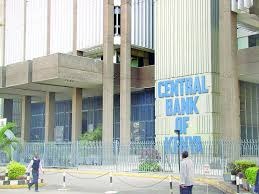
The Monetary Policy Committee (MPC) of the Central Bank of Kenya (CBK) is scheduled to meet in June 2026 against a backdrop of rising inflation, improving economic activity, and increasing uncertainty in the global economic environment. At its April 2026 meeting, the Committee maintained the Central Bank Rate (CBR) at 8.75%, citing the need to balance support for economic growth with the preservation of price and exchange rate stability. While market participants remain divided on whether the CBK should resume its easing cycle, the prevailing macroeconomic conditions suggest that maintaining the policy rate at its current level would be the most prudent course of action.
The primary objective of monetary policy is to maintain price stability, and recent inflation trends suggest that the room for further monetary easing has narrowed considerably. Kenya’s inflation rate accelerated to 6.7% in May 2026, placing it just 0.8 percentage points below the upper limit of the CBK’s target range of 2.5%-7.5%. While inflation remains within the target band, the sharp increase from previous months signals a resurgence of price pressures, largely driven by higher food and energy costs. Under such circumstances, a further reduction in the policy rate could risk stimulating demand at a time when inflationary pressures are already building, potentially complicating the CBK’s inflation management efforts in the second half of the year.


The domestic fixed-income market also provides a compelling argument for caution. Treasury bill yields have recently shown signs of firming up following a prolonged period of decline, reflecting changing liquidity conditions and the government’s continued domestic financing requirements. This suggests that market participants are beginning to price in higher inflation expectations and stronger demand for funds. In such an environment, maintaining the policy rate would help preserve consistency between monetary policy signals and market conditions, while avoiding the risk of creating distortions in interest rate expectations.
Moreover, the Kenyan economy no longer appears to require the same degree of monetary support that justified earlier rate cuts. Economic activity has continued to recover, supported by improved agricultural output, resilient service sector performance, stronger foreign exchange inflows, and easing financing conditions. While growth remains vulnerable to both domestic and external shocks, current economic conditions do not point to a significant slowdown that would warrant further policy stimulus. Instead, maintaining the current policy stance would allow the economy to continue absorbing the benefits of previous easing measures while safeguarding macroeconomic stability.
External developments further strengthen the argument for a hold decision. Global uncertainty remains elevated amid geopolitical tensions, fluctuating commodity prices, and uncertainty regarding the future path of interest rates in major economies. For a frontier market such as Kenya, maintaining policy credibility and preserving investor confidence remain critical. A stable policy rate would help support capital inflows, sustain exchange rate stability, and provide a buffer against potential external shocks that could emerge during the remainder of the year.
While proponents of further easing may argue that lower rates would stimulate credit growth and support economic expansion, the benefits appear increasingly marginal relative to the associated risks. Inflation is approaching the upper end of the target range, previous rate cuts are still filtering through the economy, and real interest rates remain supportive of growth. Consequently, the balance of evidence suggests that the MPC should prioritize preserving the gains already achieved rather than pursuing additional stimulus.
We therefore expect the MPC to maintain the Central Bank Rate at 8.75% in its June 2026 meeting. Such a decision would signal confidence in the ongoing economic recovery while preserving the flexibility needed to respond to evolving inflationary and external risks. In the current environment, patience rather than further easing appears to be the more appropriate monetary policy response.