
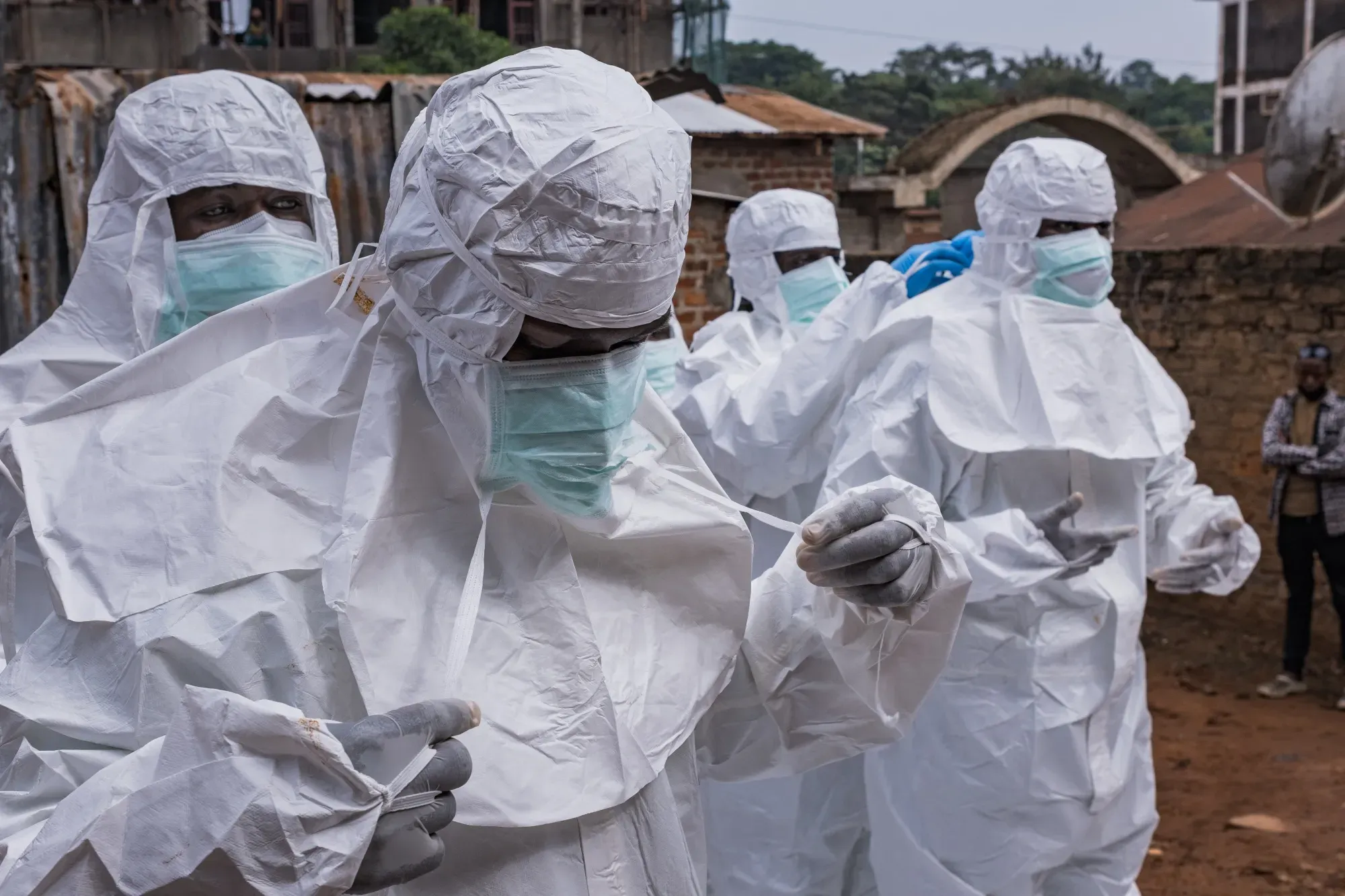
A decade-old biosecurity agreement, a quietly revised foreign policy document, and a landmark 2025 health cooperation framework have converged to place Kenya at the centre of a deeply contested debate, should an African nation host Ebola research and isolation facilities under terms largely shaped in Washington?
A deal signed in 2015 that most Kenyans never knew about
The controversy did not begin in 2025. Its roots trace back to July 24, 2015, when former Health CS James Macharia and then-US Ambassador Robert Godec signed a bilateral biosecurity agreement that would later be ratified by Kenya’s National Assembly on November 22, 2016. That agreement, as reported by Angela Oketch and Brian Wasuna in The East African, gave the United States considerable authority over projects arising from the deal, including contractor selection and tax exemptions for both imported goods and American personnel working in Kenya.
Perhaps the most consequential, and least discussed, clause was a mutual liability waiver: neither country could sue the other over death, injury, or property damage linked to projects under the agreement. For an arrangement involving biological threat research, this clause carries enormous practical weight. It effectively limits the legal recourse available to Kenyan citizens and the Kenyan government in the event of an incident.
The agreement was extended for a further seven years on April 5, 2022, when Health CS Mutahi Kagwe and US Chargé d’Affaires Eric Kneedler signed the renewal. Under that timeline, the current agreement remains in force until April 5, 2029.
How Kenya’s revised foreign policy opened the door wider
In December 2024, Kenya updated its national foreign policy with an explicit ambition to position the country as a “wellness, humanitarian, and health emergencies medical hub.” This framing, found in Section 4.9.4 of the policy document under the heading Global Health Diplomacy, became the enabling architecture for what followed in 2025. The policy defined global health diplomacy as an intersection of public health, international relations, and development, one focused on negotiating agreements and building cooperation to address global health challenges, pandemics included.
This was not a passive document. It was a deliberate strategic signal, and Washington appears to have responded accordingly. Within 12 months of that policy revision, Kenya became the first country globally to sign a government-to-government health agreement under the Trump administration’s America First Global Health Strategy.
The 2025 framework: what Kenya gained and what it committed to
On December 4, 2025, Prime Cabinet Secretary Musalia Mudavadi and US Secretary of State Marco Rubio signed the Kenya-US Health Cooperation Framework in Washington, D.C., with President William Ruto present as a witness. The financial terms are significant: the United States committed $1.6 billion to Kenya’s health system over five years, while Kenya pledged to raise its own domestic health spending by $850 million over the same period.
On paper, this is a substantial investment in a country that has long struggled with underfunded public health infrastructure. The injection of $1.6 billion, structured through a formal government-to-government framework rather than traditional aid channels, represents a different kind of health diplomacy: one that comes with strategic positioning, not just development goodwill.
The sovereignty question that won’t go away
What makes this arrangement genuinely controversial is not the money; it’s the legal and operational architecture surrounding it. The 2015 agreement grants the US side considerable control over project implementation, including who builds the facilities and under what tax conditions. The mutual liability waiver means Kenyan citizens harmed by any project under the agreement would have limited legal standing against either government. And the Ebola research and isolation centres now proposed under this framework sit squarely within the scope of that original 2015 deal.
Kenya is not the first developing nation to navigate this kind of tension; the intersection of urgent health infrastructure needs and the sovereignty implications of foreign-controlled facilities is a well-documented challenge across global health diplomacy. But being the first country to sign under America’s current foreign health strategy gives this particular arrangement a heightened visibility and geopolitical significance that policymakers and citizens alike cannot afford to ignore.