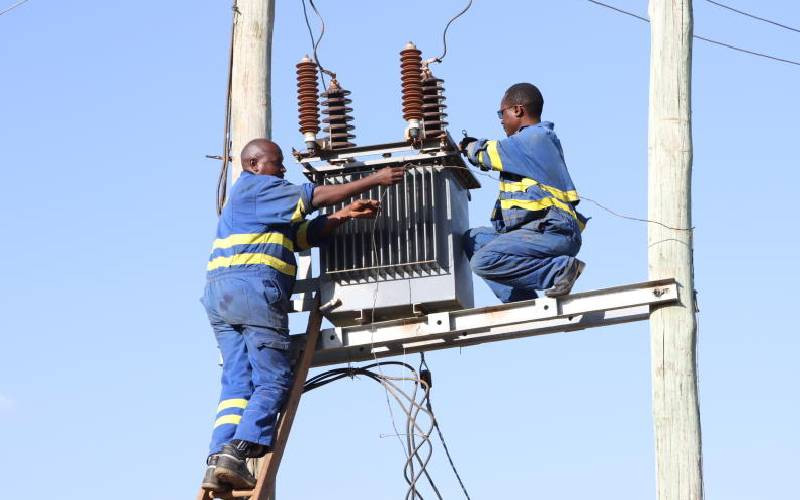
Kenya is pushing ahead with plans to moor a gas powered barge off its Coast to generate electricity, a move officials say is urgently needed to prevent blackouts as demand breaks records and reserve margins shrink to levels that alarm grid engineers.
Kenya Power Managing Director Joseph Siror revealed that plans are at an advanced stage to set up the plant at the Coast, adding that it was initially expected to be operational by December. The plant is expected to have a generation capacity of between 200 and 400 megawatts, described as a short term move to ensure Kenya is not plunged into blackouts given rapidly rising demand and the lengthy period it takes to build conventional power plants.
“The ministry is currently engaging on the floating barge, which will be a gas plant based on the sea, and what we will be required to do is to connect a transmission line to our grid,” Dr Siror said, adding that the barge would “help to meet the imminent shortfall we might encounter ahead as we await new plants.”
Spinning reserves backup power ready for rapid deployment during outages are currently below five percent, according to Principal Secretary for Energy Alex Wachira, who warned the shortfall puts Kenya “on the verge of potentially significant blackouts.” The globally recommended range sits between seven and fifteen percent. By January 2026, the system peak of 2,439.06 MW compared to firm capacity of 2,495 MW left a reserve margin of just 2.3 percent roughly 56 MW of real breathing room.
No new interconnected power plants have been commissioned in four years, as a moratorium on new capacity, imposed in 2021, was only lifted by the National Assembly in December 2025. A 35 MW geothermal plant alone takes at least 36 months to build far too slow for a grid this thin.

To fill the gap, Kenya has leaned heavily on Ethiopia and Uganda, a reliance officials acknowledge as a vulnerability. Billing for electricity imports from Ethiopia nearly tripled to Sh8.68 billion in the year to July 2025, a 187.8 percent rise year-on-year. A major breakdown at any hydro plant supplying those imports could trigger outages across Kenya.
A floating barge a self contained power station on a vessel, anchored in port and connected to the national grid offers speed that land based solutions cannot match. The Coast barge would be the first of its kind in Kenya, with procurement model and total costs still undisclosed. Whether it arrives before the next record peak is the question Kenya’s grid operators are watching most closely.