Kenya’s economy is still growing, but the pace is telling a different story.
According to a recent report by Bloomberg journalist David Herbling, the country recorded its slowest economic expansion since the pandemic era, highlighting how climate shocks are beginning to weigh heavily on growth.
A slowdown that signals deeper pressure
Kenya’s gross domestic product (GDP) expanded by 4.6 per cent in 2025, slightly below the 4.7 per cent recorded the previous year. More importantly, this marks the slowest growth rate since 2020, when the economy was hit by COVID-19.
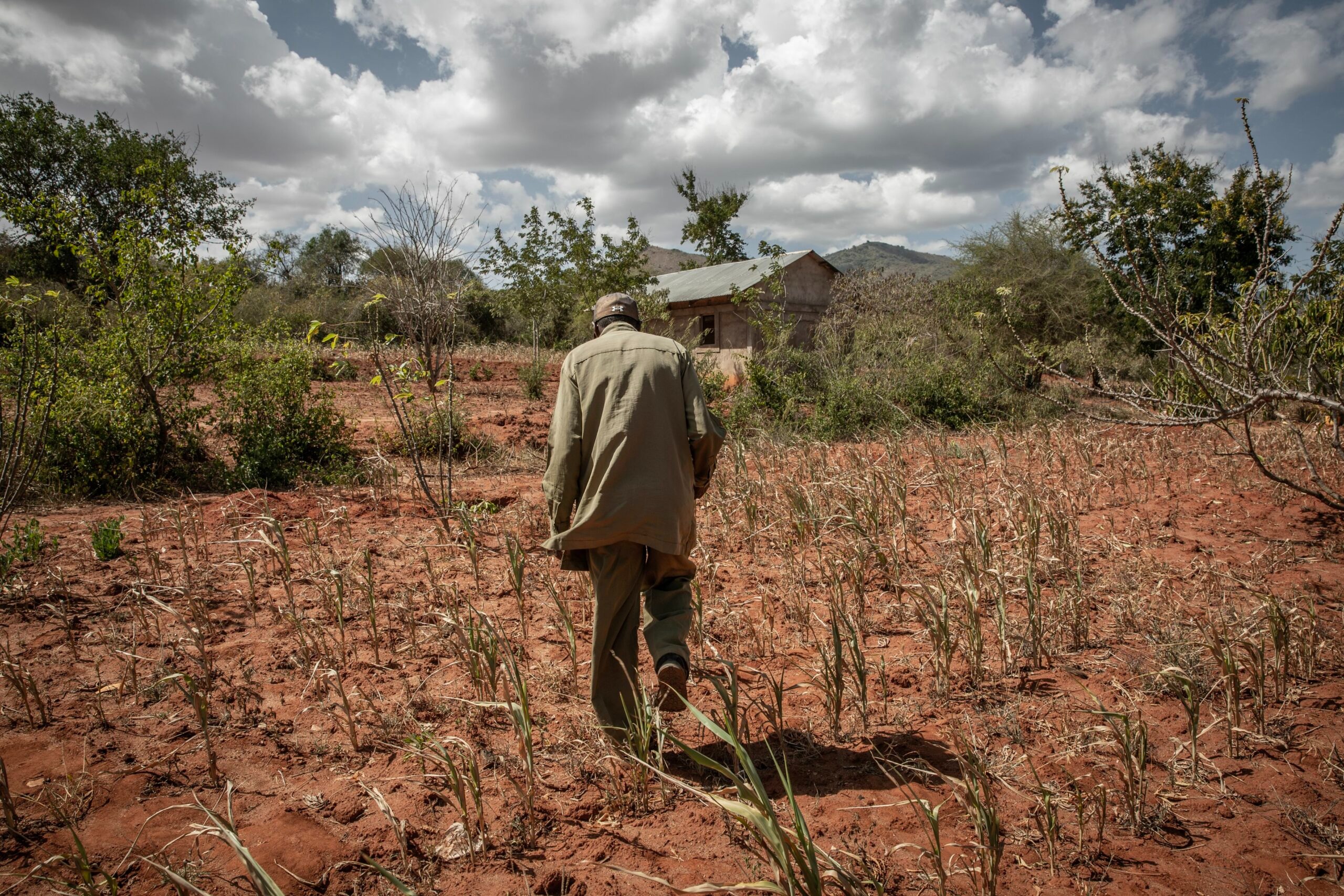
At first glance, the drop may seem marginal. However, the underlying cause is more significant: drought.


Agriculture remains one of Kenya’s economic anchors, contributing substantially to GDP and employment. Yet it is also one of the most vulnerable sectors. When rains fail, growth follows.
Drought, agriculture and the ripple effect
Data from the Kenya National Bureau of Statistics shows that agricultural growth slowed sharply due to erratic weather patterns—characterized by uneven rainfall and poor crop performance.
This matters because agriculture does not operate in isolation. When harvests decline:
- Food prices rise
- Rural incomes shrink
- Consumer spending weakens
In turn, sectors like manufacturing, transport, and retail also slow down. That is exactly what Kenya is beginning to experience.
Climate risk is now an economic risk
Kenya’s growth story has long been tied to rainfall. Nearly all agricultural production depends on rain-fed systems, making the economy highly exposed to climate variability.
So this is not just about one bad season. It is about a pattern.
Frequent droughts—and increasingly, floods—are turning into recurring economic shocks. Each one chips away at productivity, disrupts supply chains, and forces the government to divert resources toward relief instead of investment.
In simple terms, climate volatility is becoming a structural economic constraint.
Still growing, but losing momentum
Despite the slowdown, Kenya’s economy is not contracting. Growth remains broad-based, supported by sectors such as construction, services, and mining.
However, momentum is clearly weakening.
At the same time, external risks are building. Global shocks—particularly rising fuel prices linked to geopolitical tensions—are adding pressure through inflation and higher import costs.
This combination of domestic climate stress and global economic uncertainty is what makes the current slowdown more concerning.
Why this moment matters
A growth rate of 4.6 per cent is still respectable. But for a developing economy like Kenya, it may not be enough.
Economic growth needs to outpace population growth, create jobs, and expand incomes. When growth slows, those outcomes become harder to achieve.
More importantly, the slowdown raises a bigger question:
Can Kenya sustain growth in a climate-constrained future?
The road ahead
Looking forward, projections still point to a modest recovery, with growth expected to improve slightly in 2026.
However, that recovery will depend on several factors:
- More stable weather patterns
- Continued investment in infrastructure
- Better management of external shocks
At a policy level, the conversation is already shifting. There is growing emphasis on climate resilience—irrigation, drought-resistant crops, and diversified energy sources.
Because the lesson is becoming clear:
Kenya’s economic future will not just be shaped by markets or policy—but increasingly, by the weather.