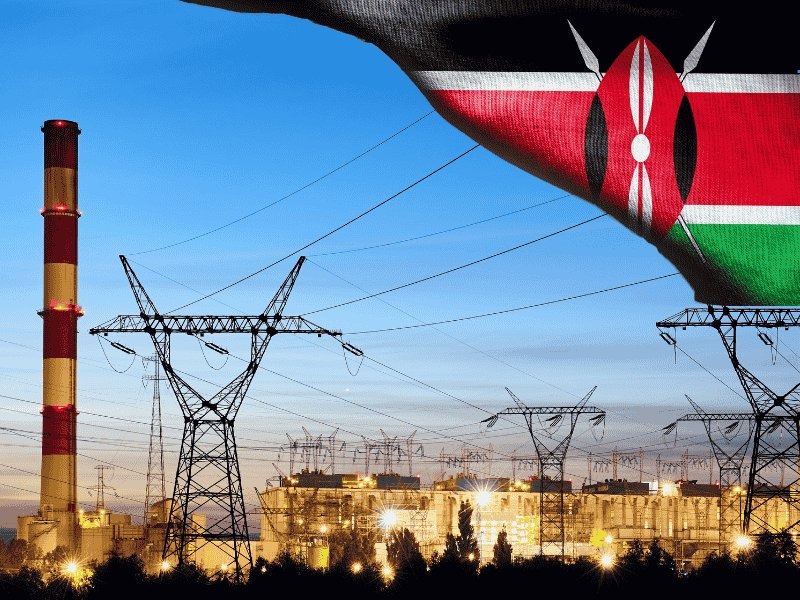
Kenya’s ambition to position itself as a manufacturing hub in Africa is facing a major hurdle—expensive electricity.
A new industry report by the Kenya Association of Manufacturers paints a stark picture: Kenya has the highest electricity tariffs among key African economies, a factor that is steadily eroding the country’s industrial competitiveness.
Power Costs Weigh Heavily on Manufacturers
Electricity is a critical input in manufacturing. However, in Kenya, it has become one of the most expensive components for businesses.
According to the report, as reported by Martin Mwita, The Star, Kenya, electricity tariffs in the country range between $0.18 (Sh 23.26) and $0.23 (Sh 29.73) per kilowatt hour. This is significantly higher than competing economies such as:

- South Africa at around $0.03 per kWh
- Egypt at approximately $0.03 per kWh
- Morocco at $0.05 per kWh
- Tanzania between $0.08 and $0.18 per kWh
As a result, Kenyan manufacturers face higher production costs, making locally produced goods less competitive both in export markets and against imports.
A Shift Away From Industrialization
The report suggests that instead of industrializing, Kenya is experiencing premature deindustrialization. This means the country is shifting away from manufacturing toward the service sector at a lower income level than expected.
Manufacturing’s contribution to GDP has steadily declined, dropping from an average of about 10 per cent between 2011 and 2016 to approximately 7.6 per cent in 2024.
This trend raises concerns about long-term economic resilience, as manufacturing is widely seen as a key driver of job creation, exports, and value addition.
Regional Competition Intensifies
Meanwhile, other African economies are leveraging lower production costs to attract investment.
Countries with cheaper electricity and more supportive industrial policies are becoming more attractive destinations for manufacturers. Consequently, some multinational firms have begun relocating operations away from Kenya.
At the same time, cheaper imports, particularly from Asia and other African countries, continue to dominate the Kenyan market, further squeezing local producers.
Policy and Structural Challenges
The high cost of electricity in Kenya is linked to several structural factors, including:
- High taxes and levies on power
- Expensive generation and transmission costs
- Inefficiencies in energy management systems
These factors combine to create a pricing environment that places Kenyan firms at a disadvantage.
The AfCFTA Opportunity—At Risk?
The African Continental Free Trade Area offers Kenya a major opportunity to expand its export markets across the continent.
However, high production costs could limit the country’s ability to fully benefit from this agreement.
To compete effectively under the AfCFTA, Kenyan manufacturers must be able to produce goods at competitive prices, something that remains difficult under current energy cost structures.
The Way Forward
Industry leaders are calling for urgent reforms to address the cost of power and revive the manufacturing sector.
Key recommendations include the following:
- Reducing taxes and levies on electricity
- Streamlining regulatory and policy frameworks
- Investing in efficient and affordable energy generation
- Strengthening linkages between manufacturing and other sectors
According to KAM CEO Tobias Alando, Kenya’s long-term economic resilience will depend on its ability to build a competitive manufacturing base capable of thriving both regionally and globally.
A Defining Moment for Kenya’s Economy
Kenya now faces a critical choice.
Without addressing the high cost of electricity, the country risks losing its industrial base and becoming increasingly reliant on imports. On the other hand, targeted reforms could unlock manufacturing growth and position Kenya as a competitive player in Africa’s evolving economic landscape.
The path forward will require coordinated action across policy, regulation, and investment—because in today’s global economy, competitiveness is no longer optional.