

In a significant development for Kenya’s international security engagement, 215 Kenyan police officers who served in Haiti as part of the Multinational Security Support (MSS) mission have returned to Nairobi, marking the conclusion of their latest tour of duty. The officers, representing the second deployed contingent, arrived on March 17 and were warmly received by senior government officials, including the Inspector General of Police, at Jomo Kenyatta International Airport. This homecoming marks another chapter in Kenya’s ongoing international support effort aimed at helping stabilise Haiti amid chronic insecurity and gang violence.
Kenya first answered a global call for assistance when the United Nations Security Council authorised the MSS mission in October 2023, in response to escalating gang domination in Haiti’s capital, Port‑au‑Prince, and other regions. Haiti’s deteriorating security situation had seen criminal groups seize control of large swathes of territory, undermining governance and threatening civilian lives. Kenya committed to lead the police component of this multinational effort, utilising its law enforcement capabilities to support the Haitian National Police in efforts to restore order.
The deployment began in June 2024 with an initial group of officers arriving to assist local police and international partners. Kenyan personnel worked in some of the most challenging environments in Port‑au‑Prince and surrounding areas, conducting patrols, securing key infrastructure, and assisting Haitian forces in efforts to push back armed gangs. The mission also involved policing duties in volatile neighbourhoods, protection of critical services and institutions, and liaison with other countries’ contingents participating in the MSS framework.
The return of this group comes as the structure of the international mission in Haiti is shifting. Countries such as Chad are beginning to take on expanded roles within a restructured framework expected to strengthen the capability of the multinational force into late 2026. Officials from the Dominican Republic and other partners have indicated that Chadian troops are undergoing training to gradually assume responsibilities previously held by Kenyan officers.

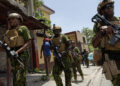
Back in Kenya, the returning officers were honoured for their service under difficult and often dangerous conditions. Officials highlighted their professionalism and courage, noting that their efforts contributed to stabilising key areas and provided much‑needed support to Haitian authorities struggling to contain gang violence. Speeches at the reception emphasised gratitude for their sacrifices and underscored Kenya’s pride in their performance.
While the returning contingent’s deployment has ended, Kenya’s broader involvement in Haiti’s security situation remains a topic of international discussion. The transformation of the mission into a more robust model with additional forces and capabilities illustrates both the ongoing complexity of Haiti’s crisis and the international community’s determination to support peace and security there. For Kenya, this chapter demonstrates its evolving role in global peace support and law enforcement cooperation, reflecting a commitment to help nations facing severe instability.