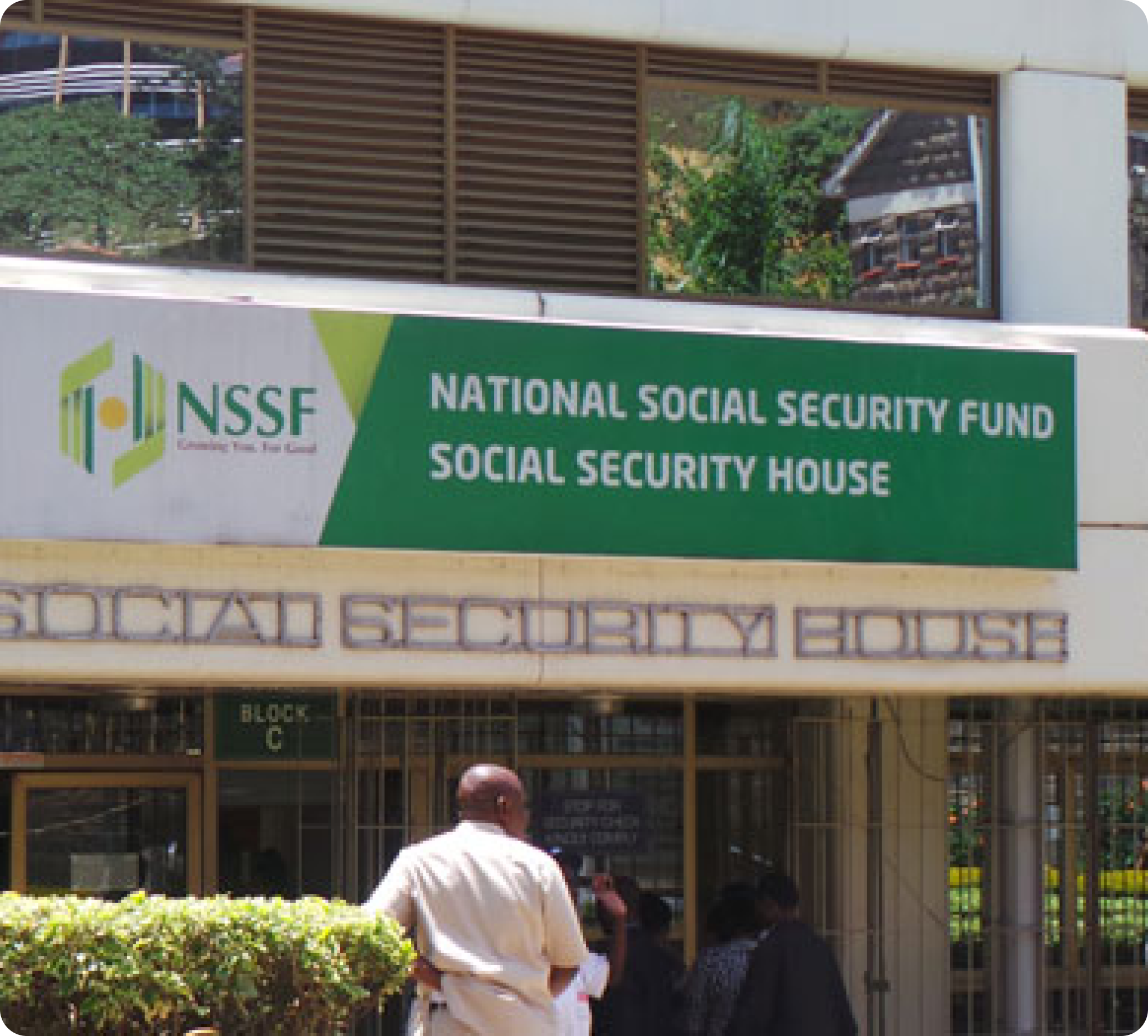
The National Social Security Fund (NSSF) Act of 2013 marked a major shift in Kenya’s pension landscape by moving away from the old flat-rate contribution of KES 200 per month, matched by the employer. Instead, the Act introduced a more robust system where employees contribute 6.0% of their pensionable earnings, with employers matching the same amount. This reform aimed to improve retirement savings adequacy and align Kenya’s pension system with global best practices.
Recognizing the impact such an increase would have on employees and employers, the Act provided for a gradual implementation over five phases, spread across five years. Each phase incrementally increases the pensionable earnings bands used to calculate NSSF contributions. The changes effective 1st February 2026 represent the fourth phase of this rollout.
Under the new rates, the Tier I (Lower Earnings Limit) increases from KES 8,000 to KES 9,000. As a result, the employee contribution rises from KES 480 to KES 540, with the employer matching the same amount. This is an increase from the previous total Tier I contribution of KES 960 to KES 1,080 per month.
For employees earning between KES 9,000 and KES 72,000, the overall NSSF contribution remains unchanged. While Tier I contributions increase by KES 60, Tier II contributions reduce by an equivalent amount, effectively neutralizing the impact on total monthly deductions for this income bracket. This ensures that mid-income earners are not disproportionately affected by the fourth phase of the implementation.


However, employees earning above KES 72,000 will experience a noticeable increase. The Tier II (Upper Earnings Limit) rises significantly from KES 72,000 to KES 108,000. Previously, the maximum Tier II contribution stood at KES 3,840 by the employee and KES 3,840 by the employer. Under the new rates, this increases to KES 5,940 each, bringing the total Tier II contribution to KES 11,880. Consequently, the maximum total NSSF contribution per employee increases from KES 8,640 to KES 12,960 per month.
Overall, the February 2026 changes are designed to further strengthen retirement savings, particularly for higher-income earners, while cushioning lower and middle-income workers from abrupt increases. Employers should also note that the law allows them to contract out of NSSF Tier II and redirect these contributions to approved private pension schemes, offering flexibility in managing retirement benefits for their workforce.