Sharp Daily
No Result
View All Result
Tuesday, February 10, 2026
  • Home
  • News
    • Politics
  • Business
    • Banking
  • Investments
  • Technology
  • Startups
  • Real Estate
  • Features
  • Appointments
  • About Us
    • Meet The Team
Sharp Daily
  • Home
  • News
    • Politics
  • Business
    • Banking
  • Investments
  • Technology
  • Startups
  • Real Estate
  • Features
  • Appointments
  • About Us
    • Meet The Team
No Result
View All Result
Sharp Daily
No Result
View All Result
Home Money

Understanding the New NSSF Contribution Rates Effective 1st February 2026

Faith Ndunda by Faith Ndunda
January 29, 2026
in Money, Pensions
Reading Time: 2 mins read

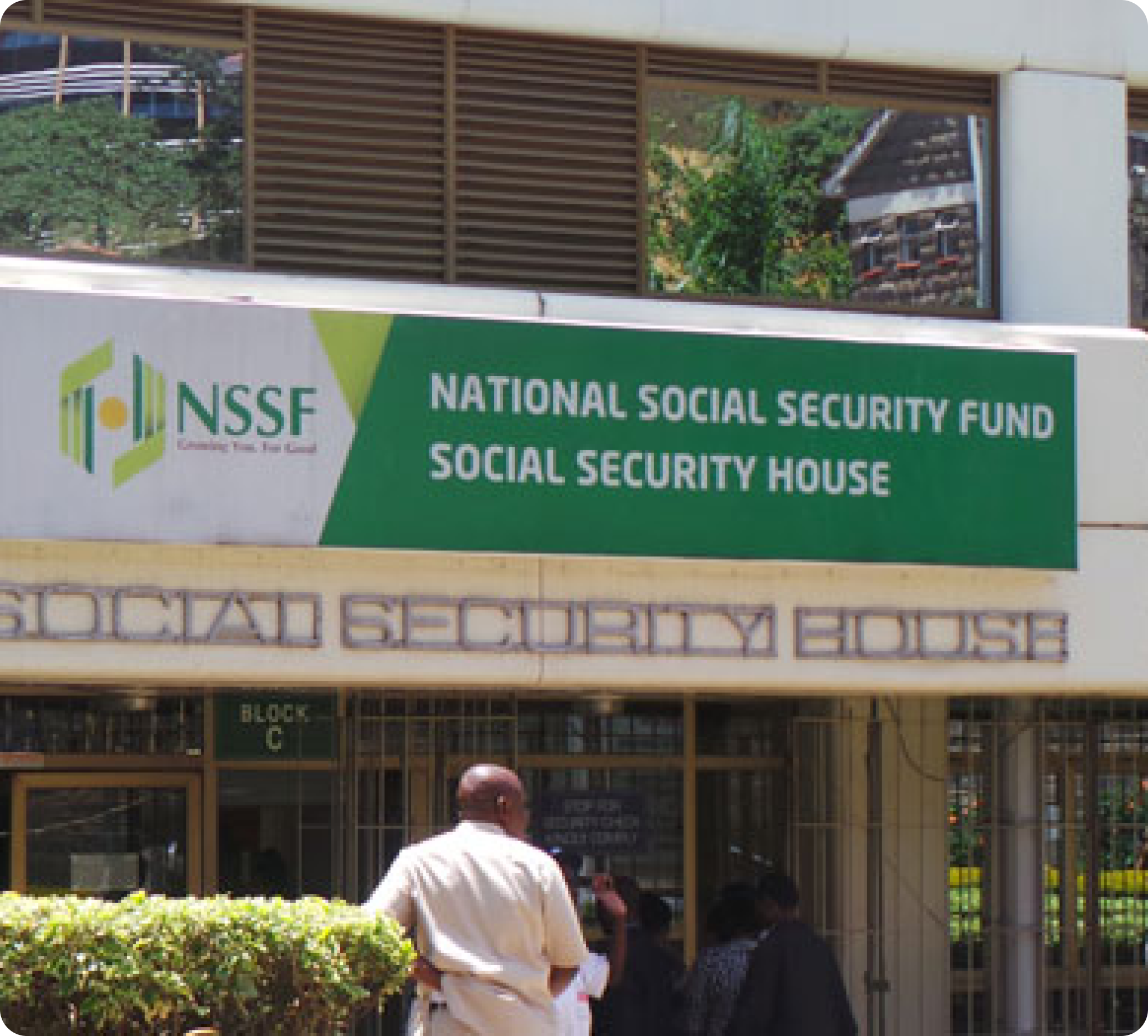
The National Social Security Fund (NSSF) Act of 2013 marked a major shift in Kenya’s pension landscape by moving away from the old flat-rate contribution of KES 200 per month, matched by the employer. Instead, the Act introduced a more robust system where employees contribute 6.0% of their pensionable earnings, with employers matching the same amount. This reform aimed to improve retirement savings adequacy and align Kenya’s pension system with global best practices.

Recognizing the impact such an increase would have on employees and employers, the Act provided for a gradual implementation over five phases, spread across five years. Each phase incrementally increases the pensionable earnings bands used to calculate NSSF contributions. The changes effective 1st February 2026 represent the fourth phase of this rollout.

Under the new rates, the Tier I (Lower Earnings Limit) increases from KES 8,000 to KES 9,000. As a result, the employee contribution rises from KES 480 to KES 540, with the employer matching the same amount. This is an increase from the previous total Tier I contribution of KES 960 to KES 1,080 per month.

For employees earning between KES 9,000 and KES 72,000, the overall NSSF contribution remains unchanged. While Tier I contributions increase by KES 60, Tier II contributions reduce by an equivalent amount, effectively neutralizing the impact on total monthly deductions for this income bracket. This ensures that mid-income earners are not disproportionately affected by the fourth phase of the implementation.


RELATEDPOSTS

Ziidi Trader: can M-PESA finally bring the stock market to very Kenyan?

February 10, 2026

When Sustainable Innovation Struggles to Scale: The Case of KOKO Networks

February 10, 2026

However, employees earning above KES 72,000 will experience a noticeable increase. The Tier II (Upper Earnings Limit) rises significantly from KES 72,000 to KES 108,000. Previously, the maximum Tier II contribution stood at KES 3,840 by the employee and KES 3,840 by the employer. Under the new rates, this increases to KES 5,940 each, bringing the total Tier II contribution to KES 11,880. Consequently, the maximum total NSSF contribution per employee increases from KES 8,640 to KES 12,960 per month.

Overall, the February 2026 changes are designed to further strengthen retirement savings, particularly for higher-income earners, while cushioning lower and middle-income workers from abrupt increases. Employers should also note that the law allows them to contract out of NSSF Tier II and redirect these contributions to approved private pension schemes, offering flexibility in managing retirement benefits for their workforce.


 

Previous Post

DTB expands physical presence with new kilimani branch

Next Post

When a company skips dividends

Faith Ndunda

Faith Ndunda

Related Posts

Pensions

Opting Out of NSSF Tier II Contributions

February 6, 2026
Analysis

Pension fund returns moderate in 2025 as falling interest rates weigh on performance

February 5, 2026
Analysis

What’s new on tax exemption for kenyans earning sh30,000

February 5, 2026
Analysis

Why Money Market Funds still matter

January 27, 2026
Pensions

Why the Two-tiered Structure in NSSF is Important

January 23, 2026
Analysis

NSE bond trades hit record Sh2.7 trillion on investor surge

January 23, 2026

LATEST STORIES

Ziidi Trader: can M-PESA finally bring the stock market to very Kenyan?

February 10, 2026

When Sustainable Innovation Struggles to Scale: The Case of KOKO Networks

February 10, 2026

NSE Enables Direct Share Trading via M-Pesa in Major Shift for Retail Investors

February 10, 2026

Spotify will let users buy physical books in app and use page match to bridge print and audiobook experiences

February 9, 2026

Living Paycheck to Paycheck; Even With a “Good Job”

February 9, 2026

NSSF Takes Sh9.5 Billion Stake in Nairobi–Nakuru Toll Road Project

February 9, 2026

The role of communication in managing expectations

February 9, 2026

Social Media as a tool in financial marketing

February 9, 2026
  • About Us
  • Meet The Team
  • Careers
  • Privacy Policy
  • Terms and Conditions
Email us: editor@thesharpdaily.com

Sharp Daily © 2024

No Result
View All Result
  • Home
  • News
    • Politics
  • Business
    • Banking
  • Investments
  • Technology
  • Startups
  • Real Estate
  • Features
  • Appointments
  • About Us
    • Meet The Team

Sharp Daily © 2024