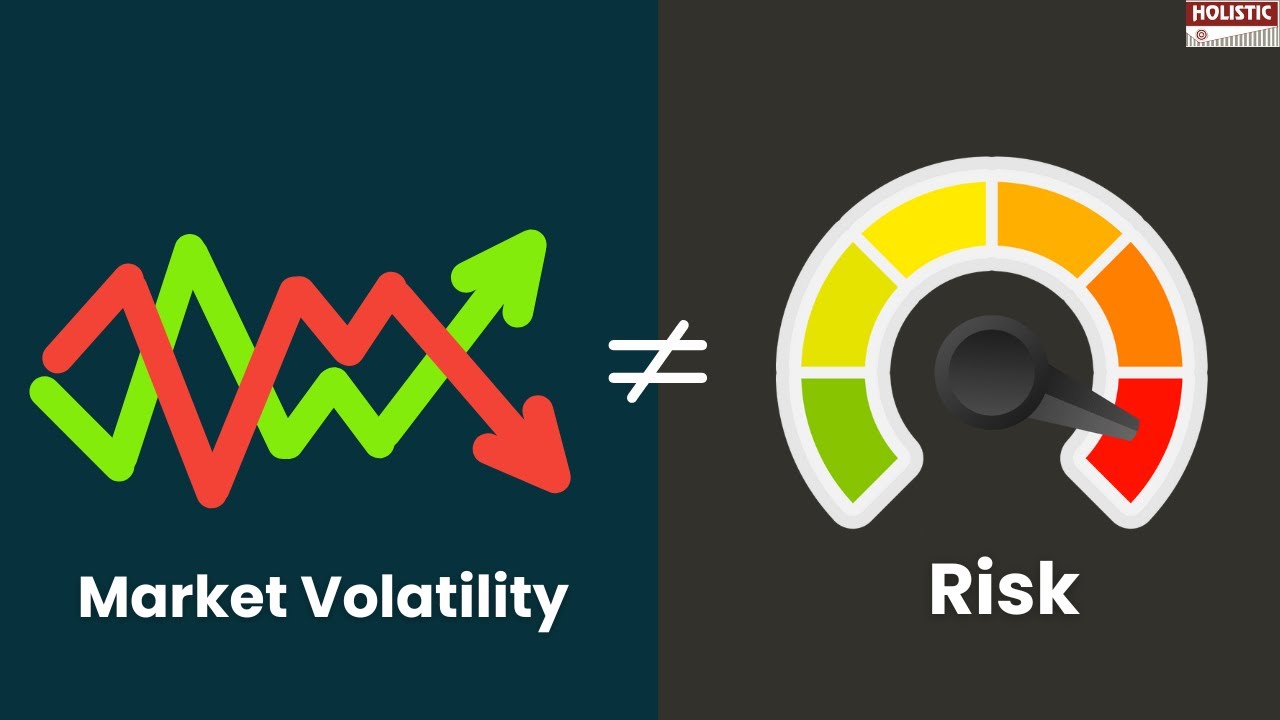
Volatility and risk are frequently mentioned together in discussions about financial markets, yet they represent distinct concepts. Volatility describes the extent to which prices move up and down over time. It focuses on observable changes in market prices and captures how frequently and how sharply those prices fluctuate. Risk, by contrast, relates to uncertainty about outcomes and the possibility that actual results may differ from expectations. While volatility and risk can occur at the same time, they are not equivalent.
Price movements often arise from factors that do not reflect changes in an asset’s underlying condition. Market sentiment, shifts in investor attention, liquidity conditions, or reactions to external events can all influence prices in the short term. These influences may cause prices to vary even when the fundamental attributes of the asset remain unchanged. In such circumstances, volatility reflects variation in market perception rather than deterioration or improvement in underlying value.
Risk is more closely connected to the characteristics that support an asset’s ability to maintain value over time. Elements such as operational stability, financial obligations, competitive position, and governance structures shape the level of uncertainty surrounding future outcomes. These aspects can remain present regardless of whether prices move frequently or remain relatively steady. As a result, an asset may appear stable in terms of price behaviour while still being exposed to meaningful sources of uncertainty beneath the surface.
The difference between volatility and risk becomes clearer when comparing how assets respond across varying conditions. Some assets display frequent price changes without significant alteration to their internal structure or long-term capacity. Others may show limited price movement for extended periods, masking weaknesses that only become visible when conditions change, for instance stocks of large, well-established companies may fluctuate daily due to trading activity even though their business remains stable, while privately held real estate or bonds with fixed terms may show little price movement but could face structural or cash-flow risks over time.. This contrast highlights that volatility describes the pattern of price behaviour, not the causes or implications of that behaviour.


Volatility is therefore a descriptive measure of how prices fluctuate, whereas risk is an interpretive concept tied to the underlying drivers of value and uncertainty. Conflating the two can lead to confusion, as visible price movement does not automatically indicate greater exposure to loss, and apparent calm does not necessarily imply stability. Recognising the distinction allows for clearer analysis of market activity by separating surface-level price dynamics from deeper structural considerations.
By viewing volatility and risk as related but separate ideas, market behaviour can be examined with greater precision. Volatility reflects how prices change, while risk concerns why outcomes may vary. Understanding this distinction supports a more nuanced interpretation of financial markets without relying solely on observable price movements. (Start your investment journey today with the cytonn MMF, call+2540709101200 or email sales@cytonn.com)