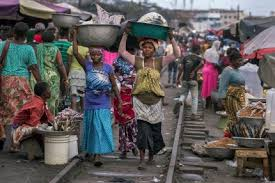
The informal economy describes all economic activities that are not covered by formal regulatory frameworks in the country. Activities under the informal economy include hawkers and roadside vendors, boda bodas and tuk-tuks, domestic workers and casual laborers, small scale farmers and artisans and gig workers. According to the International Labor Organization and the African Development Bank, over 85.0% of total employment in Africa is informal. Moreover, in countries such as the Democratic Republic of Congo and Niger, the informal employment rate exceeds 90.0%.
The reason behind this massive success of the informal economy in Africa include low barriers of entry. Formal businesses require a lot of time and costs to register and acquire licenses of operations. Most entrepreneurs do not have the capital to facilitate the bureaucratic procedures of registering a business therefore they resort to informal businesses which have a low barrier to entry. Second, widespread unemployment and increased population growth are leading to the rise of the informal sector. With the increase in population, the formal job sector is becoming redundant. This forces young people to resort to hustling in markets and also exploring the gig economy to enable them raise their standard of living. Rapid urbanization has outpaced the capacity of cities to provide employment leading to increase in informal sectors in slums. Informal businesses tend to operate on historical community ties. Its transactions are trust based and relationship oriented, which reduces reliance on formal regulatory structures.
Proponents of the informal economy argue that it has a high sectoral shock absorption. During an economic crisis, the informal sector absorbs displaced workers and provides alternative income streams. For instance, during the COVID-19 pandemic, in countries such as Kenya, many laid off workers resorted to hustles such as vegetable vending to survive the economic downturns. The informal sector fosters entrepreneurship and innovation. Informal business owners need to be innovative in how they sell their products to be able to attract more customers. For instance, informal business owners have embraced social media platforms such as Tiktok to be able to promote their products. Informal businesses are highly flexible and they can respond to shifts in market conditions.
However, they face challenges such as limited growth and scalability. Without access to formal finance and regulatory structures, many informal businesses struggle to expand and access new markets. Informal workers do not enjoy benefits such as health insurance or maternity leaves since this might disrupt their livelihoods. This proves that they have a lower quality of life as compared to formal sector workers.
Formalizing the informal economy means supporting it with policies that work for the local entrepreneurs. Such strategies include granting affordable healthcare to informal workers such as Kenya’s SHA programs, establishing legal trading zones with licensing support, and having tailored microloans to cash-based entrepreneurs.
Africa’s informal economy is the real face of African entrepreneurship, where the majority work and survive out of necessity. To have established and inclusive economies, policymakers must treat the informal sector as a foundation to build upon. With supportive policies, Africa’s informal economy could become the greatest economic machine in the 21st century.