Sharp Daily
No Result
View All Result
Thursday, June 18, 2026
  • Home
  • News
    • Politics
  • Business
    • Banking
  • Investments
  • Technology
  • Startups
  • Real Estate
  • Features
  • Appointments
  • About Us
    • Meet The Team
Sharp Daily
  • Home
  • News
    • Politics
  • Business
    • Banking
  • Investments
  • Technology
  • Startups
  • Real Estate
  • Features
  • Appointments
  • About Us
    • Meet The Team
No Result
View All Result
Sharp Daily
No Result
View All Result
Home Features

How tariffs work

Hezron Mwangi by Hezron Mwangi
February 5, 2025
in Features, Investments, Money
Reading Time: 2 mins read
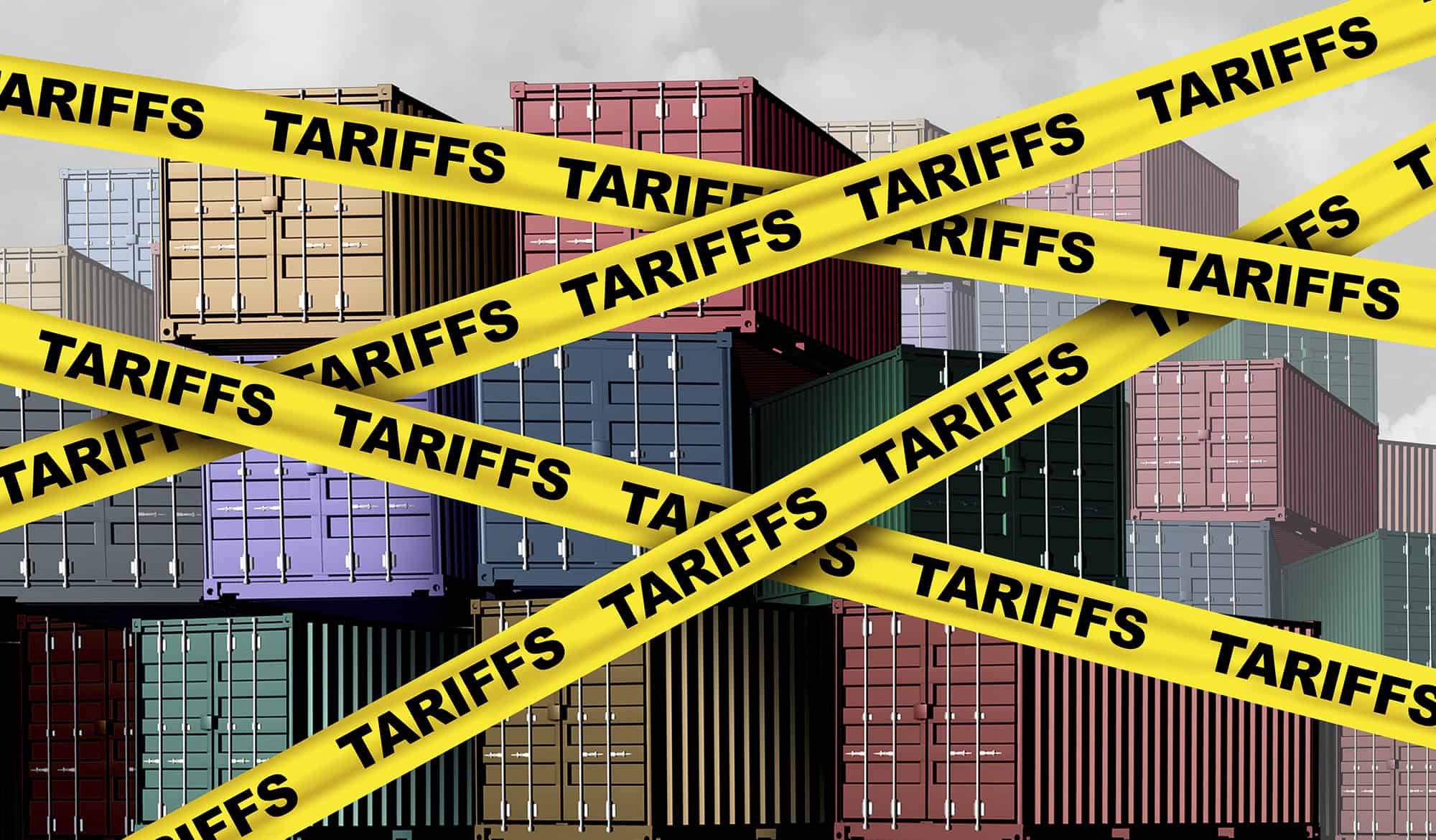
Economic tariffs and government taxation or punative tariff trade policy or duties imposed on imports and exports by a government on imported or exported goods as Protectionism as a 3D illustration.

Economic tariffs and government taxation or punative tariff trade policy or duties imposed on imports and exports by a government on imported or exported goods as Protectionism as a 3D illustration.

Tariffs are taxes imposed by a government on goods and services that are imported into a country. They are used to control the flow of goods across borders, protect local industries, and generate revenue for the government. To understand how tariffs work, let’s break it down using Kenya as an example.

For Example, Kenya is a country that produces its own rice but also imports rice from other countries like Pakistan and Thailand. Let us say that the Kenyan  government wants to ensure that local rice farmers can compete with imported rice, which might be cheaper due to lower production costs in other countries. To protect local farmers, the government imposes a tariff on imported rice. This means that for every bag of rice brought into Kenya from abroad, the importer must pay an extra fee to the government. This fee increases the overall cost of the imported rice, making it more expensive for consumers to buy compared to locally grown rice.

For instance, if a bag of rice from Pakistan costs KES 2,000, and the Kenyan government imposes a 20.0% tariff, the importer will have to pay an additional KES 400 per bag. This means the final price of the imported rice will be KES 2,400. If locally produced rice is sold at KES 2,200 per bag, consumers are more likely to buy the Kenyan rice because it is cheaper. This helps local farmers stay in business and supports the Kenyan economy.

Tariffs can also be used to generate revenue for the government. For example, Kenya imports a lot of vehicles from countries like Japan. If the government imposes a 25.0% tariff on imported cars, it earns money from every car brought into the country. This revenue can then be used to fund public services like roads, schools, and hospitals.


RELATEDPOSTS

China’s silver export policy shift and its global market impact

December 31, 2025

Rooted in Kenya, working for the world

June 11, 2025

However, tariffs can sometimes lead to higher prices for consumers. If Kenya imposes high tariffs on imported electronics, such as smartphones, the cost of these devices may increase significantly. This could make it harder for ordinary Kenyans to afford them.

In summary, tariffs are a tool used by governments to protect local industries, generate revenue, and control trade. While they can benefit local producers, they may also lead to higher prices for consumers. Kenya, like many countries should use tariffs strategically to balance these competing interests and support its economy.


Previous Post

Equity Bank and IFC Launch $20 Million risk-sharing facility for refugees and host communities

Next Post

How real estate investors are navigating Kenya’s land ownership

Hezron Mwangi

Hezron Mwangi

Related Posts

Business

Glovo deepens kenya investment with kSh10 billion commitment by 2030

June 18, 2026
Money

Kenya misses out on World Bank emergency funding as Sh97.1 billion loan awaits approval

June 16, 2026
Banking

CBK moves to expand emergency lending powers as Kenya strengthens banking sector stability

June 15, 2026
Money

Kenya Airways seeks Sh194 Billion to rescue itself from debt crisis

June 15, 2026
Family Bank
Analysis

Family bank receives approval for NSE listing

June 12, 2026
Investments

Kenya’s EV assembly ambition gets a Sh1 Billion boost from Simba Corp’s AVA

June 11, 2026

LATEST STORIES

Glovo deepens kenya investment with kSh10 billion commitment by 2030

June 18, 2026

DStv subscriber base in Kenya falls to 248,053 in first quarter of 2026

June 18, 2026

Family Bank investors set for Sh1.9 billion gain as bank lists on NSE

June 18, 2026

Africa faces fish supply squeeze despite record global production, UN report warns

June 17, 2026

Kenya proposes new shisha rules with fines rising to Sh1 million

June 16, 2026

Digital Identity Infrastructure and Trust in Modern Fintech Systems

June 16, 2026

Data-Driven Lending and Credit Scoring in Digital Finance

June 16, 2026

Kenya misses out on World Bank emergency funding as Sh97.1 billion loan awaits approval

June 16, 2026
  • About Us
  • Meet The Team
  • Careers
  • Privacy Policy
  • Terms and Conditions
Email us: editor@thesharpdaily.com

Sharp Daily © 2024

No Result
View All Result
  • Home
  • News
    • Politics
  • Business
    • Banking
  • Investments
  • Technology
  • Startups
  • Real Estate
  • Features
  • Appointments
  • About Us
    • Meet The Team

Sharp Daily © 2024