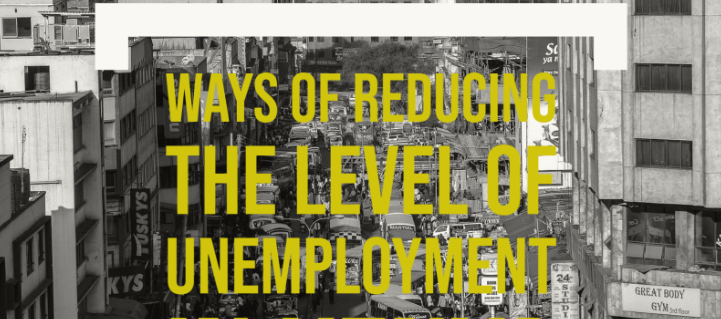
In sub-Saharan Africa, unlike other developing regions, the population is increasingly youthful, prompting a clear imperative to invest in the continent’s youth, given its status as the most youthful population.
As per data from the Kenyan government, 92 percent of the country’s youth possess competencies acquired through formal and informal means yet lack official certification for practice.
The government has consistently allocated resources and conducted campaigns to reshape public perceptions of technical and vocational education and training (TVET) institutions.

Nevertheless, a segment of young individuals have acquired invaluable skills through hands-on experiences, apprenticeships, and community mentorship.
Education CS Ezekiel Machogu underscores the significance of recognizing informally acquired skills. He proposes achieving this through the harmonization of skills via the Recognition of Prior Learning (RPLR) and micro-credentials, aligned with the competency-based education and training (CBET) curriculum.
Experts in the education sector, led by the Kenya National Qualifications Authority (KNQA), have scrutinized the Recognition of Prior Learning (RPL) policy framework, differentiated unit cost, and submitted their report to the government.
This initiative aims to facilitate the vetting and certification of young people, particularly in the informal sector, who excel in skills such as plumbing and masonry. The process will be coordinated by the Kenya National Qualifications Authority (KNQA).
In August of this year, the Presidential Working Party on Education Reform released a report strongly recommending the implementation of the Recognition of Prior Learning (RPL) Policy and Credit Accumulation and Transfer Systems (CATS) in Kenya.
According to Dr. Alice Kande, Acting Director-General and CEO of KNQA, this framework will allow for the recognition of skills through competence-based certificates, enhancing the ability of individuals to participate in various economic opportunities.
Dr. Kande emphasizes that RPL serves as a remedy for past inequalities, fostering improved employability, mobility, progression, and access within education, training, and development career paths.
Section 8(1)(K) of the Kenya National Qualifications Framework Act mandates the authority to promote lifelong learning and recognize skills acquired through diverse methods, whether formally or informally.
The authority acknowledges that not all skills are acquired in traditional classroom settings, citing mechanics, technicians, plumbers, and tailors as examples of individuals with exceptional skills obtained in the course of their work.
Dr. Kande underscores the need to review the policy to align it with global and national agendas, emphasizing that the realignment task was undertaken to integrate policies seamlessly with the broader vision of the government.