Sharp Daily
No Result
View All Result
Thursday, May 21, 2026
  • Home
  • News
    • Politics
  • Business
    • Banking
  • Investments
  • Technology
  • Startups
  • Real Estate
  • Features
  • Appointments
  • About Us
    • Meet The Team
Sharp Daily
  • Home
  • News
    • Politics
  • Business
    • Banking
  • Investments
  • Technology
  • Startups
  • Real Estate
  • Features
  • Appointments
  • About Us
    • Meet The Team
No Result
View All Result
Sharp Daily
No Result
View All Result
Home News

The fragility of clean cooking solutions

Susan by Susan
February 9, 2026
in News
Reading Time: 2 mins read

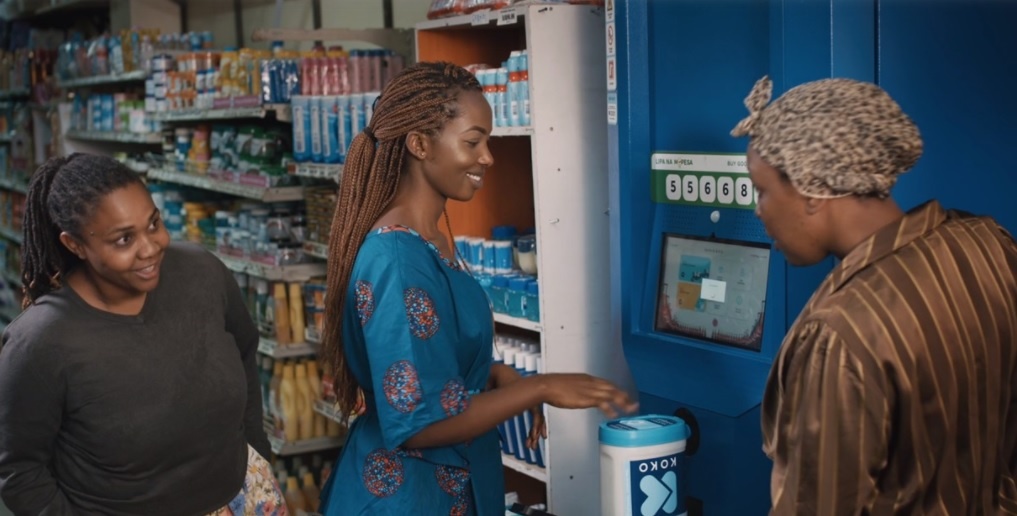
KOKO Networks entered Kenya’s energy market with a model that blended technology, affordability, and environmental ambition. By distributing bioethanol cooking fuel through smart dispensers integrated with mobile money, the company offered households an alternative to charcoal and kerosene while promising lower health and environmental costs. The model expanded rapidly across urban and peri-urban areas, embedding itself in daily consumption patterns and positioning clean cooking as an everyday utility.

At the core of KOKO’s operations was reliance on carbon credit revenues to subsidize fuel prices. Income from international carbon markets was intended to bridge the gap between commercial pricing and household affordability. This made regulatory approval not supportive but fundamental. When authorization to trade carbon credits stalled amid concerns over ownership, verification, and revenue sharing, the company’s revenue base weakened. Without this stream, operating costs became difficult to sustain, eventually pushing the firm to halt operations and file for insolvency.

The immediate economic effects were felt at the household level. An estimated 1.5 million users who had shifted to ethanol were abruptly forced to return to traditional fuels, reversing gains in cost predictability and indoor air quality. For many low-income households, cooking fuel choices are not ideological but financial, and disruption in supply alters consumption behavior quickly. The collapse therefore illustrates how energy transitions remain fragile when affordability depends on external financing mechanisms.

Employment and informal enterprise were also affected. KOKO’s distribution network relied on agents, technicians, and retail-linked operators whose incomes were tied to daily fuel sales. When the network shut down, these livelihoods disappeared almost overnight, reinforcing how platform-based infrastructure, once scaled, becomes economically systemic. More broadly, the episode highlights the risks embedded in climate-linked commercial models operating within uncertain policy environments. Carbon markets require stable rules, predictable approval processes, and credible verification systems. Where these are unclear or contested, even well-designed technologies struggle to translate environmental value into financial sustainability.


RELATEDPOSTS

Cable Experts to acquire 68% stake in East African Cables from TransCentury

May 20, 2026
John Mbadi, Kenya's treasury secretary, during an interview in Nairobi, Kenya, on Wednesday, Aug. 20, 2025. Kenya is in talks with China to convert dollar-denominated debt the East African nation owes its biggest bilateral lender to yuan and extend the repayment period, Mbadi said. Photographer: Kang-Chun Cheng/Bloomberg via Getty Images

Finance bill 2026: Key changes set to shape kenya’s economy

May 20, 2026

KOKO’s exit also carries implications for Kenya’s clean-energy agenda. The company’s technology aligned with national goals on reducing deforestation and improving public health. Its collapse exposes the gap between policy ambition and execution capacity.
Previous Post

Road infrastructure and Kenya’s economic trajectory

Next Post

KRA reinstates Nil returns amid compliance drive and system enhancements

Susan

Susan

Related Posts

John Mbadi, Kenya's treasury secretary, during an interview in Nairobi, Kenya, on Wednesday, Aug. 20, 2025. Kenya is in talks with China to convert dollar-denominated debt the East African nation owes its biggest bilateral lender to yuan and extend the repayment period, Mbadi said. Photographer: Kang-Chun Cheng/Bloomberg via Getty Images
Analysis

Finance bill 2026: Key changes set to shape kenya’s economy

May 20, 2026
News

The relationship between interest rates and equity market performance

May 20, 2026
News

The impact of exchange rate volatility on investment decisions

May 19, 2026
Entertainment

The Spotify “Disco Ball” Branding Stunt

May 18, 2026
News

The influence of commodity prices on investment markets

May 18, 2026
News

Safaricom’s fuel strategy highlights growing energy risks facing Africa’s digital economy

May 15, 2026

LATEST STORIES

Cable Experts to acquire 68% stake in East African Cables from TransCentury

May 20, 2026
John Mbadi, Kenya's treasury secretary, during an interview in Nairobi, Kenya, on Wednesday, Aug. 20, 2025. Kenya is in talks with China to convert dollar-denominated debt the East African nation owes its biggest bilateral lender to yuan and extend the repayment period, Mbadi said. Photographer: Kang-Chun Cheng/Bloomberg via Getty Images

Finance bill 2026: Key changes set to shape kenya’s economy

May 20, 2026

The relationship between interest rates and equity market performance

May 20, 2026

The impact of exchange rate volatility on investment decisions

May 19, 2026

Equity Group Holdings move to extend its footprint across Southern Africa

May 19, 2026

The Spotify “Disco Ball” Branding Stunt

May 18, 2026

Court to decide on Kenya’s Sh204 billion Safaricom stake sale

May 18, 2026

The influence of commodity prices on investment markets

May 18, 2026
  • About Us
  • Meet The Team
  • Careers
  • Privacy Policy
  • Terms and Conditions
Email us: editor@thesharpdaily.com

Sharp Daily © 2024

No Result
View All Result
  • Home
  • News
    • Politics
  • Business
    • Banking
  • Investments
  • Technology
  • Startups
  • Real Estate
  • Features
  • Appointments
  • About Us
    • Meet The Team

Sharp Daily © 2024