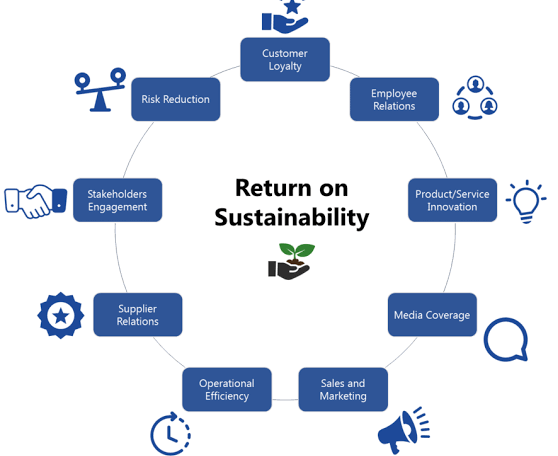
Sustainability is becoming an increasingly important component of corporate strategy as businesses seek to balance environmental and social responsibilities with long-term financial performance. Rather than treating sustainability as a standalone corporate initiative, many organizations are embedding it within their business models to improve operational efficiency, strengthen risk management and create long-term shareholder value. This shift is also changing how investors, regulators and other stakeholders assess corporate performance, placing greater emphasis on the financial impact of sustainability-related activities.
The introduction of the IFRS Sustainability Disclosure Standards (IFRS S1 and IFRS S2) has accelerated this transition by establishing a globally consistent framework for sustainability reporting. According to the IFRS Foundation, organizations are required to disclose sustainability-related information that is material to their financial performance and future prospects. The standards require companies to explain how sustainability-related risks and opportunities influence their governance structures, business strategy, financial performance, cash flows and long-term enterprise value, rather than reporting environmental initiatives as separate corporate responsibility activities.
This integrated approach encourages businesses to evaluate sustainability initiatives based on measurable financial outcomes. For example, investments in renewable energy projects should be assessed by considering implementation costs, operating cost savings and their contribution to long-term profitability. Similarly, environmental initiatives such as tree-planting programmes become more meaningful when linked to measurable outcomes, including carbon emission reduction targets, regulatory compliance, supply chain resilience and operational efficiency. Measuring sustainability alongside financial performance enables organizations to demonstrate how these initiatives contribute to business growth rather than simply fulfilling environmental obligations.
Integrating sustainability into corporate strategy also enhances transparency and decision-making. According to guidance issued by the International Sustainability Standards Board (ISSB), investors increasingly require consistent, comparable and decision-useful sustainability information when assessing long-term business risks and investment opportunities. Reporting sustainability information alongside financial performance enables stakeholders to better understand how environmental and social factors influence profitability, resilience and future growth prospects. This integrated reporting approach improves comparability across companies while supporting more informed capital allocation decisions.


A stronger connection between sustainability and financial performance also helps reduce the risk of greenwashing. When organizations support sustainability commitments with measurable performance indicators and quantifiable financial outcomes, investors and other stakeholders can more effectively evaluate whether environmental and social initiatives are delivering tangible business results. This strengthens corporate accountability while improving confidence among investors, regulators, customers and the broader market.
The growing emphasis on sustainability reporting reflects a broader shift in corporate governance, where environmental and social considerations are increasingly viewed as important drivers of long-term competitiveness rather than separate compliance obligations. Businesses that successfully integrate sustainability into strategic planning are better positioned to manage emerging risks, respond to evolving regulatory requirements and capitalize on new market opportunities.
Overall, sustainability reporting is evolving beyond traditional corporate responsibility into a core component of business performance. Through the implementation of IFRS S1 and IFRS S2, companies are increasingly linking sustainability initiatives to measurable financial outcomes, improving transparency, strengthening investor confidence and supporting long-term value creation. As global reporting standards continue to evolve, integrating sustainability with corporate strategy is expected to become an increasingly important element of business performance assessment.