Sharp Daily
No Result
View All Result
Friday, March 13, 2026
  • Home
  • News
    • Politics
  • Business
    • Banking
  • Investments
  • Technology
  • Startups
  • Real Estate
  • Features
  • Appointments
  • About Us
    • Meet The Team
Sharp Daily
  • Home
  • News
    • Politics
  • Business
    • Banking
  • Investments
  • Technology
  • Startups
  • Real Estate
  • Features
  • Appointments
  • About Us
    • Meet The Team
No Result
View All Result
Sharp Daily
No Result
View All Result
Home News

Kenya’s public wage bill growth slows amid rising expenditure approvals

Brian Murimi by Brian Murimi
August 9, 2024
in News
Reading Time: 2 mins read

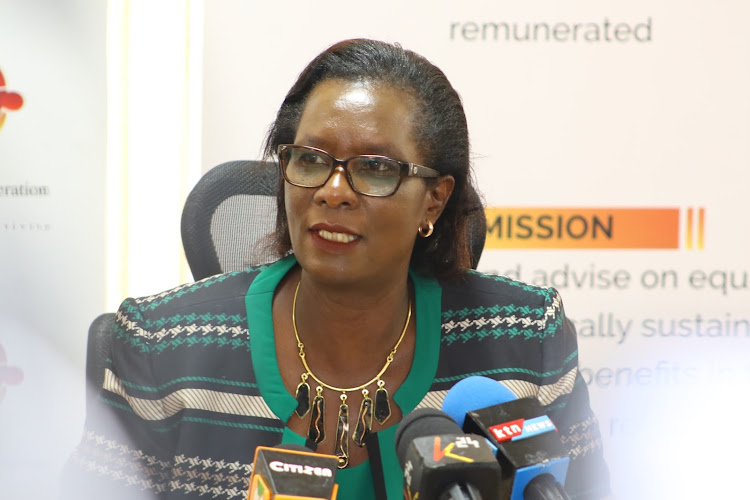
Kenya’s Salaries and Remuneration Commission (SRC) has reported a slowdown in public wage bill growth, even as it approved a significant increase in expenditure requests from public institutions in the fiscal year 2023/2024.

According to the SRC’s Fourth Quarter Wage Bill Bulletin released on Friday, the commission approved requests worth KES 32.21 billion in FY 2023/2024, representing 61.92 per cent of the total KES 52.02 billion requested. This marks a substantial increase from the KES 4.27 billion approved in the previous fiscal year.

The bulletin reveals that the wage bill to nominal GDP ratio is estimated to decrease to 6.92 per cent in FY 2023/2024, down from 7.67 per cent in FY 2021/2022. Similarly, the wage bill to ordinary revenue ratio is projected to decline to 46.23 per cent in FY 2023/2024 from 47.06 per cent in FY 2021/2022.

Despite these improvements, county governments continue to face challenges in managing their wage bills. The bulletin states, “The county government expenditure on the wage bill, as a share of revenue, shows that on average, the ratio has remained above the PFM Regulations, 2015, of not more than 35 per cent.”

RELATEDPOSTS

KNBS: Informal economy fuels Kenya’s employment growth, wage gap widens

May 21, 2024

At the national level, the personnel emoluments as a share of total expenditure are estimated to decrease from 25.51 per cent in the third quarter to 23.54 per cent in the fourth quarter of FY 2023/2024. However, the wage bill to ordinary revenue ratio for the national government is expected to increase from 29.92 per cent to 34.73 per cent in the same period, approaching the legal threshold of 35 per cent.

The SRC received 79 requests from public institutions in FY 2023/2024, with the majority (79 per cent) relating to allowances and benefits. Collective Bargaining Agreements (CBAs) accounted for 11 per cent of the requests, while bonus and salary review requests made up 6 per cent and 4 per cent, respectively.

The commission noted a significant approval in the fourth quarter, stating, “The high percentage of requests approved by SRC as a share of requests received from public institutions in the fourth quarter was mainly attributed to SRC’s advice on Collective Bargaining Agreements (CBA) for Universities Academic Staff Union (UASU), Kenya University Staff Union (KUSU), and the Kenya Union of Domestic, Hotels, Educational Institutions, Hospitals and Allied Workers (KUDHEIHA) for the 2021-2025 cycle.”

While the total wage bill continues to grow, the rate of increase has moderated. The bulletin reports, “The total wage bill grew at an average rate of 9.15 per cent per annum between FY 2017/2018 and 2021/2022, and estimated to continue growing, but at slightly lower rates of 6.36 and 6.37 per cent in FY 2022/2023 and 2023/2024, respectively.”

Previous Post

Equity Bank’s scholarship program sends 113 African scholars to global universities

Next Post

Kenyan employers demand tax clarity as court ruling sparks confusion

Brian Murimi

Brian Murimi

Brian Murimi is a communications and advocacy professional with a focus on innovation, policy and continental development in Africa. A former journalist, he now works at the intersection of knowledge, strategy, and pan-African institution building.

Related Posts

News

Why Risk-Based Pricing Is Replacing Central Bank Rate Lending in Modern Banking

March 13, 2026
News

Building a safety net: How Kenyans can start an emergency fund from scratch

March 13, 2026
News

KRA turns to data intelligence tool to track tax heats across digital platforms

March 13, 2026
News

Billions lost as civil servants steal Sh2.45 Billion from public coffers

March 13, 2026
News

Kenya’s rising treasury bill demand: What it signals for investors

March 13, 2026
News

Kenya’s renewed turn to Chinese loans signals a new phase in infrastructure financing

March 12, 2026

LATEST STORIES

Why Risk-Based Pricing Is Replacing Central Bank Rate Lending in Modern Banking

March 13, 2026

Building a safety net: How Kenyans can start an emergency fund from scratch

March 13, 2026

WRC Safari Rally Revs Up Kenya’s Economy with Billions in Boost for Tourism and Local Businesses

March 13, 2026

KRA turns to data intelligence tool to track tax heats across digital platforms

March 13, 2026

Billions lost as civil servants steal Sh2.45 Billion from public coffers

March 13, 2026

Rethinking VAT enforcement in Kenya

March 13, 2026

Kenya’s rising treasury bill demand: What it signals for investors

March 13, 2026

YouTube introduces 30 second unskippable ads on TV app

March 13, 2026
  • About Us
  • Meet The Team
  • Careers
  • Privacy Policy
  • Terms and Conditions
Email us: editor@thesharpdaily.com

Sharp Daily © 2024

No Result
View All Result
  • Home
  • News
    • Politics
  • Business
    • Banking
  • Investments
  • Technology
  • Startups
  • Real Estate
  • Features
  • Appointments
  • About Us
    • Meet The Team

Sharp Daily © 2024