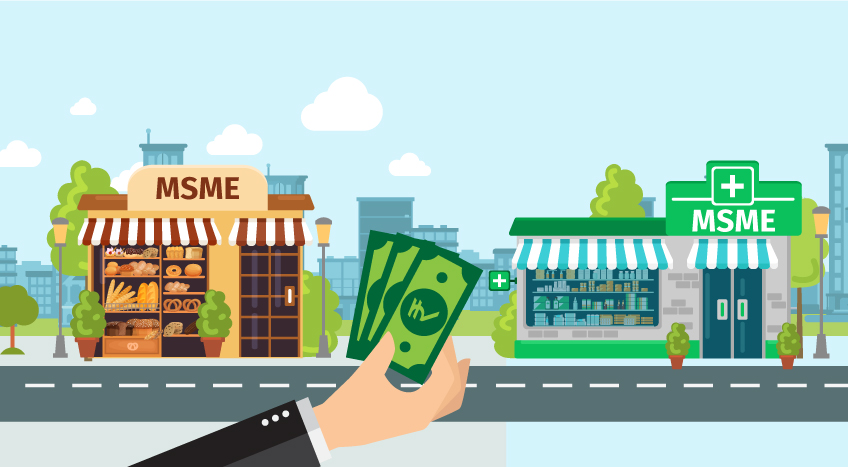
In August 2023, the Central Bank of Kenya’s (CBK) FinAccess MSE Tracker Survey shed light on a growing reluctance among micro and small enterprises (MSMEs) to extend credit to their customers.
This trend could potentially result in a shortage of working capital and business closures. According to the report, the percentage of businesses providing consumer credit declined from 68.5% in October 2022 to 61.1% in June 2023. Notably, female-owned businesses exhibited a higher inclination to offer consumer credit at 63.8%, as opposed to male-owned businesses at 57.6% in June 2023.
The FinAccess MSE Tracker collects data from owners of micro and small enterprises, whose businesses constitute their primary source of income. Among the surveyed respondents, 72.6% reported that their businesses remained operational, while 27.4% had ceased operations. The primary reason cited by 46.1% of those who closed down their businesses was a lack of working capital. This was followed by issues such as insufficient demand (24.4%) and owner illnesses (6.9%), which rendered them incapable of running their establishments.
The challenge of inadequate working capital was a significant concern for both female and male-owned businesses, with rates of 47.6% and 43.1%, respectively. The survey emphasized that nearly 30% of businesses had closed, while the proportion of operational businesses had remained relatively stable, with 72.6% still operational in June 2023, compared to 71.6% in October 2022.


The survey underscores the need to investigate and address the phenomenon of businesses starting, operating for a time, and then shutting down. Among those whose businesses had closed, 30% reported seeking assistance from family or friends for grants, with no intention of repayment. Approximately 19% used their personal savings to salvage their livelihoods, while 17% resorted to loans from their chamas (informal savings groups).
Regarding the reopening of closed businesses, the survey indicates that 51.7% of affected entrepreneurs plan to reopen the same business within the next 12 months, while 23.7% are considering starting a different venture. However, 24.6% have no intentions of reopening or starting a new business in the next 12 months. For closed businesses to reopen, the survey suggests that 32.7% of respondents would require between Kshs 20,001 to Kshs 50,000, while 16.1% would need between Kshs 10,001 to Kshs 20,000, and 16.6% would need more than Kshs 100,000. The closure of businesses also leads to a reduced supply of goods and services on credit by suppliers.
In comparison to October 2022, the survey found that trade credit extended to businesses had decreased by 6.1% in June 2023, down from 36.7%. MSEs encounter various challenges, including erratic cash flows due to the high cost of doing business, which can adversely affect their profitability and market connections, ultimately limiting their growth.
These businesses often resort to loans to stay afloat, but persistently challenging economic conditions lead to loan defaults, including late payments, missed payments, or payments below the expected amount. According to business owners, the most pressing challenges include increased input costs (high supply costs), customers delaying payments, and heightened competition.