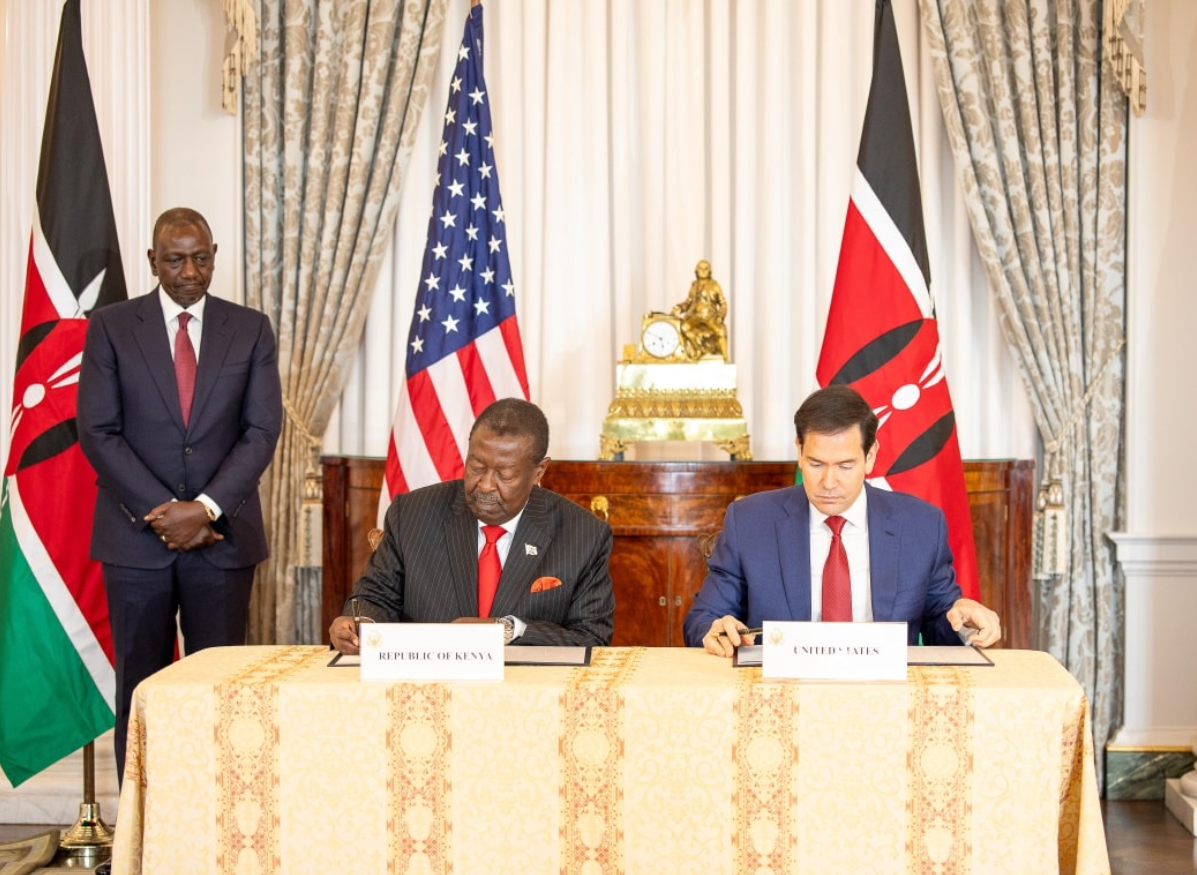
Kenya on 4 December 2025 signed a landmark government to government health agreement with the United States, becoming the first African country to operationalize the new U.S. global health cooperation model. The signing ceremony took place in Washington, D.C., during President William Ruto’s working visit.
Speaking after the signing, President Ruto said the pact represents “a significant step toward a health system that is efficient, accountable and responsive to the needs of every Kenyan.” He added that Kenya is committed to “ensuring every dollar invested delivers measurable impact.”
U.S. officials described the deal as part of a broader shift toward bilateral partnerships intended to strengthen national systems directly rather than through external intermediaries.
Key components of the health pact
The agreement, which will run for five years, outlines a clear roadmap for collaboration across Kenya’s national health institutions. It emphasizes long-term system strengthening, sustainability and transition of donor-supported programs into full national control.
Key focus areas include:


-
Universal Health Coverage (UHC): Expanding access to affordable and quality healthcare services nationwide.
-
Health workforce transition: Gradual absorption of donor-supported health personnel into the national payroll by 2028.
-
Health infrastructure upgrade: Modernization of equipment and expansion of hospitals to improve service delivery.
-
Disease surveillance and preparedness: Enhanced monitoring and emergency response systems to manage outbreaks effectively.
-
Supply chain and commodity management: Kenya progressively taking over procurement and distribution of medical commodities.
At the signing event, Kenya’s delegation emphasized readiness to implement the reforms. “This framework gives us the tools to strengthen our institutions and build resilience for future generations,” a senior Kenyan official said.
Significance and expected impact
The agreement is being seen as a milestone in Kenya’s effort to reduce dependency on externally managed health programs. By shifting to a direct government-to-government model, the pact aims to streamline funding, improve transparency and ensure investments strengthen national systems.
U.S. representatives noted that the partnership is “designed to support countries that demonstrate readiness and strong governance structures.” The pact is also expected to provide a blueprint for similar bilateral health agreements with other nations.
For Kenya, the framework aligns with its long-term vision for health sovereignty, with the goal of managing all core health programs using national resources and systems by the early 2030s.
Challenges on the horizon
Despite the enthusiasm, analysts say the agreement places significant responsibility on Kenya. To sustain the transition, the government will be required to increase its domestic health budget annually and strengthen institutional governance, procurement systems and accountability mechanisms.
There are also concerns about equitable distribution of resources. Counties with historically limited health infrastructure will need targeted investment to ensure national uniformity.
A senior health economist observed that “the success of this pact will depend less on how it starts and more on Kenya’s ability to maintain funding discipline and transparency over the next decade.”
READ MORE