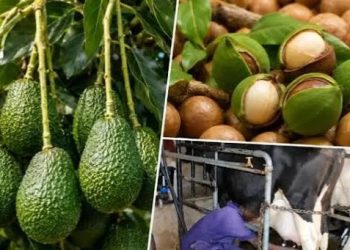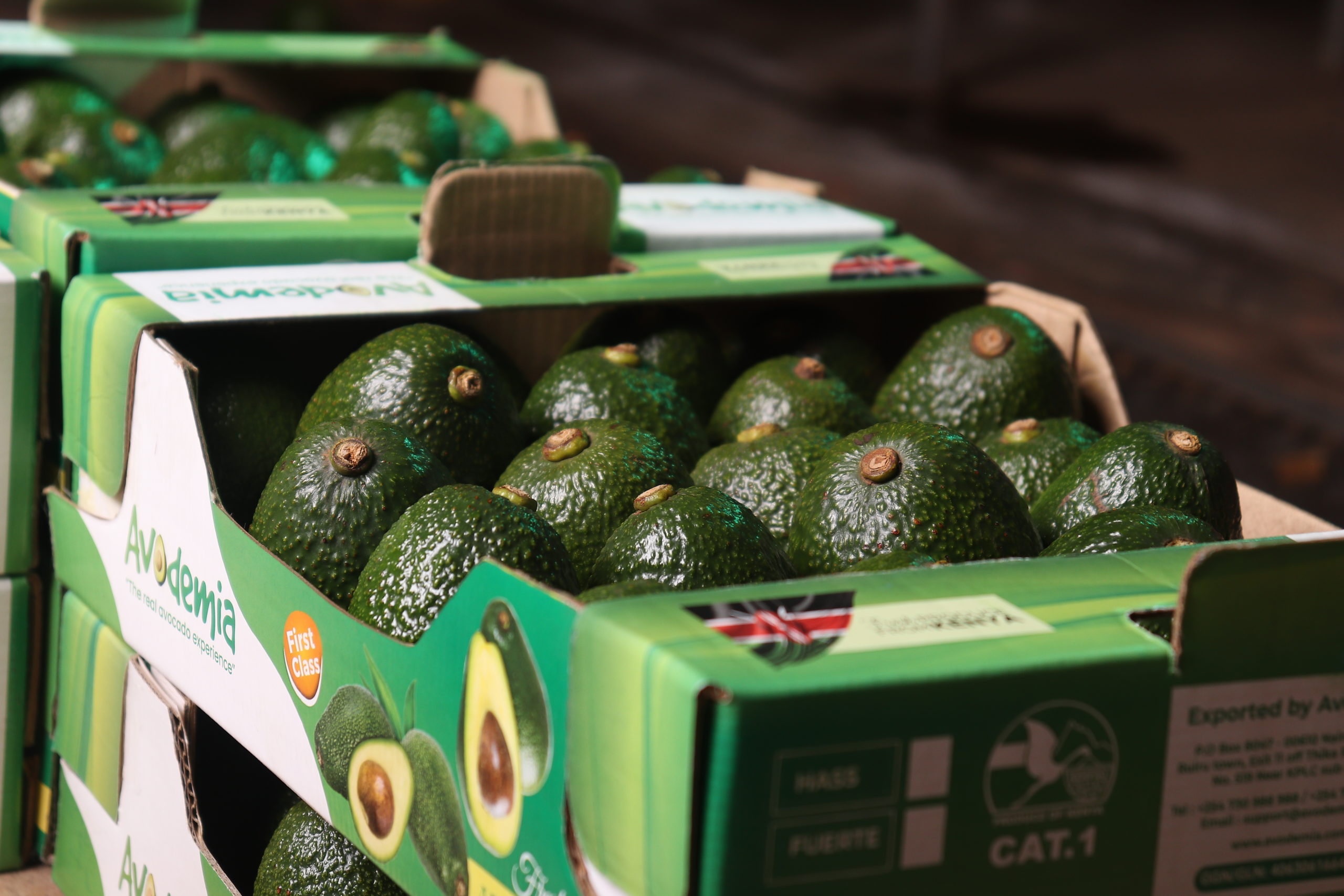
Avocado farmers in Kenya can now breathe a sigh of relief with the state lifting a four-month ban on exports of the fruit. Business will resume in two weeks, after suspension imposed by the Agricultural Food Authority (AFA)
The Horticultural Crops Directorate, established by the Agriculture and Food Authority Act of 2013 banned avocado exports by sea in November last year citing findings behind a survey conducted to ascertain the maturity of avocados in key production zones as the reason for the ban.
Kenya’s avocado exports, notably the Hass, Fuerte, Pinkerton, and Jumbo varieties, are pivotal to the country’s economy, often referred to as the ‘green gold’ of the future.
Avocado export revenues surpassed KES 20 billion last year, primarily to European and Middle Eastern nations, thereby constituting a substantial source of foreign exchange income for Kenya.


However, the sea exports the four varieties will remain restricted to size code 20 (184 grams) until the open export window begins.
The government temporarily halted the export of Hass, Pinkerton, Fuerte, and Jumbo avocado varieties by sea. Instead, it decided to utilize air transport for limited quantities to ensure that only ripe fruit is exported, thereby avoiding the shipment of unripe produce that had previously damaged Kenya’s image in global markets.
The decision to lift the suspension followed avocado field surveys conducted by the AFA between January 7 and 12, to assess the maturity and volume of fruit in key production areas across the country.
AFA acting Director-General Christine Chesaro stated that just a month ago, there was a shortage of fruit, which prompted the extension of restrictions on avocado shipments by sea. However, recent evaluations have indicated that there is now an adequate supply of ripe fruit on farms, meeting the necessary export volumes.
“All export produce is subject to inspection by AFA-HCD inspectors. Exporters are required to apply for inspection at least three days prior to shipment,” read a memo dated February 14 to all avocado traders.
Avocado exporters must submit a list of their Horticultural Produce Marketing Agents (HPMAs) or suppliers by February 26. The directive underscores the importance for avocado traders to oversee both production and post-production activities to ensure adherence to regulatory and market standards.
AFA has imposed strict measures, including penalties, on exporters or their agents found transporting avocados without crates or in open pick-up trucks in contravention of the Horticultural Regulations.
Despite facing hurdles such as smuggling attempts and market price fluctuations, Kenya has emerged as a significant player in avocado exports, surpassing South Africa in this sector. The rise of local cottage industries dedicated to extracting oil from avocados has further bolstered Kenya’s burgeoning avocado industry.