The Kenyan government must shift from a predominantly reactive stance to proactive, anticipatory strategies in addressing recurrent droughts, particularly as the current crisis threatens millions in arid and semi-arid lands (ASAL).
Kenya is grappling with a deepening drought, driven by consecutive failed rainy seasons, including below-average October-December 2025 short rains. According to the National Drought Management Authority (NDMA), 23 of the country’s 47 counties now face acute food shortages, with Mandera in the “alarm” phase and others such as Turkana, Wajir, Garissa, Marsabit, Tana River, Kilifi, Kitui, Kwale, Kajiado and Isiolo in “alert.” An estimated 2.1 million to 2.5 million people in ASAL regions are projected to face crisis-level food insecurity through January 2026 and potentially beyond if rains remain poor.
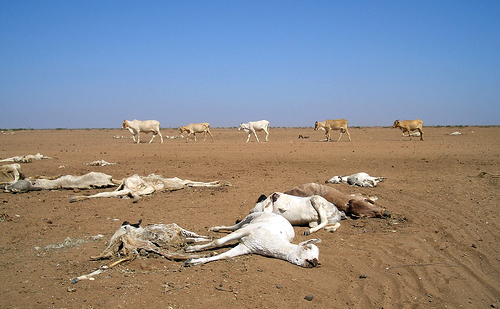
The impacts are severe and multifaceted. Livestock, the backbone of pastoralist wealth, are dying in large numbers amid pasture and water scarcity, with market values plummeting. Households trek over 5 kilometers for water from boreholes, heightening risks of waterborne diseases. Crop failures and soaring staple prices have eroded purchasing power, pushing families to markets earlier in lean seasons. Malnutrition hits hardest among pregnant and breastfeeding mothers and children under 5. Resource competition risks escalating into conflicts, while coping mechanisms such as early marriages and gender-based violence rise.
The government’s response has included activating national and county drought committees and disbursing more than Kshs 6 billion in the past month for food distribution, water trucking, medical supplies and livestock support. Deputy President Kithure Kindiki announced a commitment to allocate an additional Kshs 4 billion monthly. Humanitarian partners are scaling interventions, though funding gaps and insecurity constrain efforts.

These measures, while necessary, exemplify a reactive approach: funds flow after conditions deteriorate to crisis levels. Kenya’s drought-prone ASAL regions, covering much of the country, experience shocks with predictable seasonality and climate trends amplified by global warming. Yet responses often activate only when human suffering is evident, leading to higher costs, greater loss of life and livelihoods, and repeated cycles of emergency aid.
A proactive framework would prioritize prevention and early action. Kenya already has foundations: the NDMA’s drought early warning bulletins, the Integrated Food Security Phase Classification (IPC) projections, and elements of anticipatory action roadmaps developed with partners like ICPAC and others. These systems forecast risks weeks or months ahead using vegetation indices, rainfall predictions and impact modeling.
To build on this, the government should:
- Fully integrate and fund anticipatory action protocols, triggering pre-drought interventions (such as destocking livestock at viable prices, prepositioning feed and water, or cash transfers) when early warning thresholds are met, rather than waiting for “alarm” classifications.
- Invest heavily in resilient infrastructure: Expand water harvesting, boreholes with solar power, drought-resistant seeds and fodder banks in high-risk counties. Climate-smart agriculture and rangeland restoration could reduce vulnerability before crises peak.
- Strengthen community-level early warning dissemination, ensuring alerts reach pastoralists in local languages via radio, mobile networks or trusted leaders, empowering timely decisions like migration or sales.
- Secure dedicated, multi-year funding for resilience-building outside emergency budgets, bridging the current monthly shortfalls noted by officials and partners.
- Enhance coordination between national and county governments, NDMA, and humanitarian actors to avoid duplication and ensure proactive plans are localized.
Reactive firefighting drains resources and perpetuates dependency. Proactive investment yields dividends: reduced humanitarian needs, preserved livelihoods and stronger resilience against worsening climate extremes. Kenya’s leaders have the tools and recent commitments to pivot. The question is whether political will matches the urgency of the millions facing hunger and hardship in the ASAL heartlands.