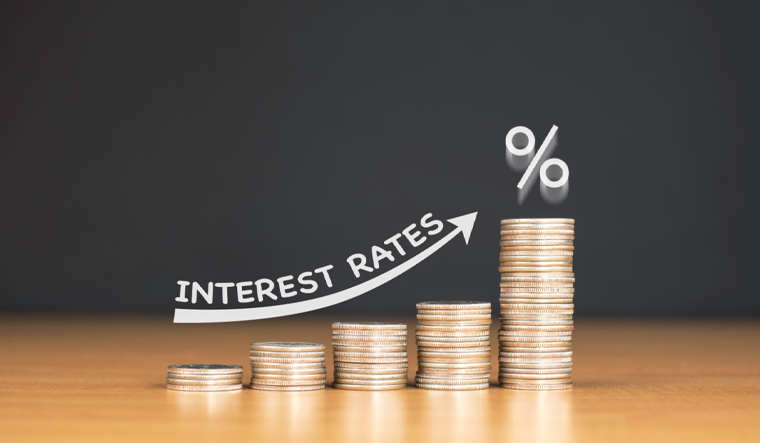
Kenya experienced a noteworthy surge in interest rates in 2023, as the 91-day paper rates escalated by 651.4 basis points, reaching 15.9% from 9.4% at the commencement of the year.
This escalation was attributed to heightened government borrowing requirements and restricted access to international markets, compelling an increase in domestic borrowing.
Simultaneously, Kenya’s credit ratings witnessed a decline, as Fitch, Moody’s, and S&P Global shifted the country’s outlook from stable to negative. Liquidity challenges and limited access to global markets, coupled with an impending Eurobond maturity of USD 2.0 billion in June 2024, were cited as reasons for the downgrades.
These rating adjustments diminished Kenya’s capacity to secure more affordable international loans, prompting domestic investors to demand higher yields.

Despite a decade of relatively stable yields on government papers, averaging 8.7% on the 91-day paper, 2015 and 2016 experienced heightened volatility. In October 2015, the 91-day paper reached a peak of 22.5%, driven by the Central Bank of Kenya’s stringent monetary policy, which elevated the Central Bank Rate (CBR) from 8.5% to 10.0% in June 2015 to anchor inflation expectations and curb demand pressures.
The persistent rise in yields primarily emanates from a consistent fiscal deficit, projected to be 5.4% of the GDP in FY 2023/24, necessitating ongoing government borrowing. Additionally, investors continue to assign a higher risk premium to the country, influenced by concerns about debt sustainability and currency depreciation.
The Kenyan macroeconomic environment remains subdued, marked by elevated inflationary pressures and aggressive depreciation of the Kenyan Shilling. This has dampened business production levels, evident in the Purchasing Managers Index (PMI) averaging 48.1 in 2023. Consequently, revenue collection is expected to lag behind, necessitating an increase in domestic borrowing to bridge the fiscal deficit.
In 2024, Kenya anticipates support for its interest rate environment from concessional multilateral loans from the IMF under the sixth review of the Extended Fund Facility (EFF) and Extended Credit Facility (ECF) Arrangements, along with the First Review Under the Resilience and Sustainability Facility (RSF).
Additionally, the country expects to receive a total of USD 12.0 billion between FY 2024 and FY 2026 from the World Bank, pending approval by the World Bank Executive Directors.
To alleviate the strain on interest rates, the government is advised to reduce the debt service-to-revenue ratio and control expenditures by eliminating wasteful spending at both the national and county levels. Creating a conducive environment for Private Public Partnerships (PPPs) and joint ventures can attract more private sector participation in financing development projects, reducing the need for borrowing.