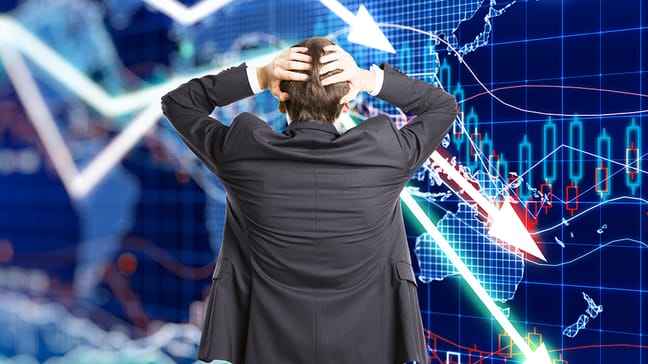
Markets are often described as rational machines, processing information into prices with mechanical precision. Yet beneath the spreadsheets and models lies a force that is neither tidy nor easily quantified: fear. In financial systems, fear behaves less like a mood and more like a variable, shaping decisions, reallocating capital, and compressing or inflating risk premiums across entire economies. Fear enters quietly. It appears in cautious earnings calls, in tighter lending standards, in portfolio managers shortening their investment horizons. Long before factories slow production or unemployment rises, balance sheets begin to change. Companies postpone expansion, households increase precautionary savings, and investors demand higher compensation for uncertainty. Economic activity has not yet contracted, but its momentum weakens.
Asset prices respond with particular sensitivity. A rumor of instability can erase years of valuation gains within days, not because productive capacity vanished, but because confidence did. Markets trade expectations, and fear is an expectation of loss. When it spreads, correlations rise, diversification weakens, and liquidity migrates toward assets perceived as safe. The result is volatility that appears sudden, yet is rooted in collective psychology. Fear also redistributes power within the financial system. Large institutions with strong balance sheets gain access to cheaper capital, while smaller firms face higher financing costs or exclusion altogether. Innovation slows not from lack of ideas, but from lack of risk tolerance. What economists later describe as a credit cycle often begins as a behavioral shift.
Importantly, fear is not always destructive. It disciplines excessive leverage, exposes fragile business models, and forces capital to reprice risk more honestly. In this sense, fear functions as an informal regulator, correcting periods of overconfidence that formal policy failed to restrain. Crises cleanse, even as they wound. But unmanaged fear becomes contagious. When expectations turn uniformly pessimistic, rational caution mutates into systemic paralysis. Consumption contracts, investment freezes, and governments intervene not only to stabilize markets, but to stabilize beliefs. Confidence, once broken, requires more than interest rate adjustments to repair.
Understanding markets, therefore, requires more than financial literacy. It demands psychological literacy. Numbers explain outcomes; emotions explain velocity. Fear determines how fast capital retreats, how deeply prices fall, and how long recoveries take to begin. In modern finance, sentiment is not a footnote to economic theory. It is part of the mechanism itself. Central banks can supply liquidity, but only credibility restores circulation. Markets ultimately price narratives about the future. When those narratives darken, spreadsheets follow. When they brighten, growth quietly resumes again.