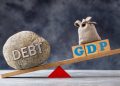
Creative accounting refers to the manipulation of financial statements using gaps or ambiguities in accounting standards to present a more favorable or misleading view of a company’s financial health. This practice often involves inflating assets, underreporting liabilities, or manipulating revenue recognition to enhance financial ratios and attract investors or meet regulatory requirements.
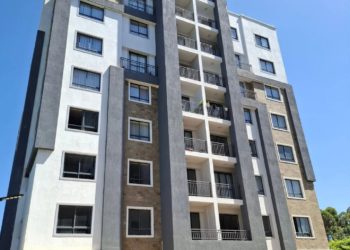
While not necessarily illegal, creative accounting distorts the true economic reality of the business and can mask underlying financial issues. In Real Estate, property valuations can be skewed by inflating income and minimizing expenses, which increases the property’s net operating income (NOI). This exaggerated NOI is then capitalized at a lower cap rate, leading to an elevated property value. The methods employed to boost property valuations vary from straightforward to sophisticated, and are frequently combined to produce the intended outcome. This article will look at how creative accounting can be used to portray a false image in a Real Estate Property.
In valuation, artificially boosting market demand can be used to portray a false picture. This involves distorting market data to give the false appearance of high demand for the property. It can be achieved by manipulating comparable sales figures, generating fake demand through leases to affiliated entities, or misrepresenting the property’s location. For instance, a property owner might mislead potential buyers by highlighting non-existent nearby amenities to create a more attractive impression of the property’s surroundings.
Revenue manipulation is one of the most frequently employed methods to boost property valuations. This can be achieved by exaggerating rental income, reducing reported expenses, or a combination of both. For instance, a property owner might lease a unit to a related party at an inflated rent to artificially raise rental income. Additionally, they could understate expenses by omitting certain costs or failing to disclose non-deductible expenses.


Lease manipulation; it refers to modifying or fabricating lease agreements to artificially boost rental income. This can be achieved by increasing the stated rent, changing lease conditions, or renting the property to a related entity at an inflated rate. For instance, a property owner might lease the property to an affiliated party at an above-market rent to enhance reported rental income.
Manipulating the capitalization rate is also employed by some appraisers. The capitalization rate (cap rate) represents the rate of return on a real estate investment based on the anticipated income the property will generate. By altering or artificially lowering the cap rate, the perceived value of the property can be inflated. This can be achieved by downplaying the risks tied to the property, exaggerating the demand in the local market, or adjusting comparable sales data to make the property appear more valuable than it truly is. Such manipulation can result in a higher property valuation, deceiving potential buyers or investors into believing that the property offers a stronger return on investment than it actually does. This tactic is often used to make a property seem like a safer and more profitable investment than it is in reality.
Creative accounting in real estate can distort a property’s true value, leading to a misleading financial picture. These strategies, while sometimes within the bounds of legality, misrepresent the property’s genuine financial performance and introduce risks for investors and other stakeholders. Recognizing and understanding these tactics is crucial for making informed decisions and ensuring that real estate valuations reflect their true market worth. Ultimately, while creative accounting may offer short-term gains, it undermines transparency and trust in the long-term health of the real estate market.