As access to credit expands through banks, mobile lenders, and digital finance platforms, borrowing has become easier than ever. This expansion has not only improved financial inclusion but also exposed a major weakness in many credit-heavy economies, mainly widespread financial illiteracy. Limited understanding of interest rates, repayment structures, and debt management carries significant economic and social costs. One of the most immediate consequences of financial illiteracy is over-borrowing. Many individuals take loans without fully grasping the long-term cost of credit such as compound interest, penalties, and rollover fees. The convenience of instant digital loans encourages short-term consumption rather than long-term financial planning, trapping borrowers in cycles of repeated borrowing that steadily erode disposable income.
At the household level, poor financial knowledge weakens savings and asset accumulation. When a growing portion of income is used to service debt, households struggle to build emergency funds or invest in education, housing, or businesses. This reduces financial resilience and increases vulnerability to economic shocks such as inflation, illness, or job losses, deepening inequality over time. The effects extend to the wider economy. High levels of distressed borrowing increase default risks for lenders, pushing financial institutions to raise interest rates or tighten lending conditions. As a result, credit becomes more expensive and less accessible, even for productive businesses that rely on financing to expand operations, create jobs, and drive economic growth.
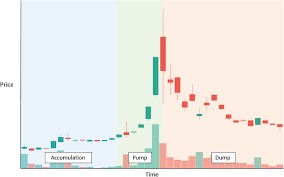
Financial illiteracy also affects participation in financial markets. Individuals with limited understanding of risk, diversification, and returns are more vulnerable to scams, speculative schemes, and poorly structured investments. This undermines trust in formal financial systems and weakens the role of capital markets in mobilizing long-term savings. In a credit-driven economy, financial literacy is a critical economic safeguard. Understanding budgeting, credit terms, interest calculations, and debt management enables individuals to use credit responsibly and productively. For the broader economy, improved financial literacy supports healthier lending practices, stronger savings behavior, and more efficient allocation of capital.
The cost of financial illiteracy is reflected in rising household debt, financial stress, and constrained economic progress. Addressing this challenge requires sustained efforts from policymakers, financial institutions, and educators to ensure that access to credit is matched with access to financial knowledge. Without this balance, credit expansion risks becoming a drag rather than a driver of sustainable economic development.