Sharp Daily
No Result
View All Result
Thursday, February 5, 2026
  • Home
  • News
    • Politics
  • Business
    • Banking
  • Investments
  • Technology
  • Startups
  • Real Estate
  • Features
  • Appointments
  • About Us
    • Meet The Team
Sharp Daily
  • Home
  • News
    • Politics
  • Business
    • Banking
  • Investments
  • Technology
  • Startups
  • Real Estate
  • Features
  • Appointments
  • About Us
    • Meet The Team
No Result
View All Result
Sharp Daily
No Result
View All Result
Home News

CBK Should Consider Implementing an Interest Rate Corridor

Vincent Wangu by Vincent Wangu
August 10, 2023
in News
Reading Time: 2 mins read
CBK reinstates transaction charges

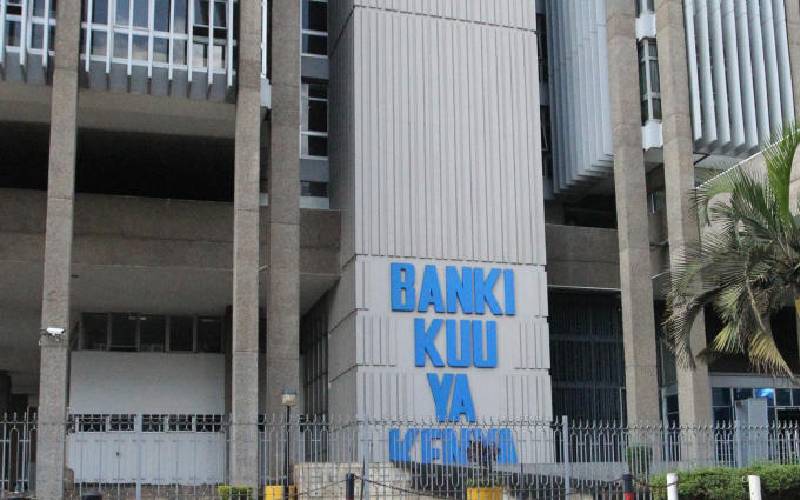
Central Bank of Kenya (CBK) headquarters. [Photo/ Courtesy]

The Central Bank of Kenya (CBK) had in 2012 planned to introduce an interest rate corridor to help ensure that the interbank rates remain within a reasonable range around the Central Bank Rate (CBR). The aim was to minimize the volatility in the interbank rate by setting the target range to be within the range of 250 bps below and above the CBR rate.

Read more: Central Bank of Kenya Holds Benchmark Interest Rate Steady at 10.5%

Additionally, the introduction of the interest rate corridor would have enabled CBK to have better control over the short-term interest rates, thereby influencing the broader economic conditions of the country. By adjusting the CBR rates, CBK would have been able to influence the rate at which to lend or accept deposits from commercial banks, thereby influencing the overall level of interest rates in the country.

Read more: Equity Bank Announces an Increase in Loan Interest Rates to 14.69%

RELATEDPOSTS

Kenyan banks inject sh153 billion into MSMEs

January 16, 2026

NSE ranks second in Africa for dollar returns in 2025

January 12, 2026

For example, if CBK wants to encourage borrowing and economic activity, it might lower the CBR, making borrowing cheaper for commercial banks. This could lead to lower lending rates for consumers and businesses, thereby stimulating spending and investment. In contrast, If the central bank wants to curb inflation or prevent excessive borrowing, it might raise the CBR rate. This would make borrowing more expensive and simultaneously slow down economic activity.

The plan was later left aside due to the placement of three banks in receivership and the introduction of interest rate caps in 2015 and 2016, as CBK had to concentrate on ensuring the stability of the banking sector.  According to CBK statistics, the Interbank rate has reached a high of 17.4% in Q3’2023 from the 10.2% interbank rate as of 3rd July 2023.

Read more: Smaller Banks Face Liquidity Struggles as Interbank Rate rises to 17.1%

The high volatility in interbank rates further emphasises the need for the rate to be regulated. Otherwise, the banks will, start demanding high interest rates from their customers, consequently slowing down economic development.

Email your news TIPS to editor@thesharpdaily.com

Previous Post

Pension Schemes Record a Modest Performance During Q2’2023

Next Post

Tax Appeal Tribunal Dismisses Naivas Appeal Against the Payment of Kshs 1.8 Billion Corporate Tax

Vincent Wangu

Vincent Wangu

Related Posts

News

Kenya’s Debt Risk Revisited: What Moody’s, Fitch and S&P Say, and What They Don’t

February 4, 2026
News

Carbon Credits in Kenya: A Climate Solution or a Foreign-Led Market?

February 4, 2026
News

Corporate Bonds vs Government Bonds: What Kenyan Issuers and Investors Should Know

February 4, 2026
News

Family Bank’s Potential NSE Introduction: What It Means for Mid-Tier Banks and the Market

February 4, 2026
News

Listing by Introduction vs IPO: What the Choice Really Means for Companies and Investors

February 4, 2026
Analysis

Auditor-general exposes illegal fees and uniform cartel at Starehe boys

February 4, 2026

LATEST STORIES

Kenya’s Debt Risk Revisited: What Moody’s, Fitch and S&P Say, and What They Don’t

February 4, 2026

Carbon Credits in Kenya: A Climate Solution or a Foreign-Led Market?

February 4, 2026

Corporate Bonds vs Government Bonds: What Kenyan Issuers and Investors Should Know

February 4, 2026

Family Bank’s Potential NSE Introduction: What It Means for Mid-Tier Banks and the Market

February 4, 2026

Listing by Introduction vs IPO: What the Choice Really Means for Companies and Investors

February 4, 2026

Google warns 40% of Android phones at risk from malware and spyware amid outdated software

February 5, 2026

Auditor-general exposes illegal fees and uniform cartel at Starehe boys

February 4, 2026

KRA gains power to tax unexplained bank deposits after court ruling

February 4, 2026
  • About Us
  • Meet The Team
  • Careers
  • Privacy Policy
  • Terms and Conditions
Email us: editor@thesharpdaily.com

Sharp Daily © 2024

No Result
View All Result
  • Home
  • News
    • Politics
  • Business
    • Banking
  • Investments
  • Technology
  • Startups
  • Real Estate
  • Features
  • Appointments
  • About Us
    • Meet The Team

Sharp Daily © 2024