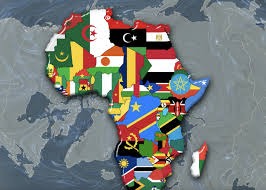
Africa’s regional integration architecture is extensive. The African Union (AU) operates at the continental level, supported by regional economic communities including COMESA, SADC, East African Community and IGAD. Collectively, these institutions aim to liberalise trade, harmonise regulations, coordinate infrastructure, and strengthen Africa’s collective bargaining power in global markets.
Yet intra-African trade remains structurally low. According to UNCTAD and African Development Bank data, trade within Africa typically accounts for roughly 15–20 percent of total African trade, far below the levels observed in Europe or East Asia. This is not due to the absence of agreements. Customs unions and free trade areas exist on paper in several blocs. The African Continental Free Trade Area (AfCFTA), launched under the AU framework in 2021, was designed to consolidate fragmented regional regimes into a single continental market.


The binding constraint lies elsewhere.
Production structures across many member states remain concentrated in primary commodities. When export baskets are similar and industrial capacity is limited, tariff liberalisation alone cannot generate deep trade flows. Industrial complementarity and cross-border value chains are prerequisites for sustained integration. These remain underdeveloped.
Institutional enforcement is also limited. Regional courts and secretariats exist, but they do not possess supranational authority comparable to more consolidated unions. When domestic political pressures conflict with regional commitments, implementation is often delayed. Non-tariff barriers, administrative delays, licensing requirements, border frictions, persist despite formal tariff reductions. These are documented repeatedly in EAC and COMESA trade monitoring reports.
The allegation that these bodies function as Western instruments arises primarily from funding structures. Historically, a significant portion of the AU’s programme budget has been financed by external partners, particularly the European Union. This dependency has been acknowledged publicly by AU officials, prompting reforms such as the 0.2 percent import levy adopted in 2016 to increase financial self-reliance. Implementation of that levy has been uneven across member states, limiting progress toward fiscal autonomy.
External funding influences priorities and technical programming. However, decision-making authority formally remains with member states. The more persistent obstacle to integration is internal political economy. Many governments rely on tariff revenue. Domestic industries lobby against competition. Informal systems at border points create entrenched rent networks. These incentives weaken commitment to full market opening.
Trust deficits compound the challenge. Smaller economies worry about asymmetric benefits within regional markets. Larger economies question compliance discipline among partners. Without credible enforcement and adjustment mechanisms, confidence in shared rules remains fragile.
Africa’s regional institutions are operational and active. Their limited impact on trade transformation reflects structural production constraints, fiscal incentives, enforcement weakness, and incomplete financial autonomy. External influence exists through funding and global market dependence, but the decisive variables remain domestic political and economic incentives.
Integration in Africa is therefore neither symbolic nor externally dictated. It is constrained by internal structural realities that have yet to align fully with the ambition of continental economic union.
Start your investment journey today with the Cytonn Money Market Fund. Call + 254 (0)709101200 or email sales@cytonn.com