Sharp Daily
  • News
  • Business
  • Technology
  • Real Estate
  • Opinion
  • About Us
No Result
View All Result
Sharp Daily
  • News
  • Business
  • Technology
  • Real Estate
  • Opinion
  • About Us
No Result
View All Result
Sharp Daily
No Result
View All Result
Home News

Jua Kali-Kenya’s Potential In Handcrafted Textiles

Anslem Murimi by Anslem Murimi
February 14, 2023
in News
Reading Time: 2 mins read
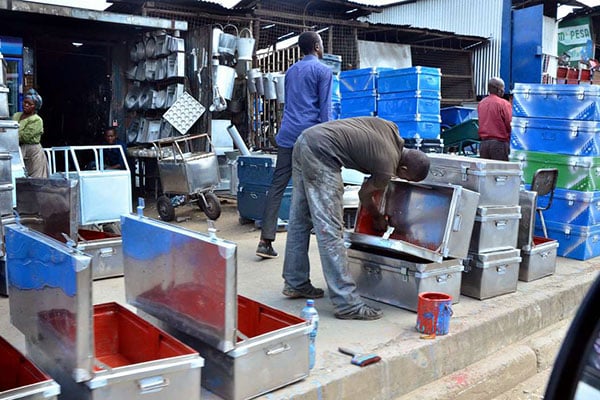
Jua Kali Industry

Jua Kali Industry [Photo/Courtesy]

In their 2023 draft budget, the nascent Kenya Kwanza administration defined the high cost of labour as one of the challenges that hamper the competitiveness of Kenya’s garment export.

With the Kenya National Qualifications Authority currently undertaking processes for the Recognition of Prior Learning in the informal sector, there is an opportunity for tailors in the informal sector to have their technical and theoretical skills formalised.

For those who don’t have them yet, formalisation that could lead to employment is an incentive that may motivate them to seek out the acquisition of these skills, whose absence contributes to poor passing down of skills to apprentices, poor performance and poverty among tailors.

Read: Kenya Inks Partnership With India To Boost Textile Industry

RELATEDPOSTS

Why access to affordable credit is critical for business growth

October 9, 2026

Stablecoins Move Beyond Trading as Digital Payments Enter a New Era

October 5, 2026

By introducing these tailors into the labour market for textile workers, there would be an increase in labour supply for this sector that could help put downward pressure on labour prices/wages in the textile industry.

Handmade textiles provide an alternative to machine-made counterparts. The main reason for this is quality, which is much higher for handcrafted fabrics than for machine-made fabric; they are made to last a lifetime.

There is a trade-off here as handmade clothes are costlier to buy, but need to be bought less often as they are of a higher quality. Additionally, with minimal greenhouse gas emissions, handmade fabrics are environmentally friendly.

With the expansion of textiles as a priority for President Ruto’s administration, training, certification and hiring of Jua Kali tailors may be an avenue for the achievement of the goal to increase employment from 50,000 to 500,000 over the next five years.

Email your news TIPS to editor@thesharpdaily.com
Previous Post

How Russia Oil Supply Cut Will Increase Fuel Prices In Kenya

Next Post

HFC,Madison Group Ink ‘Villa Kazi’ Housing Project Deal

Anslem Murimi

Anslem Murimi

Related Posts

News

Why Matatu Fares Rise With the Rain and Never Come Back Down

October 9, 2026
News

Kenya Without an IMF Programme: What Does It Mean for the Economy and Investors?

October 9, 2026
Analysis

Kenya’s kSh340 billion infrastructure fund goes live

October 9, 2026
News

Public Debt and Economic Growth

October 9, 2026
News

Shariah compliant investment products expand as Islamic finance nears $6 Trillion

October 9, 2026
News

Beyond the Dangote IPO, Can Africa Unlock a New Era of Cross-Border Investing?

October 9, 2026

LATEST STORIES

Why access to affordable credit is critical for business growth

October 9, 2026

Why Matatu Fares Rise With the Rain and Never Come Back Down

October 9, 2026

Kenya Without an IMF Programme: What Does It Mean for the Economy and Investors?

October 9, 2026

Kenya’s kSh340 billion infrastructure fund goes live

October 9, 2026

Public Debt and Economic Growth

October 9, 2026

Part-time work in retirement and what it means for your pension

October 9, 2026

Lionel Messi’s Argentina Farewell

October 9, 2026

Shariah compliant investment products expand as Islamic finance nears $6 Trillion

October 9, 2026
  • About Us
  • Meet The Team
  • Careers
  • Privacy Policy
  • Terms and Conditions
Email us: editor@thesharpdaily.com

Sharp Daily © 2024

No Result
View All Result
  • News
  • Business
  • Technology
  • Real Estate
  • Opinion
  • About Us

Sharp Daily © 2024