


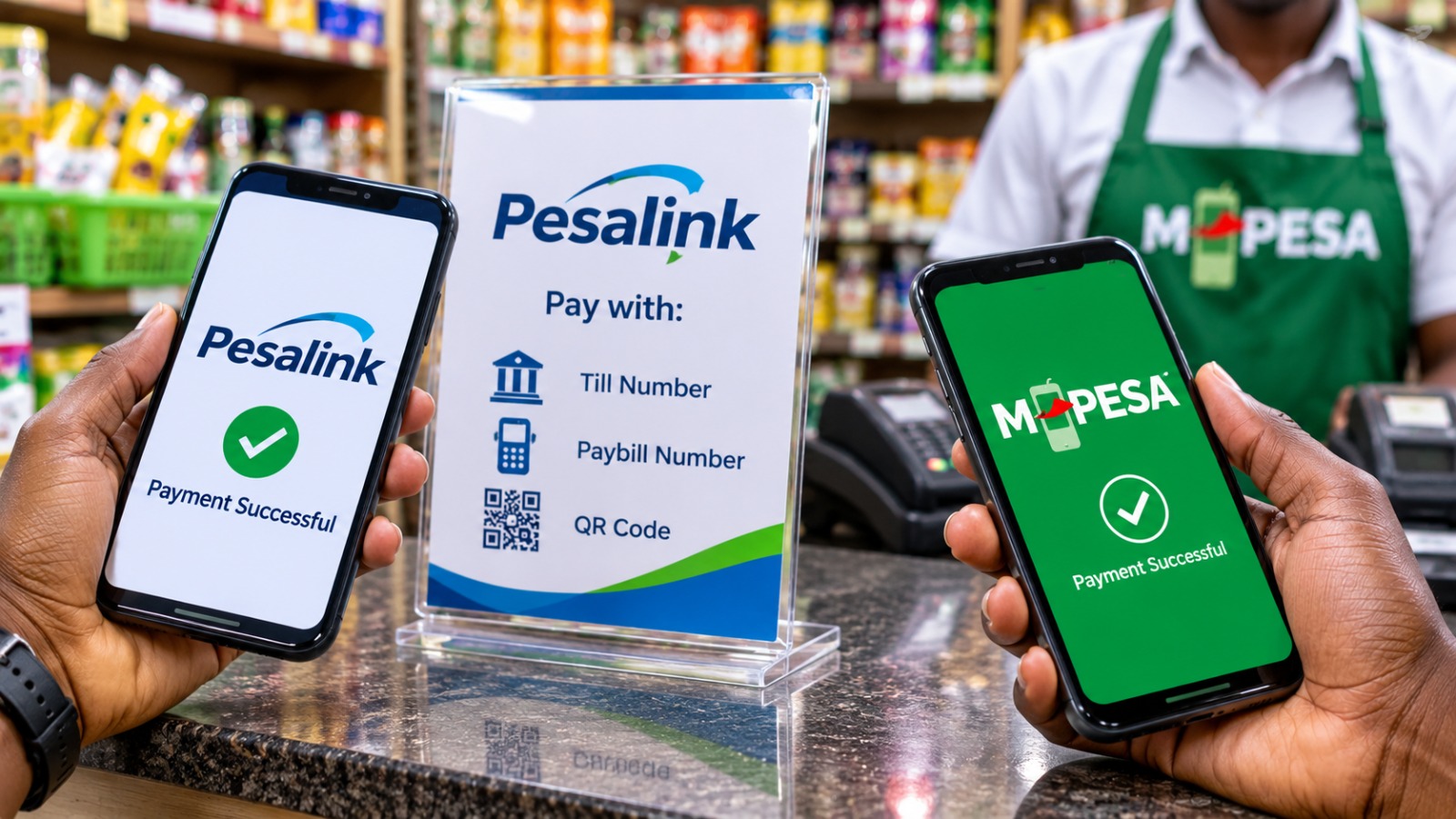
Kenya’s digital payments market is entering a new phase of competition following Pesalink’s introduction of person-to-business (P2B) payments, allowing customers to pay merchants through till numbers, Paybill numbers and QR codes. The development places the bank-owned payment network in more direct competition with Safaricom’s M-PESA, which has established a strong presence in Kenya’s merchant payments market. While Pesalink’s new service could expand payment options and encourage competition, its ability to challenge M-PESA will depend on affordability, accessibility and widespread adoption.
Pesalink, operated by Integrated Payment Services Limited (IPSL), a subsidiary of the Kenya Bankers Association, was initially established to facilitate instant transfers between bank accounts. It has since expanded its network to include more than 80 participating institutions, including banks, Savings and Credit Cooperative Organisations (SACCOs), telecommunications companies and fintechs. Its latest development introduces merchant payments, enabling customers to pay businesses directly from participating financial institutions using familiar merchant identifiers. The service is currently being piloted at Quickmart supermarkets through Equity Bank and SBM Bank, with plans to expand participation across the network. The introduction of merchant payments also enabled Pesalink to attain basic inclusivity status in AfricaNenda’s 2026 State of Inclusive Instant Payment Systems report, reflecting the expansion of its supported payment use cases.
On the other hand, M-PESA benefits from an established customer and merchant ecosystem that provides a significant competitive advantage. In its half-year results for the period ended September 2026, Safaricom reported that M-PESA’s merchant base grew by 90.3% to 4.5 million from 2.4 million a year earlier. This comprised 1.28 million Lipa na M-PESA merchants and 3.2 million Pochi la Biashara tills. Additionally, one-month active M-PESA customers increased by 11.6% to 42.3 million, while M-PESA revenue grew by 13.6% to Kshs 100.1 bn. These figures demonstrate the scale of the ecosystem Pesalink is seeking to compete within.
One of the key factors that could influence competition is transaction pricing. Lower merchant collection charges could encourage businesses to adopt Pesalink, while affordable or zero-cost customer transactions could improve its attractiveness to shoppers. However, Pesalink has not yet published a standard tariff for its new merchant payment service, making it difficult to establish whether it offers a cost advantage over M-PESA. Furthermore, the network will need to expand beyond its initial pilot, onboard more merchants and ensure that customers can conveniently make payments through their preferred financial institutions.


Going forward, we expect increased competition in Kenya’s digital payments market to create opportunities for greater interoperability, improved payment efficiency and potentially lower transaction costs for businesses and consumers. However, M-PESA’s established network, customer familiarity and broader financial services ecosystem present significant barriers to entry. We believe Pesalink’s success will depend on its ability to build a sufficiently broad merchant network, maintain competitive pricing and deliver a seamless payment experience. Ultimately, the development could deepen Kenya’s digital payments ecosystem, although challenging M-PESA’s market position will require more than simply introducing an alternative till payment service.