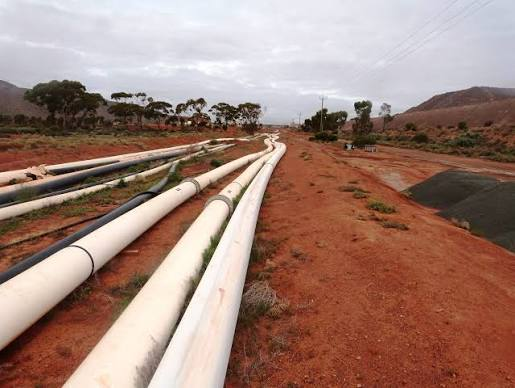
The planned USD 660.0 mn refined petroleum pipeline linking Djibouti and Ethiopia marks another significant development in East Africa’s energy and logistics infrastructure. Announced on September 24, 2026, the project will connect Damerjog in Djibouti to Dewele in Ethiopia through a 120-kilometre pipeline, supported by substantial storage facilities at both ends. The project is being developed through a partnership between Ethiopian Investment Holdings and the Dangote Group and is expected to become operational within 18 months.
At its core, the project addresses a structural challenge facing Ethiopia: the high cost and inefficiency of transporting petroleum products over long distances by road. As a landlocked economy, Ethiopia relies heavily on Djibouti as a gateway for international trade and energy supplies. Developing dedicated pipeline infrastructure could therefore reduce transportation delays, improve the reliability of fuel deliveries and lower logistics costs along one of the region’s most important trade corridors. For businesses and consumers, improved fuel supply reliability could also reduce some of the disruptions associated with road-based transportation.
The scale of the storage infrastructure is equally important. The project is expected to provide approximately 375,000 cubic metres of storage capacity at Damerjog and 800,000 cubic metres at Dewele, giving the corridor more than one million cubic metres of combined storage capacity. This could strengthen Ethiopia’s ability to manage fluctuations in petroleum supply and demand while providing greater flexibility in sourcing and distributing refined products.
For Djibouti, the project reinforces the country’s position as a critical logistics and energy hub for the Horn of Africa. Damerjog has increasingly become an important component of Djibouti’s broader industrial and port infrastructure, while Ethiopia represents a large neighbouring market. Improved petroleum infrastructure could therefore deepen the economic relationship between the two countries and increase the strategic importance of the Ethiopia-Djibouti corridor.


The project also highlights the growing role of African private capital in financing regional infrastructure. Dangote Group is already pursuing major investments in Ethiopia, including a USD 4.0 bn fertiliser-related project, power infrastructure and a polypropylene packaging facility. Its involvement in the pipeline therefore forms part of a broader expansion of industrial and energy investments across the continent.
The implications extend beyond Ethiopia and Djibouti. East Africa’s energy infrastructure is increasingly becoming interconnected with broader investment in refining, storage, transportation and industrial capacity. Dangote’s planned involvement in a proposed 700,000-barrel-per-day refinery in Kenya’s Lamu further illustrates the scale of this emerging regional energy investment landscape.
Ultimately, the pipeline should be viewed not simply as a fuel transportation project but as infrastructure supporting trade, energy security and regional economic integration. Its success will depend on timely construction, effective cross-border coordination and sufficient petroleum demand to support the investment. If implemented as planned, however, the project could strengthen one of East Africa’s most important commercial corridors while demonstrating the economic value of integrated regional energy infrastructure.