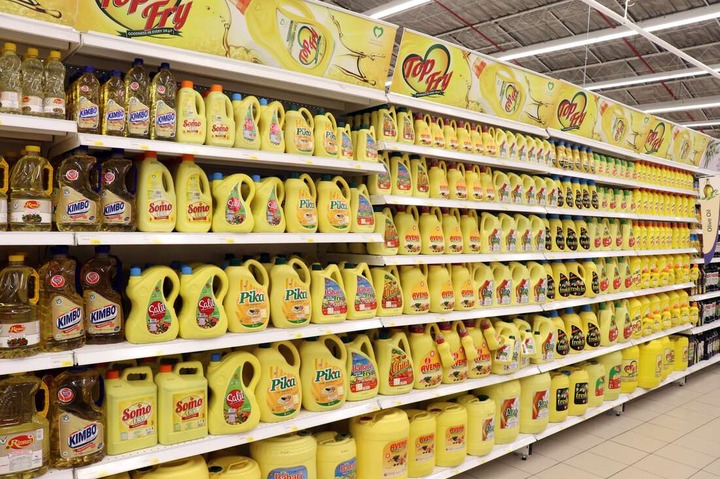
Kenyan households are once again facing rising food costs as cooking oil prices climb to their highest levels since the global food crisis of 2022. The latest increase highlights the country’s continued reliance on imported edible oils and the vulnerability of local consumers to fluctuations in international commodity markets.
According to the Kenya National Bureau of Statistics (KNBS), the average retail price of one litre of salad cooking oil reached Sh358.09 in July 2026, the highest recorded since October 2022. Although prices remain below the peak of Sh379.84 seen in September 2022, the steady increase signals that much of the price relief experienced over the past two years has gradually disappeared.
The resurgence in prices mirrors developments in the global vegetable oil market. The Food and Agriculture Organization (FAO) reports that international vegetable oil prices rose sharply in mid-2026, driven by higher prices for palm and rapeseed oil. The FAO’s Vegetable Oil Price Index increased by 3.8 percent during the period and remained more than 23 percent higher than a year earlier.
As Kenya imports most of its edible oil requirements, global price movements are quickly transmitted to the local market. The Central Bank of Kenya (CBK) had already warned earlier this year that international edible oil markets were experiencing renewed inflationary pressure. Rising demand for biodiesel in Indonesia, lower palm oil production in Malaysia, unfavorable weather affecting rapeseed harvests in Australia and Canada, and stronger demand for soybean oil in the United States have all contributed to higher global prices.


In addition, geopolitical tensions and elevated energy prices have increased production and transportation costs, further pushing up the prices of key vegetable oils such as palm, soybean, sunflower, and rapeseed oil. These global factors continue to influence what Kenyan consumers ultimately pay at retail outlets.
However, international markets are not the only factor behind higher cooking oil prices. Previous investigations by the Common Market for Eastern and Southern Africa (COMESA) Competition Commission suggested that domestic pricing practices may also have contributed to elevated retail prices during the 2022 crisis. The commission found that some manufacturers continued increasing consumer prices even after the cost of crude palm oil and shipping had begun to decline, resulting in Kenyan consumers paying significantly more than expected during that period.
The latest price surge serves as a reminder of Kenya’s heavy dependence on imported edible oils and the need to strengthen domestic production. Expanding local oilseed farming and processing capacity could help reduce exposure to global commodity shocks, improve food security, and cushion households from future price volatility.