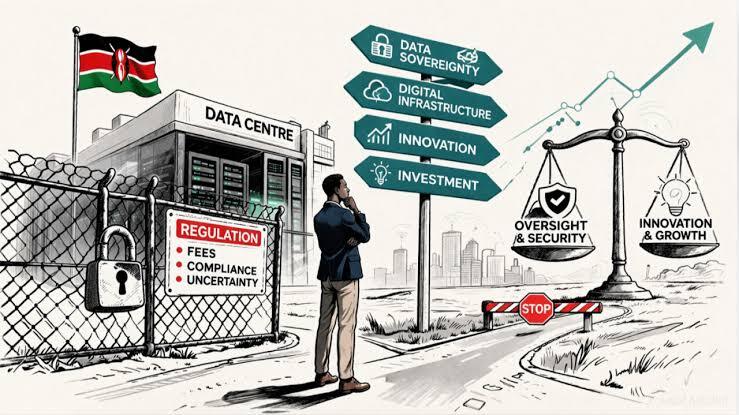
For decades, real estate has been the preferred investment for Kenya’s wealthy individuals, offering stable returns through commercial buildings, residential developments and land banking. However, changing market conditions are prompting high-net-worth investors to rethink their strategies, with billions of shillings now flowing into data centres, logistics facilities and digital infrastructure. The shift reflects broader changes in the economy as technology adoption, e-commerce and cloud computing reshape investment opportunities. Rather than relying solely on office towers or high-end apartments, investors are increasingly targeting sectors that support Kenya’s digital economy and regional trade.
The commercial property market has faced significant headwinds in recent years. Office vacancies have remained elevated following the rise of hybrid work arrangements, while developers continue to grapple with oversupply in certain segments of the residential market. At the same time, rising construction costs, higher financing rates and slower property appreciation have reduced returns that once made real estate the default investment choice. As yields compress, investors are searching for assets capable of generating stronger and more sustainable long-term returns. One of the biggest beneficiaries is the data centre sector. Kenya has emerged as East Africa’s leading digital hub, attracting multinational technology firms, financial institutions and cloud service providers seeking secure, reliable infrastructure.
Growing internet penetration, mobile money adoption, artificial intelligence, cloud computing and increased demand for data storage have significantly boosted the need for modern data centres. These facilities provide mission-critical infrastructure for businesses while generating long-term lease income from corporate clients. Unlike traditional commercial buildings, data centres often operate under multi-year contracts, offering predictable cash flows and lower vacancy risks. Their strategic importance also makes them more resilient during economic downturns. Logistics and warehousing have also become attractive investment destinations. The rapid expansion of e-commerce, retail distribution and manufacturing has increased demand for modern warehouses located near transport corridors and urban centres.
Kenya’s strategic position as a regional gateway for East and Central Africa has further strengthened demand for logistics parks, distribution centres and cold-storage facilities. Infrastructure projects, including improved highways, the Standard Gauge Railway and expanded port facilities, continue to support the sector’s growth. Institutional investors and wealthy individuals are increasingly financing warehouse developments that cater to retailers, manufacturers and third-party logistics providers seeking efficient supply chain solutions. The investment shift is also being driven by changing consumer behaviour. Businesses require secure digital infrastructure to support online services, while consumers expect faster delivery of goods purchased through digital platforms. These trends have created sustained demand for both data infrastructure and logistics networks.


Environmental, Social and Governance (ESG) considerations are also influencing investment decisions. Modern logistics parks and data centres increasingly incorporate energy-efficient technologies, renewable power solutions and sustainable building practices, making them attractive to investors focused on long-term resilience. Property is unlikely to lose its place entirely within investment portfolios. Residential housing, mixed-use developments and specialised commercial assets will continue to play an important role. However, investors are becoming more selective, favouring property segments linked to structural economic growth rather than speculative appreciation. As Kenya advances its digital transformation agenda and strengthens its position as a regional technology and logistics hub, capital allocation is expected to continue shifting toward sectors that underpin the modern economy. For wealthy investors, the future of real estate is no longer defined solely by office towers and luxury apartments, but by the infrastructure powering data, commerce and connectivity.