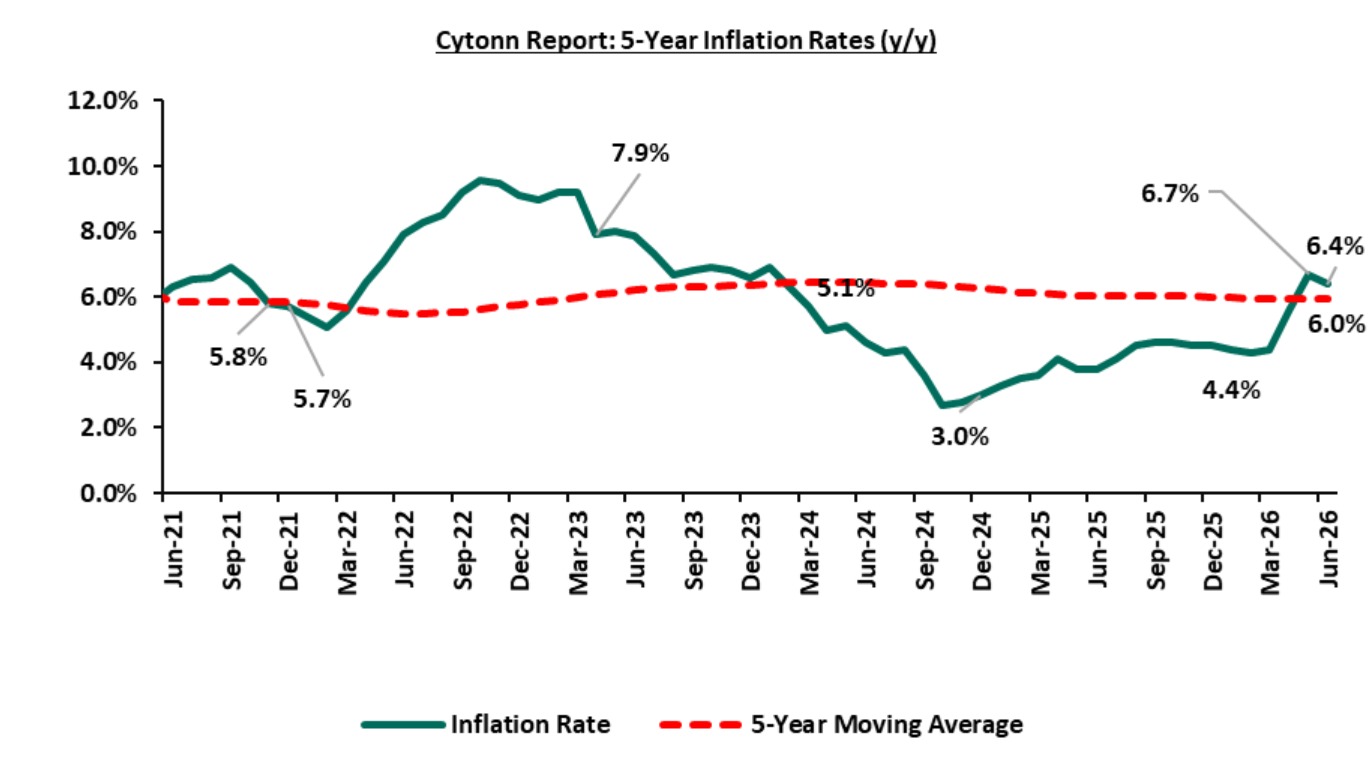
Kenya’s annual inflation slowed slightly to 6.4% in June 2026, down from 6.7% recorded in May, offering a modest reprieve after months of rising consumer prices. Despite the marginal decline, the latest figures indicate that households continue to grapple with elevated costs of essential goods and services, particularly in transport and food.
The easing in headline inflation comes after May’s sharp increase, which was largely driven by higher fuel prices and their ripple effect across the economy. While inflation has now moderated, it remains well above the levels recorded earlier this year and continues to sit above its five-year moving average, reflecting persistent price pressures.
Transport recorded the highest year-on-year increase at 16.1%, making it the largest contributor to inflation during the month. The rise continues to reflect the impact of higher fuel prices, which have pushed up commuting and logistics costs and, in turn, affected the prices of other goods and services.
Food and non-alcoholic beverages also remained a major source of inflation, rising by 8.6% compared to June last year. The increase continues to weigh heavily on household budgets as consumers spend more on basic food items amid sustained supply and production costs.


Meanwhile, the Housing, Water, Electricity, Gas and Other Fuels category recorded a 3.4% annual increase, indicating that the cost of utilities and housing-related expenses remains on an upward trajectory, although at a slower pace than transport and food.
The latest inflation reading is expected to remain a key consideration for policymakers as they balance the need to support economic growth while keeping inflation within the government’s target range. For consumers, however, the slight moderation is unlikely to provide immediate relief, as the prices of everyday necessities continue to rise faster than incomes for many households.
Although June’s figures signal that inflationary pressures may be easing, the high cost of transport, food and essential services suggests that the cost-of-living challenge remains a significant concern for Kenyan families and businesses alike.