The rise of retail investors in financial markets has been widely celebrated as a democratization of finance. Yet beneath this shift lies a growing vulnerability, the resurgence of pump and dump dynamics, now amplified by digital platforms and social media. What was once a fringe form of market manipulation in thinly traded stocks has evolved into a broader structural feature of modern markets.
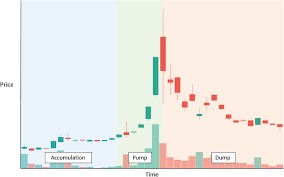
At its core, a pump and dump scheme follow a simple sequence. Prices are artificially inflated through coordinated buying, misleading narratives, or aggressive promotion. As momentum builds, more investors, often retail participants, enter the market, driven by fear of missing out. Early actors then exit at elevated prices, triggering a sharp reversal that leaves late entrants exposed to losses. While the mechanics are not new, the speed and scale at which these cycles now occur are unprecedented.


The transformation is largely technological. Social media platforms, online trading forums, and messaging groups have reduced the cost of coordinating market sentiment. Information, whether accurate or not, spreads rapidly, blurring the line between analysis and speculation. In such an environment, price movements can become detached from fundamentals, driven instead by narrative momentum.
Market structure further reinforces these dynamics. Illiquid assets, including small-cap stocks and certain digital tokens, are particularly susceptible to manipulation because relatively small volumes of capital can move prices significantly. In these segments, price discovery is weak, and valuations are often anchored more in expectation than in measurable earnings or cash flows.
Behavioral factors play a critical role. Retail investors are more likely to respond to momentum and social cues, especially in volatile markets. Herd behavior and information cascades can create self-reinforcing cycles: rising prices validate the underlying narrative, attracting more participants and pushing prices even higher, until the cycle reverses. At that point, liquidity evaporates, and losses are rapidly realized.
From an economic perspective, pump and dump schemes function as a mechanism of wealth transfer. Gains accrued by early participants are effectively funded by losses incurred by those who enter later. This asymmetry is rooted in information inequality, insiders or early movers act on strategy, while late entrants react to signals that may already be distorted. The implications extend beyond individual losses. Repeated episodes of manipulation can erode trust in financial markets, discouraging participation and undermining capital formation. For emerging markets, where retail participation is growing but regulatory capacity may be uneven, the risks are particularly acute.
Addressing this challenge requires more than enforcement. It demands improved market transparency, investor education, and real-time monitoring of trading patterns and information flows. As markets become more accessible, ensuring they remain fair becomes increasingly complex. The central paradox is clear, the same forces that have opened markets to millions of new participants have also made them more susceptible to manipulation. In this environment, the line between opportunity and exploitation is becoming increasingly difficult to distinguish.
Start your investment journey today with the Cytonn Money Market Fund. Call + 254 (0)709101200 or email sales@cytonn.com