Kenya’s cryptocurrency sector is calling for significant changes to proposed licensing rules, arguing that sweeping capital requirements could choke off innovation and push emerging firms out of one of Africa’s most active digital asset markets.
The concerns follow the National Treasury’s publication on March 17, 2026, of the draft Virtual Asset Service Providers (VASP) Regulations 2026, which seek to operationalize the Virtual Asset Service Providers Act 2025 signed into law by President William Ruto in October 2025 and which came into force on November 4, 2025.
Under the draft regulations, cryptocurrency operators will need to maintain a minimum paid-up capital of up to Sh500 million the highest threshold applying to Stablecoin and tokenization issuers. Virtual asset wallet providers and exchanges face a minimum of Sh150 million, while payment processors must hold at least Sh50 million.
Industry stakeholders have until April 2026 to submit feedback, with some already advocating for a tiered approach that would ease requirements for smaller projects while maintaining stricter standards for large-scale issuers.


While the new rules are expected to boost investor confidence and attract institutional capital, they could also raise barriers to entry for smaller players. Compliance costs, licensing requirements, and operational standards may prove challenging for startups that have thrived in a relatively low regulation environment.
The combination of high reserve requirements, mandatory audits, and a two tier licensing system will likely accelerate consolidation, favoring well capitalized domestic firms over smaller or foreign competitors. The regulatory urgency is not without context. Kenya was grey listed by the Financial Action Task Force in 2024, placing it on a watchlist of jurisdictions with insufficient anti money laundering and counter terrorism financing controls.
Treasury Cabinet Secretary John Mbadi confirmed the regulations are meant “to operationalise the Act whose objective is to provide for the legal framework for licensing and regulating the activities of Virtual Asset Service Providers in and from Kenya.”
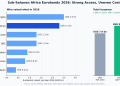
The stakes are high. Between July 2024 and June 2025, Kenyans received about $19 billion in cryptocurrency inflows, according to blockchain analytics firm Chainalysis, and more than six million Kenyans use crypto. Kenya was ranked fifth globally in transactional crypto use, behind only Ukraine, the US, Nigeria, and Vietnam, according to the 2025 World Crypto Ranking report by Bybit.
Licensing fees will range between KSh100,000 and KSh2 million, renewable annually or at 0.15 percent of gross turnover, whichever is higher. The dual regulatory structure assigns the Central Bank of Kenya oversight of payment-related entities and Stablecoin issuers, while the Capital Markets Authority supervises exchanges and tokenization platforms.
The consultation window runs until April 10, 2026, with nationwide public forums beginning March 30 to gather input from industry stakeholders, regulators, and consumers. Observers note that the success of the framework will depend largely on the balance struck between capital thresholds, solvency criteria, licensing costs, and the room left for innovation.