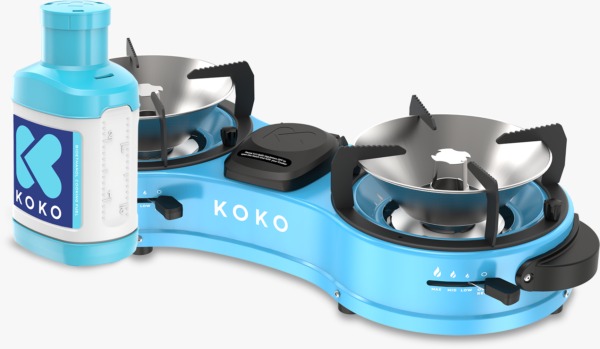
KOKO Networks was founded in Nairobi with the ambition of transforming how low-income urban households access cooking fuel. Operating in a city where charcoal and kerosene dominate despite their high health and environmental costs, the company introduced a bioethanol based alternative distributed through automated fuel dispensers embedded in neighbourhood kiosks. Customers could purchase small quantities of fuel using mobile money and cook on subsidised ethanol stoves, aligning the model with existing consumption patterns in the informal urban economy.
From an operational perspective, KOKO addressed multiple market failures simultaneously. Its fuel ATMs reduced distribution costs and eliminated single use plastic packaging through reusable containers. Cloud based monitoring systems tracked fuel movement across the supply chain, improving efficiency and reducing losses. At the retail level, kiosk owners earned commissions, integrating the system into existing local commerce rather than replacing it. This design enabled KOKO to scale rapidly, reaching more than a million users and deploying over 3,000 automated refuelling machines across Nairobi.
However, the financial sustainability of the model depended on a dual revenue structure. While customers paid for fuel and stoves, retail prices were heavily subsidised. A litre of bioethanol sold for roughly half the prevailing market price, and stoves were offered at a fraction of their commercial cost. These subsidies were funded primarily through the sale of carbon credits in international markets, based on emissions reductions achieved by replacing charcoal with bioethanol.
In January 2026, the Kenyan government rejected the letter of authorisation required for KOKO to continue selling carbon credits. This regulatory decision effectively removed the company’s main source of subsidy financing. Within days, KOKO laid off its entire 700-person workforce and shut down operations, despite having secured a World Bank backed political risk guarantee less than a year earlier. The closure now risks pushing an estimated 1.5 million households back to dirtier fuels and disrupting thousands of small retailers integrated into the KOKO network.


KOKO’s shutdown illustrates a structural weakness common to clean energy startups in emerging markets. Essential service providers are expected to maintain affordability for low-income users while operating on commercial terms. When pricing depends on external policy instruments such as carbon markets, regulatory uncertainty becomes a core business risk rather than a peripheral one. In KOKO’s case, strong consumer demand, proven technology, and international investor support were insufficient to offset the absence of regulatory alignment.
The failure therefore reflects not a lack of market viability, but a misalignment between innovation, policy frameworks, and state oversight. Without predictable regulatory support for mechanisms like carbon finance, market based solutions for clean cooking remain exposed to sudden collapse, regardless of their demonstrated social and environmental value. (Start your investment journey today with the cytonn MMF, call+2540709101200 or email sales@cytonn.com)