Agriculture remains the backbone of Kenya’s economy, employing a large share of the population and contributing significantly to GDP. Yet despite strong production in horticulture, dairy, meat, and fisheries, the sector continues to suffer from a structural weakness: inadequate cold storage and logistics infrastructure. This gap represents not only an economic inefficiency but also a compelling investment opportunity.
Post-harvest losses in Kenya are estimated to range between 20% and 40% for perishable products. For fruits, vegetables, milk, and fish, the lack of temperature-controlled storage and reliable transport leads to spoilage, price volatility, and reduced farmer incomes. From an investment perspective, these losses reflect unmet demand rather than weak fundamentals. The underlying consumption and export markets already exist; what is missing is the infrastructure that preserves value along the supply chain.


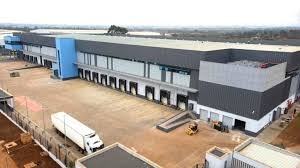
Urbanization and changing consumption patterns are increasing demand for fresh, high quality produce in cities. Supermarkets, restaurants, and exporters require consistent supply and quality standards that informal logistics systems struggle to deliver. Cold rooms, refrigerated transport, aggregation hubs, and last-mile logistics are therefore becoming essential economic infrastructure rather than optional add-ons.
The investment case is strengthened by the diversity of revenue streams. Cold storage facilities can earn income from storage fees, logistics services, value-added processing, and long-term supply contracts with retailers and exporters. Compared to traditional farming, returns are less exposed to weather risk and more driven by utilization rates and operational efficiency. This makes cold-chain investments attractive to private equity, development finance institutions, and impact-oriented investors.
Technology is also lowering barriers to entry. Modular cold rooms, solar-powered refrigeration, and digital inventory management systems allow for scalable deployment, even in semi-rural areas. Public-private partnerships with county governments and farmer cooperatives further reduce risk and improve utilization.
In the long term, improved cold chain infrastructure enhances food security, stabilizes prices, and increases Kenya’s competitiveness in regional and global agricultural markets. For investors, cold storage and logistics sit at the intersection of agriculture, infrastructure, and trade offering resilient, demand-driven returns in a sector critical to Kenya’s economic transformation.
Start your investment journey today with the Cytonn Money Market Fund. Call + 254 (0)709101200 or email sales@cytonn.com