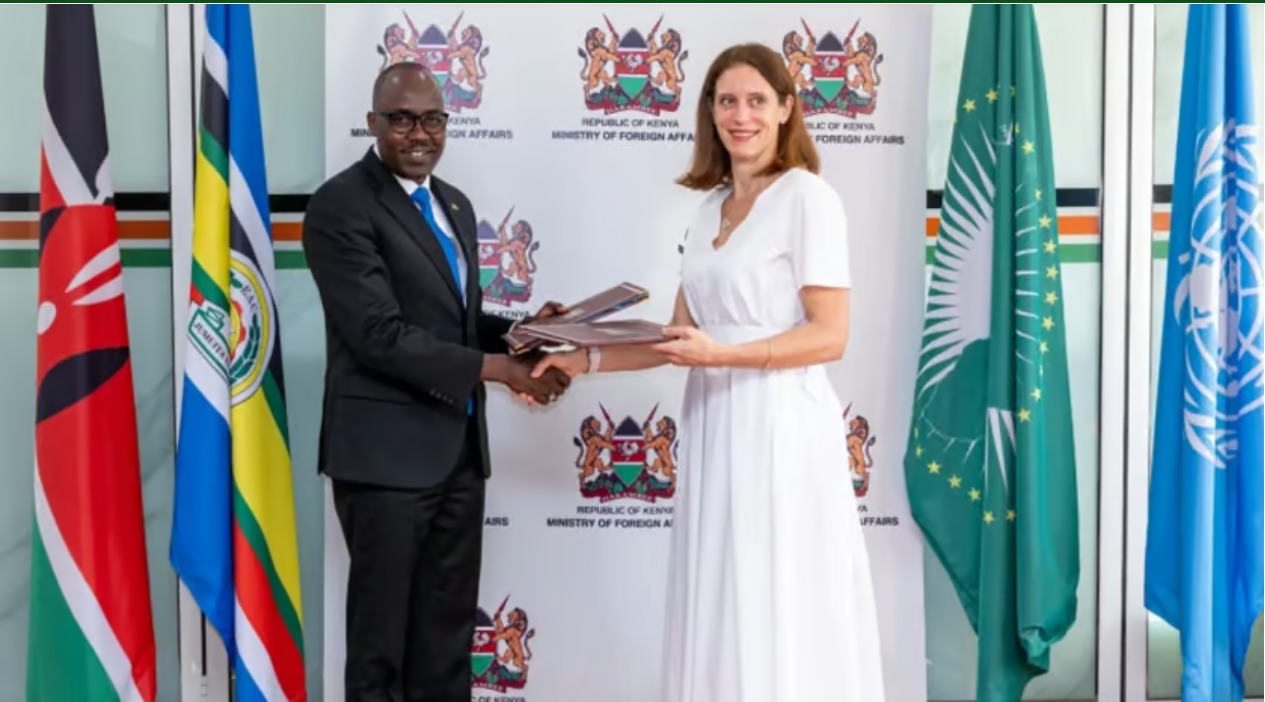
Kenya has launched the National Plastics Action Partnership (NPAP), a major reform platform designed to unify the country’s transition toward a circular plastics economy. Introduced by the Ministry of Foreign Affairs, the NPAP marks a significant shift away from the traditional “take–make–waste” model towards a system where plastics remain in use through recycling, reuse, and circular manufacturing processes. The hub brings together a wide range of stakeholders such as government ministries, county governments, private industry, civil society, innovators, development partners, and waste pickers to align national plastics management under a roadmap. This level of coordination has been missing for years, contributing to fragmented regulations, weak data systems, and inconsistent enforcement across sectors.
A key benefit of NPAP is its role in strengthening Kenya’s position in global plastics treaty negotiations. As the world prepares for a binding United Nations Global Plastics Treaty, Kenya will now negotiate with a structured, nationally owned plan rather than general principles. This platform enhances Kenya’s credibility, allows the country to speak with a unified voice, and increases its negotiating leverage. NPAP is integrated into the World Economic Forum’s Global Plastic Action Partnership (GPAP), linking Kenya to a network of 25 countries with access to analytical tools, modelling expertise, and global best practices. Through this collaboration, Kenya will map plastic flows, analyze economic impacts, and develop long-term scenarios up to 2040, positioning the country and the region as leaders in circular economy innovation.
The platform aims to increase transparency by tracking plastic waste flows, recycling volumes, recovery rates, and investment mobilization, which is a critical data for investors and international donors. With global markets tightening traceability and recycled-content requirements, Kenya stands to unlock new opportunities in green supply chains. The launch of NPAP aligns with the proposed East African Community Single-Use Plastics (SUP) Bill, which seeks to harmonize regional bans on unnecessary single-use plastics and close regulatory loopholes that have enabled cross-border waste movement. If passed, the Bill would create predictable conditions for manufacturers and recyclers across East Africa.
Circular-plastics systems are projected to create millions of jobs globally, and Kenya expects to benefit significantly. Waste pickers, youth, and women will gain opportunities through formalization and expanded value chains in recycling, reuse, and alternative materials. With prior milestones such as the 2017 carrier-bag ban and the 2020 ban on single-use plastics in protected areas, Kenya continues to position itself as a continental leader in plastics governance and green industrialization.