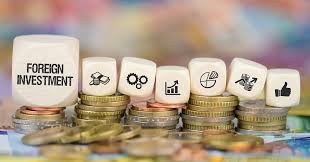
For years, African economies have welcomed foreign capital investment through strategies such as tax holidays which are meant to reduce entry costs into the market, relaxed capital controls which makes it easier to convert local currency into foreign exchange and special economic zones with relaxed zoning and planning laws and allowing long-term land leases. Foreign Direct Investment has been dubbed as the key to development and growth but is foreign capital investment proving beneficial to Africa or is it affecting Africa’s ability to generate wealth from its own resources. Despite foreign investment being important in facilitating capital which helps in fast-tracking infrastructure such as roads, expanding industrial capacity and integrating local markets into global supply chains, Africa needs to empower its own people other than favouring foreign investors as this will shift dependence from foreign countries and foster economic growth.
The harsh reality of foreign capital is its high volatility. The investors who put in their money during a boom in Africa’s economy will be the first to withdraw their capital once the economy is in a recession. These sudden withdrawals can cause shocks in respective sectors which may eventually lead to destabilization of the economy. For instance, during the COVID-19 pandemic, foreign investors fled the bond and equity markets in masses, which triggered sharp currency depreciations with outflows exceeding USD 5.0 bn in the first quarter of 2020 with USD 3.1 bn coming from the South African market alone. These outflows stressed Central banks in Africa, leading to reduced net foreign assets and worsening liquidity constraints which undermined the capacity of banks to facilitate African trade.
Local investors face barriers such as high minimum investment requirements in private equity and infrastructure instruments, poor financial literacy and insufficient protection from foreign influence and cultural bias to land and savings schemes instead of diversified investment. Funds in SACCOs, for instance, could be more useful in powering locally owned enterprises or buying equity stakes in national assets if there is a suitable framework to facilitate such investments.
Africa should reevaluate the significance of foreign investment in their respective countries. They should strive to encourage local investors to participate in investing into the country’s economic welfare instead of crowding it with volatile foreign investments. They should implement policies such as incentivizing co-investment between foreign and local capital, creating platforms for diaspora investors for more engagement besides the regular remittances, ease barriers to entry for local investors and ensuring transparency and accountability in major foreign investment deals.


Africa must stop undermining themselves as its greatest source of investment power is in its own people not in European boardrooms. From entrepreneurial youth to vibrant savings and cooperative societies, Africa has the capacity to finance its own future.