The global space industry has experienced remarkable growth in the recent years, witnessing an 8 percent expansion in the global space economy, reaching USD 546 billion in 2022.
This surge is attributed to substantial investments in space exploration, satellite technology, and commercial space activities, particularly by countries in the Western hemisphere. Amid this trend, Kenya, known for its diverse landscapes and cultural heritage, stands poised to potentially emerge as a prominent player in the space age.
Historically, the Italian-owned Broglio Space Center (BSC) in Malindi, along Kenya’s coast, served as a spaceport between 1967 and 1988, launching Italian and international satellites.
However, the BSC no longer functions as a launch site, necessitating the establishment of a domestic spaceport. Overseeing space operations in Kenya is the Kenya Space Agency (KSA), established in 2017 to promote, coordinate, and regulate the country’s space sector.


A 2021 report, sponsored by Longshot Space Technologies in collaboration with the KSA, highlights Kenya’s favorable conditions for a spaceport.
The nation’s geographical advantages, such as its equatorial location and a long coastline along the Indian Ocean, enhance the efficiency of rocket launches and facilitate the recovery of launch vehicles.
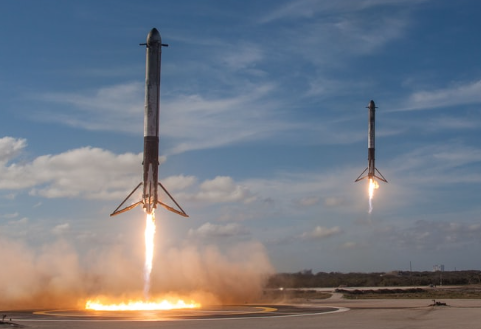
The report underscores that launching rockets toward the equator provides a substantial speed boost, equivalent to an additional speed of 1,650 km/h due to the Earth’s rotation. This advantage allows launch vehicles from Kenya to save energy, enabling them to carry heavier payloads into space.
Despite not having a domestic launch site, the KSA has demonstrated its commitment to space activities. In April 2023, Kenya launched Taifa-1, its first operational earth observation satellite, from Vandenberg Space Force Base in California. Earlier, in May 2018, the country deployed 1KUNS-PF, a technology demonstrator nanosatellite, from the International Space Station.
The potential establishment of a spaceport in Kenya offers numerous advantages. Satellite capabilities can enhance border surveillance, disaster monitoring, and communication infrastructure, bolstering the nation’s security and resilience.
Furthermore, a dedicated space program could contribute significantly to economic growth, fostering job creation, technological advancements, and local industries supporting space exploration.
In addition to economic benefits, a Kenyan spaceport has the potential to drive social development. Academic research and development in STEM disciplines would thrive, and the space program could inspire the nation’s youth to pursue careers in science, technology, engineering, and mathematics.
Educational initiatives, scholarships, and research programs stemming from the space program would empower the next generation to contribute to Kenya’s technological and scientific achievements.
In essence, Kenya’s cosmic ambitions extend beyond technological advancements to encompass economic and social transformation. Venturing into space represents a strategic move to shape Kenya’s destiny in the new frontier of the space age, holding the promise of a brighter future for the nation.