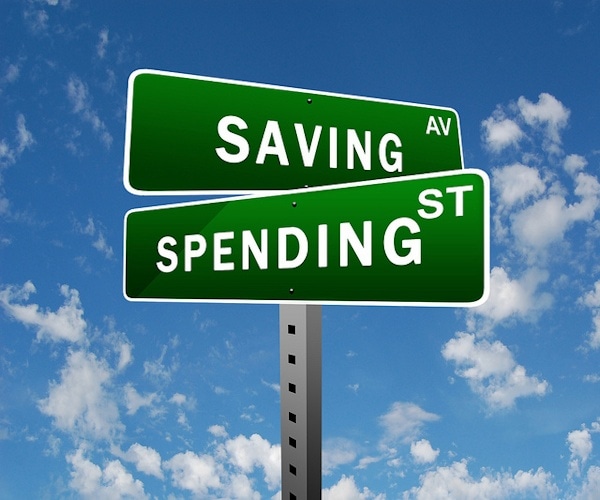
There’s a powerful psychological tug-of-war at play every time we decide whether to save or spend. On one hand, immediate gratification calls: that new gadget, a night out or a trendy purchase. On the other, long-term security whispers: building an emergency fund, investing or simply putting aside something for later. Understanding this mental conflict is key to building better financial habits.
A core driver of this conflict is what economists call present bias that is the tendency to overvalue short-term rewards at the expense of future ones. According to NS&I, present bias causes many people to choose instant pleasures like dining out instead of prioritizing abstract, long-term goals such as retirement savings. In practice this means that even when people know they should save, they often succumb to the pull of what they can ‘’feel’’ now. This bias leads to procrastination in saving and contributes significantly to long-term financial preparedness.
Self-control also plays a huge role. Empirical research shows that individuals with higher self-control are better at resisting impulse spending and more likely to convert financial knowledge into real saving behavior. For example, a 2025 study among micro and small enterprise (MSE) owners in Kampala found that self-control significantly moderates the relationship between financial literacy and actual savings those with stronger self-control saved more, even when literacy and social influence were held constant.
Another psychological dynamic is the satisfaction of underlying psychological needs. A recent study in South Africa found that when people’s psychological needs such as competence are met, they are more likely to exercise consumer spending self-control, which in turn improves their financial well-being. This suggests that spending and saving behavior don’t just stem from knowledge, there’re intertwined with emotional and psychological well-being.


There’s also a cognitive bias called the denomination effect, which affects how we perceive and use money. Research by Raghubir and Srivastava found that people are more likely to spend when money is in smaller denominations than when it’s consolidated in larger ones because smaller bills feel ‘’easier’’ to part with. This bias also highlights how even the form of money influences our behavior.
To complicate things further, mental accounting shapes how people categorize money into ‘’buckets’’ for example, treating a tax refund or cashback as “fun money’’ rather than income which makes it psychologically easier to spend. Cultural or social influences amplify these tendencies: financial literacy on its own isn’t always enough. In a study of Saudi youth, peer pressure and parental influence strongly affected saving behavior but curiously, high self-control weakened the link between literacy and saving.
All of this suggests that improving saving behavior is not purely a matter of learning about finance. It’s about understanding and working with the psychological wiring, nudging ourselves toward good habits, structuring our finances to reduce temptation and building up self-regulation overtime. By recognizing these biases and emotional levers, we can design a strategy that helps our “future self” as much as our “present self”. (start your investment journey today with the cytonn money market fund. Call +254(0)709101200 or email sales@cytonn.com)