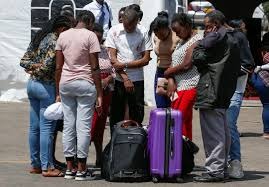
For many Kenyans and Africans more broadly, working abroad has become an increasingly attractive economic option. Higher wages, stable incomes, and better employment conditions offer opportunities that domestic labor markets often struggle to provide. Yet while foreign employment delivers clear short-term benefits, it also raises important questions about long-term economic costs and where a sustainable balance should be drawn.
At the household level, the benefits are immediate. Income earned abroad is typically higher and more predictable, allowing families to improve living standards, invest in education, and build financial resilience. Remittances have become a critical source of foreign exchange for many African economies, supporting consumption, stabilizing currencies, and supplementing national income. In Kenya, remittance inflows consistently rank among the country’s largest external financing sources, underlining their macroeconomic importance.


However, the broader labor market effects are more complex. When skilled and semi-skilled workers leave, domestic firms may face shortages that raise wage pressures or limit expansion. Sectors such as healthcare, construction, and technical trades are particularly sensitive, as experience and training take time to replace. While outward migration can ease unemployment in the short term, it may also constrain productivity growth if key skills are depleted faster than they are developed.
There is also a structural dimension to consider. Economies grow not only through capital accumulation but through the gradual buildup of human capital. When a significant share of the workforce gain experience abroad without clear pathways for skills transfer or return, the domestic economy risks underutilizing its investment in education and training. This challenge is not unique to Kenya; it is visible across Africa, where labor export arrangements coexist with persistent skill gaps at home.
That said, working abroad is not inherently a loss. Migrant workers often acquire technical expertise, professional networks, and work discipline that can benefit the domestic economy if harnessed effectively. The issue lies in whether systems exist to encourage return, reintegration, or knowledge transfer. Without such mechanisms, migration becomes a one-way flow rather than a development tool.
Where, then, should the line be drawn? The answer is not in restricting mobility, but in aligning labor migration with long-term economic strategy. Investing in skills development, improving domestic job quality, and creating incentives for return or remote contribution can help balance opportunity with sustainability.
Ultimately, foreign employment is neither purely good nor bad. It is an economic choice shaped by incentives and constraints. Managing it well requires recognizing both its immediate gains and its longer-term trade-offs, and ensuring that today’s opportunities do not undermine tomorrow’s capacity for growth.
Start your investment journey today with the Cytonn Money Market Fund. Call + 254 (0)709101200 or email sales@cytonn.com