When Jubilation Turned to Grief
On December 9, 2025, Tanzania should have been celebrating its 64th Independence Day with parades and festivities marking freedom from British colonial rule. Instead, the East African nation observed one of its darkest moments: Independence Day celebrations were cancelled, cities were under heavy security, and the nation mourned hundreds killed during post-election violence.
Prime Minister Mwigulu Nchemba scrapped official festivities and redirected funds toward repairing infrastructure damaged during widespread unrest following the disputed October 29, 2025, general elections. The government’s attempt to impose quietly failed to silence mounting demands for justice, accountability, and democratic reform.
The Disputed Election That Ignited Crisis
The turmoil began when President Samia Suluhu Hassan was declared the winner with 97.66 percent of the vote after leading rivals were excluded, a result that African Union and SADC observers failed to endorse. Opposition leader Tundu Lissu had been jailed for months on treason charges, while another candidate was barred from running. Hassan faced only 16 candidates from smaller parties with no capacity to mount a serious opposition to the ruling Chama Cha Mapinduzi (CCM) party.


African Union observers found the election fell far short of democratic standards, documenting ballot stuffing, internet shutdowns, jailing of opposition candidates, and politically motivated abductions. For many Tanzanians, particularly the youth, the result was not a legitimate mandate but a consolidation of autocratic rule.
A Deadly Crackdown: The Human Cost
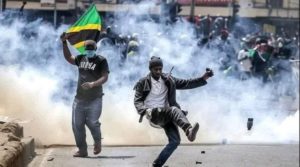
When protests erupted, security forces deployed live ammunition, tear gas, and mass arrests against predominantly peaceful demonstrators in Dar es Salaam, Mwanza, Arusha, and Shinyanga.
The UN Office of the High Commissioner for Human Rights reported that hundreds of people were reportedly killed and over 2,000 detained by security forces. UN human rights chief Volker Türk described harrowing reports of families desperately searching for loved ones, visiting police stations and hospitals. Opposition leaders claim more than 2,000 protesters were killed, with hundreds missing.
A CNN investigation documented security forces shooting unarmed protesters, with videos showing morgues overflowing and satellite images revealing recently disturbed soil consistent with mass graves at Kondo cemetery north of Dar es Salaam. Seven young soccer players were reportedly shot and killed at their homes, with six bodies never located.
Repression Intensifies
Over 150 people have been arrested since polling day, with many, including children, allegedly charged with treason, a capital offense. Human Rights Watch documented wrongful arrests targeting alleged protest organizers, including a hospital worker arrested for administering a doctor’s WhatsApp group and a teacher arrested for government criticism.
The government aggressively policed online spaces. Police announced that no demonstrations would be permitted on December 9, warning that participants would be arrested. Mass SMS alerts urged citizens to avoid groups that incite violence. Meta reported restricting three Instagram accounts at Tanzania’s government request for allegedly violating local law.
Independence Day Under Lockdown
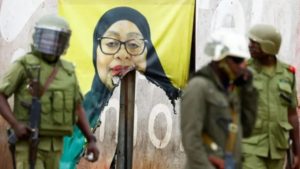
The government announced that only people with emergencies should leave their houses on Independence Day, effectively imposing a lockdown. President Hassan’s messaging was defiant rather than conciliatory, stating, “I want to tell them, whenever they come, we are prepared.”
For many Tanzanians, the day became a stark symbol of the gap between national ideals and current realities, a celebration of freedom overshadowed by grief over lives lost and democratic promises betrayed.
A Flawed Investigation
President Hassan announced a government inquiry into the unrest, forming a commission of former state officials and retired civil servants. However, the commission contains no civil society members or political opposition, raising serious doubts about independence. Opposition parties have categorically rejected it, demanding an independent international inquiry instead. The government has refused.
UN Human Rights Chief Türk reminded authorities that such a probe must fully adhere to international standards of independence, impartiality, thoroughness, promptness, and transparency.
International Response
The U.S. State Department is comprehensively reviewing ties with Tanzania after condemning repression and disturbing violence, with officials saying the government’s actions raise serious concerns about the bilateral relationship. The US Senate Foreign Relations Committee demanded an independent investigation.
This represents a significant diplomatic shift for a key U.S. partner in East Africa, signaling potential consequences ranging from reduced aid to targeted sanctions.
Why This Matters
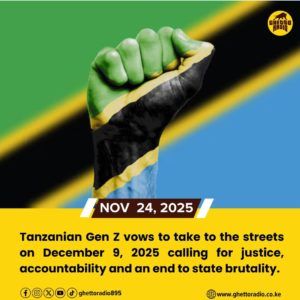
The crisis carries implications far beyond Tanzania’s borders. Most protesters were young people from Generation Z, in a country where the median age is under 18. This generation has grown up with mobile internet and awareness of democratic movements globally. Their willingness to risk their lives for democratic change suggests the current political arrangement may be fundamentally unsustainable.
The violence threatens Tanzania’s economic trajectory and international reputation. Western governments’ reassessment could lead to reduced development assistance, while trade relationships may be affected. Regional stability is also at risk, with potential spillover effects for Kenya, Uganda, Rwanda, and other neighbors.
The Path Forward
Tanzania faces an uncertain future. The government could maintain its hardline approach, leading to periodic protest eruptions met with violence and deepening international isolation. Alternatively, regional pressure might force negotiated reforms, though this seems unlikely given the government’s defiant stance.
Most likely, it is a prolonged crisis, neither full repression nor genuine reform, but ongoing tension, periodic protests, continued arrests, and international pressure without decisive resolution.
Tanzania travel advisory, November 2025: what it means for Kenya tourism this Christmas season.
A Nation at a Crossroads
Human Rights Watch said the government should end its crackdown and immediately release all those arbitrarily detained, noting that Tanzanian and international law guarantee freedom from arbitrary arrest and protect everyone’s right to express opinions and peacefully assemble freely.
For the families of those killed, for detained activists, for young people who took to the streets believing in democracy—these are not academic questions but matters of justice, accountability, and human dignity.
The cancelled Independence Day celebrations of 2025 may mark the moment when Tanzanians confronted how far their country had fallen from its founding ideals. Whether this becomes a catalyst for democratic renewal or another chapter in Tanzania’s descent into authoritarianism will depend on the courage of citizens, the integrity of international actors, and the willingness to prioritize human rights over political expedience.