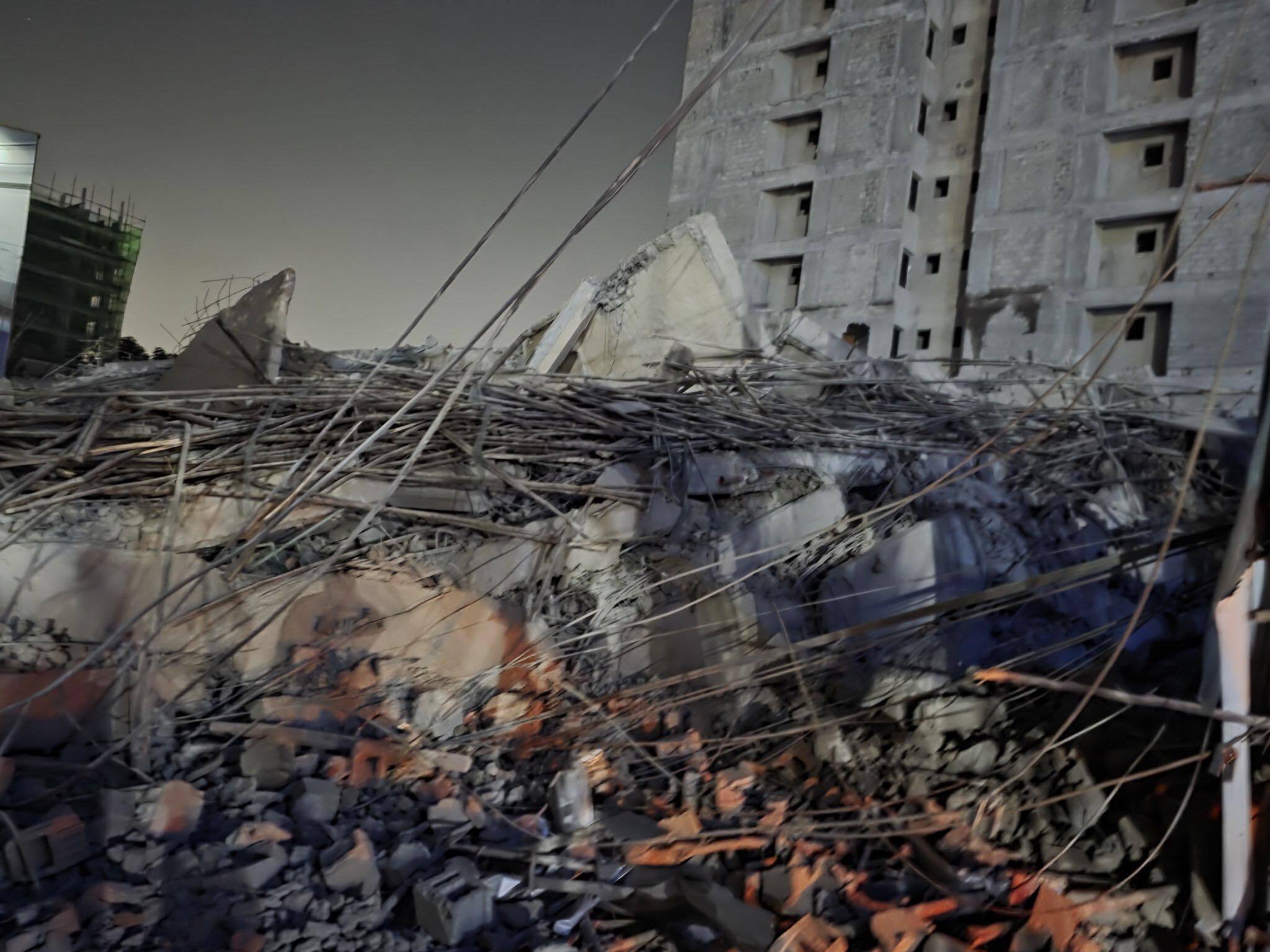
On January 2, 2026, a multi-storey building under construction in South C, Nairobi, collapsed early in the morning, triggering a major emergency response as fears grow that workers and passersby remain trapped beneath the rubble. The 16-storey structure, located along Muhoho Road in the South C estate, fell without warning, prompting rescue teams from the National Disaster Management Unit, Kenya Red Cross, Nairobi County Government, Kenya Defence Forces, and police to proceed with search-and-rescue operations amid rising concerns about construction safety in the city.
Authorities initially reported at least four people believed to be trapped under the debris, including two security guards and at least two passersby, with one person reportedly making contact by phone from beneath the collapsed floors, raising hopes of survival among loved ones.
The collapse sparked immediate panic among residents and workers in the densely populated estate, forcing nearby residents and businesses to evacuate as a security cordon was expanded around the site to mitigate the risk of further structural failures in neighboring buildings.
In response to the disaster, political leaders and community representatives have issued urgent calls for action. Lang’ata MP Phelix “Jalang’o” Odiwuor has demanded a complete suspension of construction activities in South C and Nairobi West until all ongoing projects are thoroughly inspected and certified safe.


Similarly, Embakasi East MP Babu Owino has condemned the collapse as a symptom of weak regulatory enforcement and corruption, calling for a full, independent investigation into all approvals, permits, and inspections connected with the collapsed building. He has also urged accountability and prosecution for any public officials or private developers culpable for regulatory failures.
Local officials, including the South C MCA and residents’ associations, have echoed these concerns, pointing to longstanding complaints about lax oversight and ignored warnings over unsafe development practices. They are demanding accountability, justice for the families affected, and long-term reforms to prevent similar tragedies in Nairobi’s rapidly expanding urban landscape.
As the rescue operation continues, the incident has reignited broader debates about Nairobi’s construction safety standards, enforcement of building codes, and the urgent need for transparent oversight to protect the public in one of Kenya’s most dynamic but risk-prone urban environments.