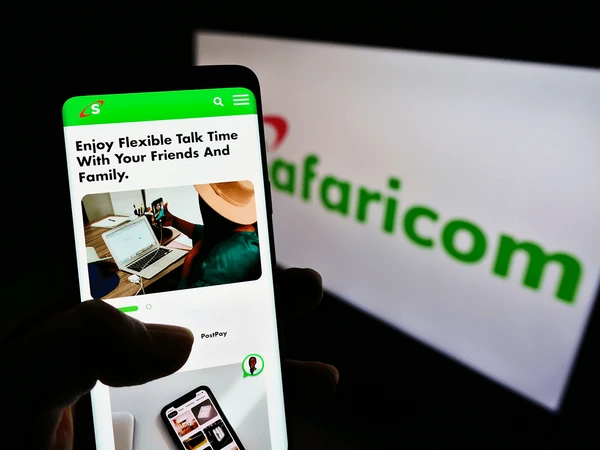
Nearly one in four Safaricom customers do not fully trust what they are charged for mobile data and text messages. A new regulatory survey has put fresh focus on billing practices in Kenya’s telecommunications sector.
The study, conducted for the Communications Authority of Kenya (CA), shows that only 77 percent of Safaricom subscribers believe mobile data charges are accurate. Confidence in SMS billing stands slightly higher at 77.7 percent. Despite its market dominance, Safaricom trails smaller rivals on billing credibility.
Rivals score higher on billing accuracy
Jamii Telecommunications emerged as the best-rated provider on billing accuracy. About 98.4 percent of its customers said they trust data charges, while 88.6 percent expressed confidence in SMS billing.
Airtel followed closely. Some 98.3 percent of its customers trust data charges, and 86.2 percent believe SMS billing is accurate. Telkom Kenya also outperformed Safaricom on both measures.

“Safaricom shows lower performance compared to other providers,” the CA report notes. It adds that while a majority still express trust, confidence remains weaker, especially for data services.
Data revenue overtakes voice for Safaricom
The findings come at a critical time for Safaricom. For the first time, its data business has overtaken voice as the main revenue driver.
In the half year to September 2025, mobile data revenues rose by 18 percent to Sh44.4 billion. Voice revenues grew marginally by 0.5 percent to Sh41.09 billion. The shift reflects changing consumer habits, including online learning, remote work, and increased use of streaming services.
Billing transparency remains a key pain point
Strategic Synergy Consultants Limited surveyed between July 1, 2024, and June 30, 2025. It covered more than 4,200 respondents nationwide.
The findings show that billing transparency remains a major concern for consumers, even as demand for digital services grows. Billing-related complaints continue to rank among the most common issues reported to the regulator, according to CA quarterly reports.
Trust gaps extend to voice charges and communication
Safaricom also ranked lowest on trust in call charges. Only 80.2 percent of its customers believe voice billing is accurate. By comparison, 97.6 percent of Airtel customers, 96.7 percent of Jamii customers, and 94 percent of Telkom Kenya customers expressed confidence.
The report also highlights gaps in customer communication. Only 18 percent of Safaricom subscribers said they receive monthly billing information. Airtel performed better, with 44.1 percent reporting access to monthly billing details. Jamii followed at 35 percent.
Trust becomes critical as data dominates revenues
As data continues to eclipse voice as the main revenue source for telecom operators, billing clarity is becoming increasingly important. Clear communication and transparent charges now play a central role in customer trust.
For market leaders such as Safaricom, maintaining that trust may prove as important as expanding network coverage or launching new digital products.