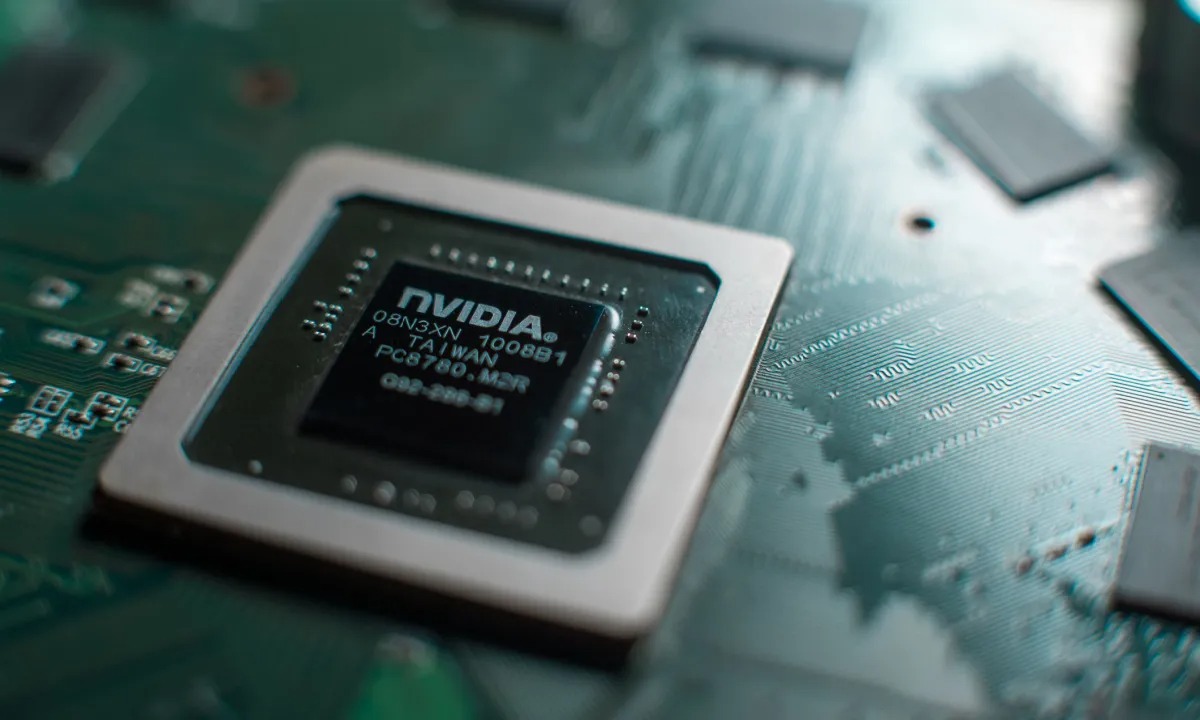
On January 5, 2026, Nvidia Corporation unveiled its next generation artificial intelligence chip platform, Vera Rubin, marking a major step in the company’s effort to address surging demand for AI data center computing and intensifying competition in the global semiconductor industry. The announcement was made during the Consumer Electronics Show (CES) 2026 in Las Vegas, one of the technology sector’s most closely watched annual events.
Speaking at the unveiling, Nvidia Chief Executive Officer Jensen Huang said the company was entering “a new era of AI computing, where scale, efficiency and speed are no longer optional but essential.” He added that Vera Rubin was designed to support the rapidly growing computational needs of advanced artificial intelligence models, particularly those used in large scale training and real time inference.
The Vera Rubin platform succeeds Nvidia’s earlier Blackwell architecture and introduces a more tightly integrated, rack scale design. It brings together six core components, including the Vera CPU, Rubin GPU, next generation NVLink interconnect, advanced networking interfaces, data processing units and high performance Ethernet switching. According to Nvidia, this integrated approach is intended to improve data movement efficiency while significantly boosting overall system performance in large AI data centers.
Nvidia stated that the Rubin GPU can deliver up to five times the performance of its predecessor for certain AI workloads. The company also said the full platform is engineered to reduce the cost of generating AI outputs, with Huang noting that “the cost of intelligence at scale must come down if AI is to be widely deployed across industries.” These efficiency gains are particularly important as AI models continue to grow in size, complexity and energy requirements.
The unveiling comes at a time when competition in the AI chip market is accelerating. Rival semiconductor companies and major cloud service providers are increasingly developing their own custom AI processors, while demand for specialized data center hardware continues to rise.
Nvidia acknowledged this competitive environment, with Huang stating that “the industry is moving faster than ever, and innovation cycles are compressing,” underscoring the need for rapid technological advancement.
Nvidia also confirmed that Vera Rubin chips are already in production, with broader deployment expected to begin in the second half of 2026. The platform is aimed primarily at hyperscale cloud providers, enterprise data centers and AI research institutions that require massive computing power to run next-generation AI systems.

Beyond raw performance, the platform incorporates enhanced networking, memory and security features designed to support increasingly complex AI workloads, including advanced reasoning models. Nvidia said these capabilities would help organizations scale AI more efficiently across sectors such as healthcare, finance, manufacturing and autonomous systems, as AI adoption continues to expand globally.