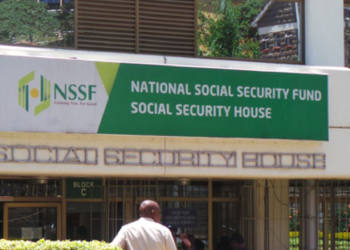
A recent report by the Auditor-General has highlighted troubling concerns regarding the management of funds at the National Social Security Fund (NSSF). The latest financial report by the NSSF for the financial year ending June 2024 has exposed significant financial misappropriations leading to a loss of over KES 16 bn. This raises serious doubts about the fund’s capacity to safeguard workers’ retirement savings.
In light of these revelations, employers need to reflect on whether continuing to remit staff Tier II contributions to NSSF is truly in their employees’ best interest. After all, if a fund struggles to manage routine expenditures without financial wastage, can it be relied upon to grow and protect long-term retirement assets?
Fortunately, the law provides employers with an alternative. Under Kenya’s retirement benefits framework, companies are permitted to contract out of remitting Tier II contributions to NSSF and instead direct these funds to a registered private pension scheme. This option is fully recognized and regulated by the Retirement Benefits Authority (RBA), giving employers a legal and secure pathway to provide a potentially superior retirement solution for their staff.
There are compelling reasons to explore this option. Private pension schemes often exhibit better governance practices, with strong oversight structures and regular independent audits. In addition, many of these schemes have consistently delivered competitive returns, offering employees better value for their long-term savings. Transparent reporting mechanisms also mean that both employers and staff have access to timely, detailed updates on fund performance; fostering greater trust and accountability. Switching to a private scheme is not as complicated as it may seem. Employers simply need to partner with an RBA-licensed pension provider and submit the necessary documentation for approval. Once this process is completed, employee contributions can begin flowing into a more efficient and better-governed retirement plan.

Ultimately, managing employees’ retirement savings is more than just a statutory requirement, it is a critical component of long-term employee welfare. By making an intentional choice to place Tier II contributions in well-managed, transparent funds, employers demonstrate a genuine commitment to securing their teams’ financial futures. Employers can consider Cytonn Umbrella Retirement Benefits Scheme, approved to receive and manage NSSF Tier II contributions and offers competitive returns.
Now more than ever, it’s essential to move beyond default settings. Consider making the switch and take an active role in protecting what matters most, your employees’ retirement.