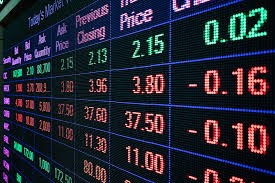
Secondary market trading of government bonds at the Nairobi Securities Exchange (NSE) surged to a historic high of Sh2.7 trillion, underscoring a growing investor appetite for fixed-income securities as market participants seek stability and predictable returns.The record turnover reflects heightened activity by both institutional and retail investors, driven by easing interest rates, improved market infrastructure, and rising confidence in government debt instruments. The surge makes 2025 the strongest year on record for bond trading at the bourse, cementing the fixed-income market’s role as a key pillar of Kenya’s capital markets.Market analysts attribute the sharp increase in trading volumes to a flight to safety, particularly by banks and fund managers reallocating capital away from equities and higher-risk assets. Government bonds have remained attractive due to their relatively higher yields compared to bank deposits and their lower risk profile during periods of economic uncertainty.
Another major driver has been the decline in interest rates on new bond issuances, which has boosted demand for older bonds offering higher coupon rates. As prices of these bonds rise in the secondary market, investors have been actively trading to lock in capital gains, further lifting turnover.The growing participation of retail investors has also played a significant role. Digital platforms such as the Central Bank of Kenya’s DhowCSD system have lowered entry barriers, allowing individuals to buy and sell government securities more easily. This has broadened the investor base beyond traditional institutional players, increasing liquidity and depth in the bond market.
For stockbrokers and investment banks, the surge in bond trading has translated into higher commission income, offering a buffer against historically low equity market activity. The trend also highlights a structural shift in investor behavior, with fixed-income products gaining prominence as a preferred investment option.From a broader economic perspective, the increased liquidity in the secondary bond market enhances price discovery and improves the efficiency of government borrowing. Active trading allows the National Treasury to better gauge investor sentiment, which can influence future debt issuance strategies.
However, analysts caution that sustained growth will depend on macroeconomic stability, prudent fiscal management, and continued investor confidence. Any sharp reversal in interest rate policy or deterioration in public debt metrics could dampen demand.Overall, the Sh2.7 trillion milestone signals a maturing bond market and reinforces the NSE’s growing importance as a hub for fixed-income investment in the region. For investors seeking steady returns, government bonds are increasingly proving to be the asset of choice.