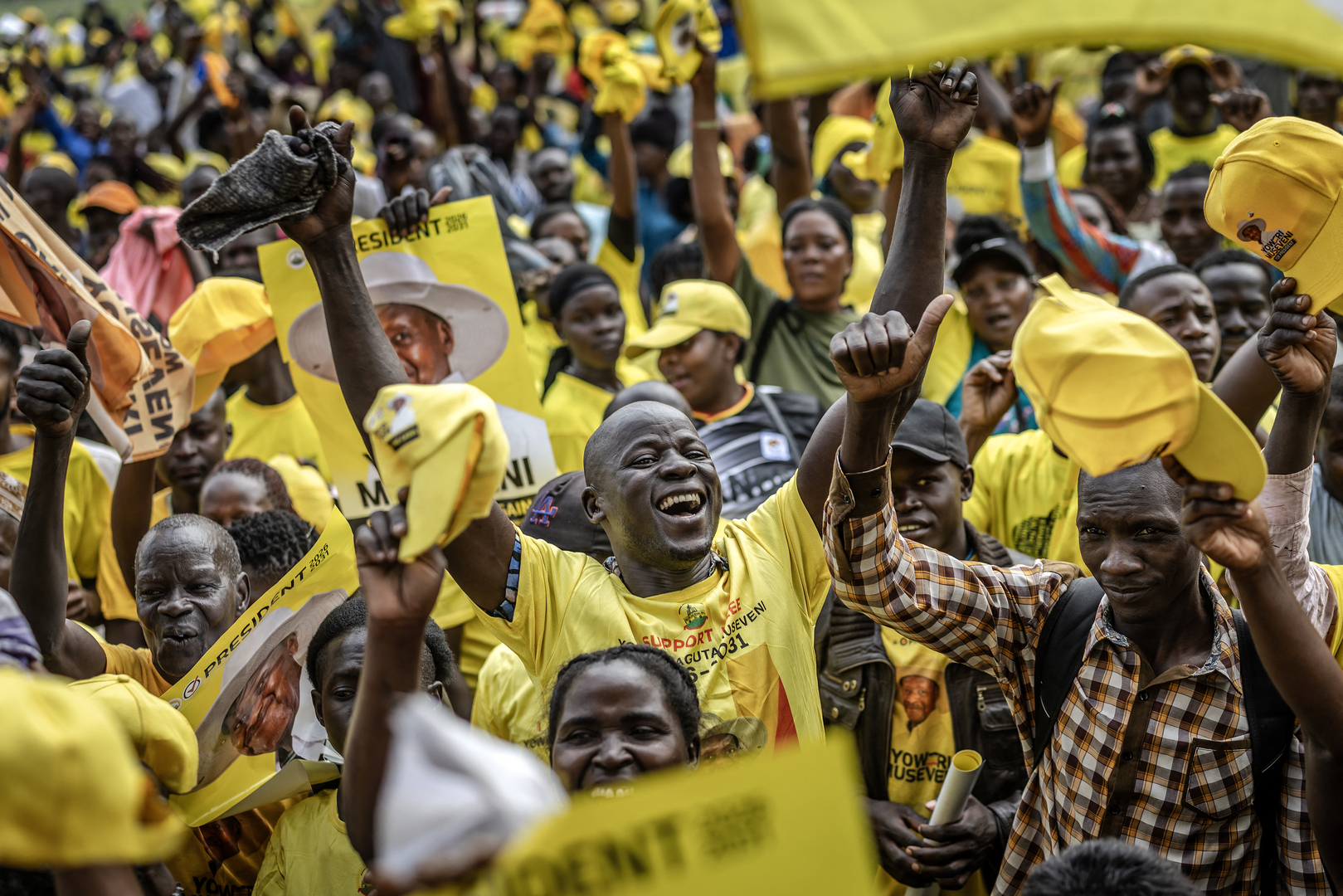
President Yoweri Museveni’s landslide victory in Uganda’s January 2026 presidential election secures him a seventh term, extending his rule into a fifth decade since seizing power in 1986. At 81, the veteran leader claimed around 71.65% to 72% of the vote (official figures from the Electoral Commission put it at 71.65%, with about 7.9 million votes), close to his peak performance decades ago. For his supporters in the ruling National Resistance Movement (NRM), this is proof that the old rebel commander still has the overwhelming backing of Ugandans, delivering the stability many remember from the chaotic years before he took over.
Museveni ran on his long track record: peace after decades of conflict, steady (if uneven) economic growth, and promises to push Uganda into middle-income status by 2030. He hammered home the upcoming oil boom as the game-changer—first crude exports through the East African Crude Oil Pipeline (EACOP) are targeted for October 2026, a 1,443-km heated line to Tanzania’s Tanga port. He told crowds that once oil flows (up to 230,000 barrels a day at full tilt), the economy could surge at double-digit rates, finally unlocking the promise of Uganda’s massive Lake Albert reserves discovered years ago.
But the win came amid heavy controversy. Main rival Bobi Wine (real name Robert Kyagulanyi), the 43-year-old former pop star turned opposition firebrand, called the results “fake,” alleging massive ballot stuffing, intimidation, and violence. His vote share dropped to about 24.7–25% (down from 35% in 2021), a blow despite Uganda’s super-young population, most under 30, seemingly his natural base. The campaign saw his rallies tear-gassed or shot at, supporters killed or arrested, and a nationwide internet blackout that critics (including the UN) slammed as a tool to hide fraud and suppress dissent. After the results were announced, security forces raided his home; Wine went into hiding, later saying he escaped while his family stayed under house arrest.
State authorities dismissed the claims without much detail, and the election passed with limited large-scale unrest beyond scattered clashes. For Wine, two failed presidential runs now raise real questions about his future. Could sustained repression sideline him like so many African opposition figures before?


The bigger story isn’t just another term for Museveni; it’s what this means for Uganda’s slow-motion political evolution. As journalist and analyst Allan Kasujja puts it, real change in Uganda doesn’t come in dramatic bursts; it creeps in gradually. This election felt more like a calendar ritual, rubber-stamping deeper shifts inside the NRM and the state.
Look at the party’s internal battles: The 2025 NRM Central Executive Committee elections were brutal, with old-guard figures pushed out in favor of newer, loyal faces, many tied to Museveni’s son, Gen Muhoozi Kainerugaba (51), the current Chief of Defence Forces. Muhoozi’s influence has grown sharply; he oversees all security matters now, a first in modern Uganda. Power at the State House seems more decentralized; eldest daughter Natasha Karugire handles the president’s daily schedule, half-brother Salim Saleh manages key military and foreign ties, and son-in-law Odrek Rwabwogo shapes economic policy.
Museveni came to power through the gun, and the military’s grip on politics remains ironclad. This family-centric setup signals that even if the president steps back (or if this is his last term), the reins are staying close—likely passing toward Muhoozi, whether formally or through the shadows.
For ordinary Ugandans, the next five years bring hope tied to oil revenues and stability promises, but also risks: more repression if youth frustration boils over (like we’ve seen in Kenya or Tanzania recently), questions over health (Museveni’s campaign had unexplained cancellations and pauses), and uncertainty if succession drama turns messy.
In the end, Museveni’s seventh term isn’t a fresh chapter; it’s continuity with a twist: the regime is quietly preparing for life after the patriarch, even as it projects unbreakable control. Whether that brings real progress or just more of the same depends on how those gradual shifts play out.