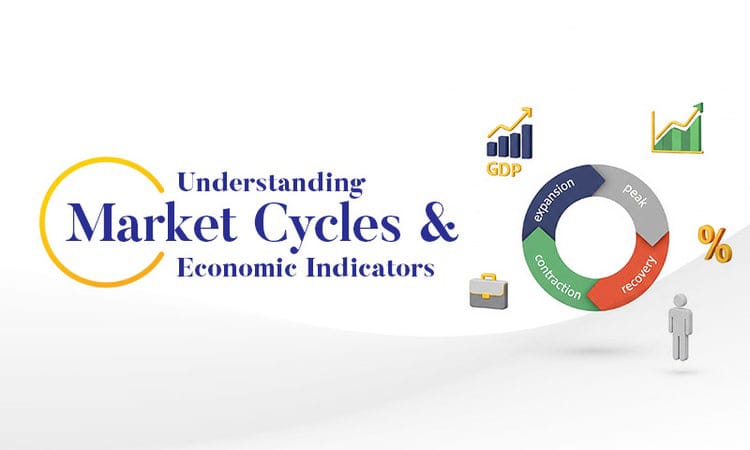
Financial markets and the broader economy function on different timelines, which explains why market movements often change direction before shifts become visible in economic conditions. Markets are shaped by expectations and interpretation, while the economy is understood through observed outcomes. This structural difference creates a natural gap between market behaviour and economic measurement.
Market prices reflect collective views about what may occur rather than what is currently happening. Participants continuously interpret information related to policy signals, business conditions, and broader developments, adjusting their positions as perceptions evolve. These adjustments are embedded into prices as soon as expectations change, even if the underlying economic activity has not yet shown visible movement. As a result, markets often respond to emerging narratives rather than established trends.
Economic conditions, by contrast, are assessed through indicators that summarise past activity. Employment patterns, production levels, and consumer behaviour become visible only after they have occurred and been recorded. This process introduces delays between real-world changes and their appearance in economic data. Consequently, economic indicators tend to confirm developments after they have already taken shape, rather than revealing them in real time.
This difference in timing explains why markets may appear disconnected from prevailing economic conditions. Price movements can occur while economic indicators still reflect earlier circumstances. Rather than indicating inconsistency, this reflects the forward-looking nature of markets and the retrospective nature of economic measurement. Markets continuously reassess expectations as new information emerges, while economic data gradually captures the effects of those evolving conditions.


The fact that markets move first does not suggest that they provide definitive foresight. Market behaviour reflects interpretation, uncertainty, and shifting consensus, all of which can change as new information becomes available. Prices adjust as expectations are revised, sometimes multiple times, before economic outcomes become observable. Economic indicators then reflect these outcomes once they materialise in recorded activity.
The relationship between markets and the economy is therefore sequential rather than simultaneous. Markets respond to anticipated change, while the economy is understood through documented results. This sequencing explains why turning points in markets often precede changes in economic indicators, even when the broader environment appears unchanged. Understanding this distinction clarifies why market behaviour and economic conditions may diverge over short periods, without implying contradiction between the two. (Start your investment journey today with the cytonn MMF, call+2540709101200 or email sales@cytonn.com)